

Hematuria (bloody urine) is one of the most common clinical symptoms of lower urinary tract disease in dogs. Common causes include cystitis, urinary tract infections (UTIs), and bladder stones. If not diagnosed and treated early, it not only causes persistent discomfort for the animal but also increases the risk of bladder damage and urethral obstruction.
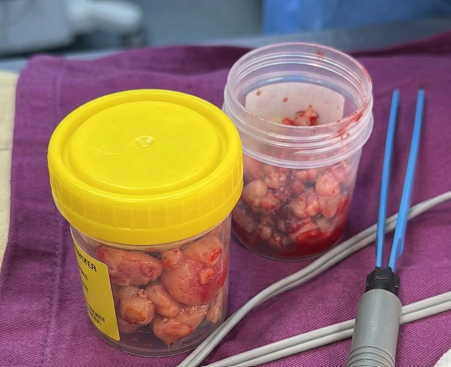
This case involves a 10-year-old female dog that was fed a standard daily diet. The owner noticed persistent hematuria for approximately two weeks and arranged a consultation. Following clinical evaluation and diagnostic imaging, a large volume of stones was discovered in the bladder, requiring further intervention.
Case Progress and Clinical Presentation
Hematuria is often one of the early warning signs of bladder stones. When stones remain in the bladder long-term, they repeatedly irritate the bladder mucosa, causing bleeding, inflammation, urinary discomfort, frequent urination (pollakiuria), and even pain. Some dogs only exhibit mild hematuria in the early stages of the disease, and clinical symptoms may not be very obvious, making them easy to overlook.
In this case, although the dog primarily presented with persistent hematuria for two weeks, further examination revealed a massive amount of stones, suggesting that the urinary tract issue may have been ongoing for some time.
Diagnostic Imaging Results
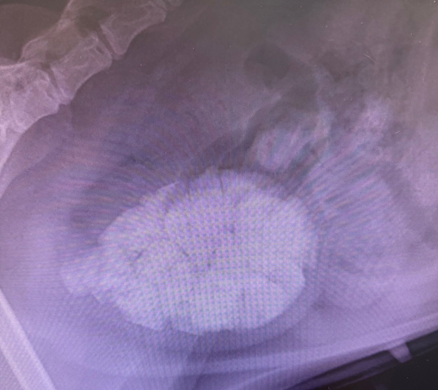
X-ray examination showed a large number of mineralized opacities within the bladder, consistent with the radiographic appearance of multiple bladder stones. When stones are numerous or large, they can not only cause continuous irritation to the bladder wall but may also move into the urethra with urine flow, increasing the risk of urethral obstruction. Therefore, diagnostic imaging is of significant value for cases with persistent hematuria or recurrent urinary symptoms.
Stone Composition Analysis
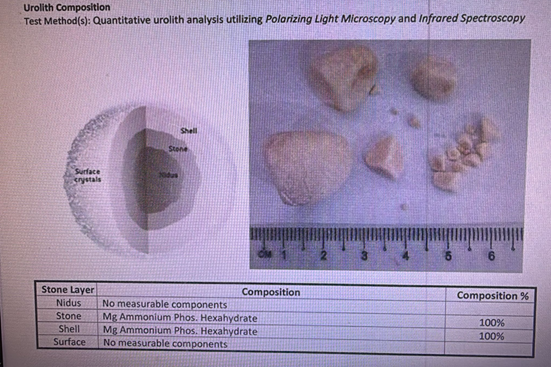
Analysis of the stone composition revealed that the bladder stones in this case were primarily composed of Magnesium Ammonium Phosphate Hexahydrate, commonly known in clinical practice as Struvite stones.
Struvite stones are a common type of bladder stone in dogs and are particularly prevalent in females. The formation of these stones is usually closely related to chronic urinary tract infections and inflammation. Certain bacterial infections can alter the urinary environment, making the urine more alkaline, which in turn promotes the precipitation of magnesium ammonium phosphate and the formation of stones. Therefore, for such cases, controlling the infection and reducing the risk of recurrence is just as important as removing the existing stones.
Common Types of Bladder Stones in Dogs
Canine bladder stones are not limited to a single type; the two most common types seen clinically include:
- Struvite (Magnesium Ammonium Phosphate) Stones Struvite stones are usually associated with alkaline urine and are often found in cases involving urinary tract infections. Changes in the urinary environment, combined with mineral precipitation, lead to gradual stone formation. In addition to infection, factors such as mineral ratios in the diet, insufficient water intake, and chronically concentrated urine can also increase the risk.
- Calcium Oxalate Stones Calcium oxalate stones are also common and are typically related to acidic urine, concentrated urine, dietary factors, and individual genetic predisposition. Unlike struvite stones, calcium oxalate stones generally cannot be dissolved by diet alone, requiring different considerations for treatment and long-term management.
Relationship Between Urine pH, Diet, and Stone Formation
Different types of bladder stones are closely related to urine pH and dietary habits. The pH value of urine affects the solubility of various minerals; when the urinary environment changes—compounded by dehydration, concentrated urine, or chronic urinary inflammation—the likelihood of crystal and stone formation increases.
Therefore, the treatment of bladder stones should not stop at the removal of the stones themselves but must emphasize follow-up management, including:
- Evaluating and controlling urinary tract infections.
- Adjusting the diet based on the stone type.
- Encouraging increased water intake.
- Performing regular urinalysis and follow-up imaging.
- Monitoring urine pH and the risk of recurrence.
Clinical Significance of This Case
This case demonstrates that even when the only outward sign is persistent hematuria, more serious underlying urinary system issues may be present. Imaging revealed a large volume of stones, and the analysis further supported the link between this case and chronic infection/inflammation.
For senior dogs, if symptoms such as hematuria, frequent urination, difficulty urinating, prolonged urination time, or recurrent UTIs occur, a detailed examination should be conducted early to prevent the condition from worsening or developing into an acute urethral obstruction.
Image Captions
Figure 1 | A sample of the bladder stones removed during surgery; the stones are numerous and vary in size.
Figure 2 | X-ray image showing a large number of mineralized opacities in the bladder, consistent with multiple bladder stones.
Figure 3 | Stone analysis results showing the primary component is Magnesium Ammonium Phosphate Hexahydrate (Struvite); these stones are often associated with chronic UTIs and inflammation.
Summary
If your dog exhibits hematuria, frequent urination, difficulty urinating, or recurrent urinary tract infections, it is recommended to seek veterinary examination as soon as possible. Early diagnosis of bladder stones and related urinary issues helps ensure timely treatment and reduces the risk of recurrence and complications.
Cityvet Dog Clinic
Cityvet is dedicated to providing excellent, comprehensive veterinary medical services. Upholding the core values of “Professionalism, Care, and Trust,” we aim to provide affordable care, utilize advanced equipment, and offer detailed explanations of treatment options to provide comprehensive medical care for every pet.
Want to book a dog urinary tract consultation? Please call our Tsuen Wan branch at 2623 5500 or our Yuen Long branch at 2477 9990. Address: G/F, 186 Sha Tsui Road, Tsuen Wan / Shop 2, G/F, Fortune Sunshine House, 25 Ping Wui Street, Yuen Long.
Disclaimer: This article provides general information only and cannot replace professional medical diagnosis. If you have any concerns, please book a veterinary check-up as soon as possible.