

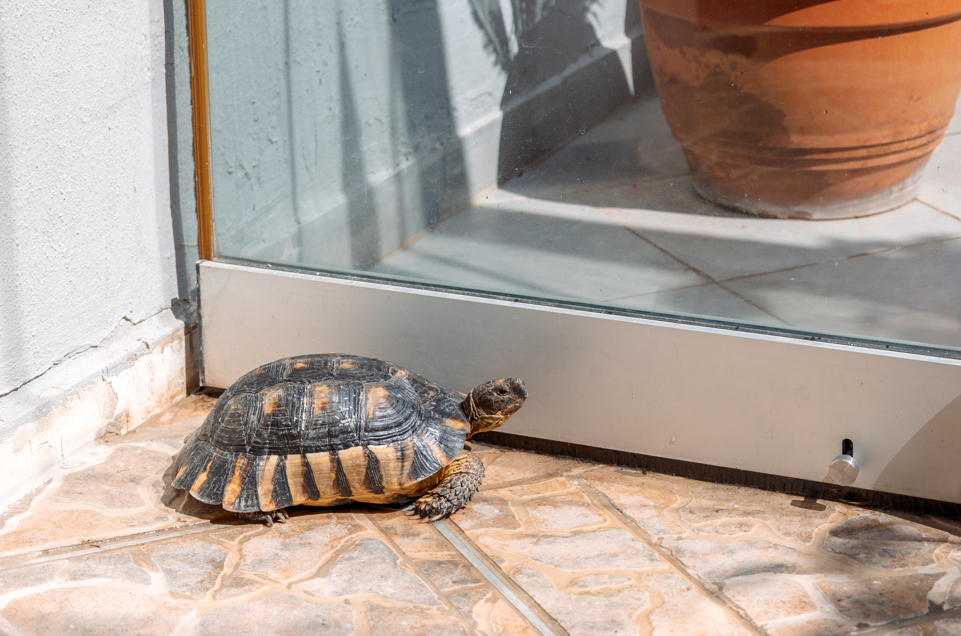
Recently, Hong Kong has seen consecutive tragic incidents involving turtles falling from heights: one at Grand View Garden, Diamond Hill on April 11, 2026, and another at Cho Yiu Chuen, Kwai Chung on April 12, 2026. These incidents underscore a critical issue: many owners still have significant safety blind spots regarding enclosure design, escape prevention, and daily care routines.
It is a common misconception that turtles are slow and therefore at low risk. In reality, turtles are surprisingly adept explorers. They utilize basking platforms, rocks, driftwood, filters, and even the corners of their tanks to climb. Any oversight in enclosure design or temporary placement during cleaning can lead to a potentially fatal fall.
Prevention is far more effective than post-accident treatment. This guide details the common causes of falls, high-risk household locations, warning signs of injury, and essential safety management practices.
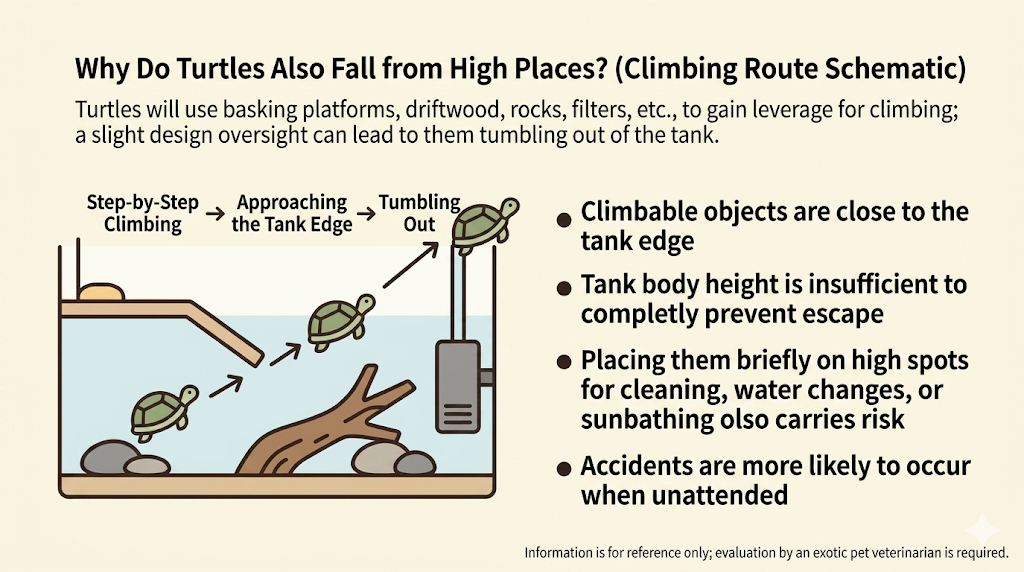
Why Do Turtles Fall from Heights?
Many owners underestimate a turtle’s activity levels. While they may not be fast, they are persistent explorers. If a tank contains basking platforms, ramps, or filters that provide leverage, a turtle can gradually climb out.
Accidents often stem from “brief” lapses in judgment during daily care, such as temporarily placing a turtle on a balcony, windowsill, or table during cleaning. Even a few moments of being unattended in an unenclosed high-level area can lead to disaster.
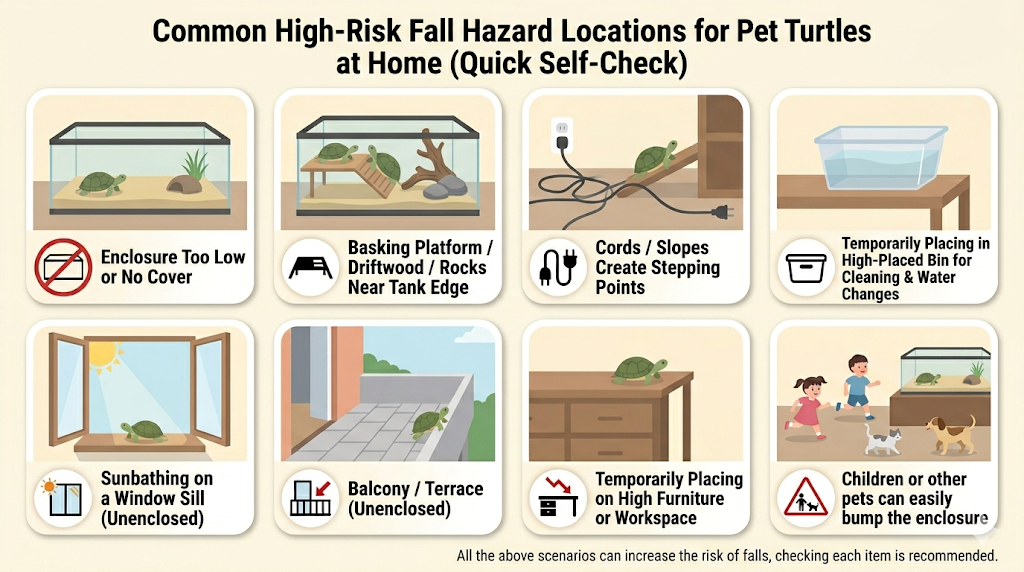
High-Risk Household Scenarios
Common high-risk situations include:
- Enclosures that are too shallow and lack a lid.
- Basking platforms, driftwood, or filters placed too close to the tank edge.
- Wires, ramps, or decorations acting as “footholds”.
- Placing the turtle in a temporary container on a high surface during tank maintenance.
- Sunbathing turtles on windowsills, balconies, or high furniture.
- Allowing turtles to roam in unenclosed elevated spaces.
- Risks from children or other pets accidentally knocking over tanks.
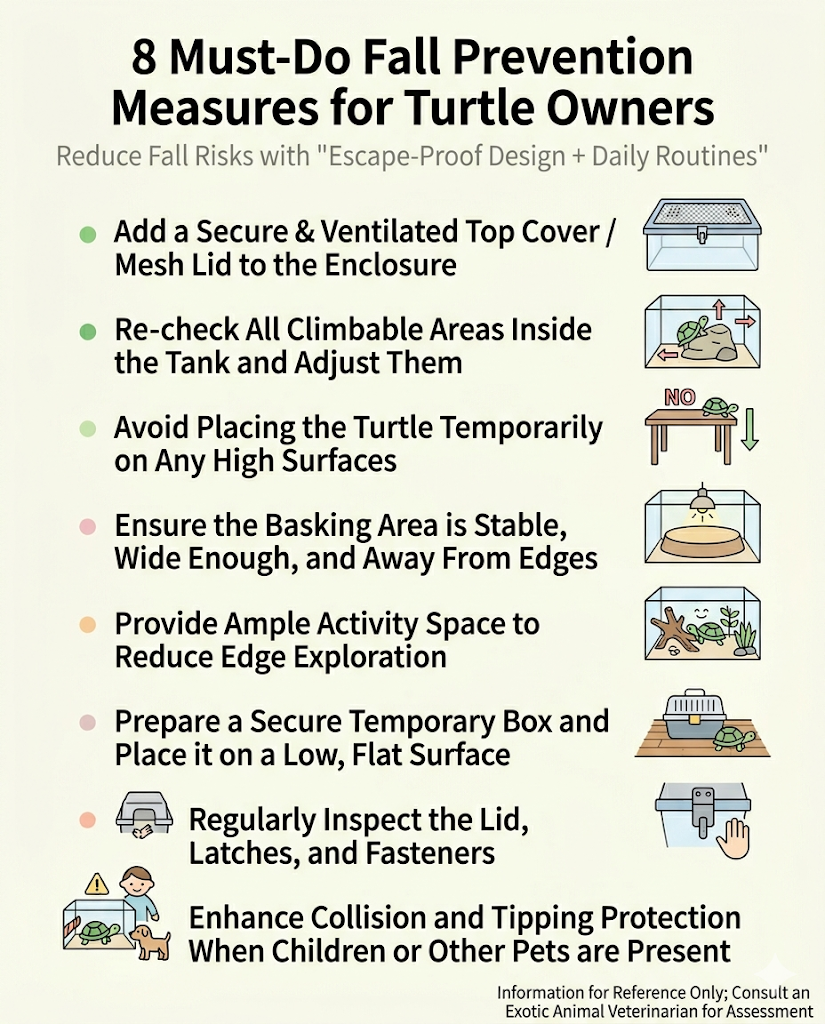
8 Essential Fall Prevention Measures
- Secure Enclosures with Escape-Proof Designs: Do not rely solely on the height of the tank wall. Use a sturdy enclosure equipped with a secure, well-ventilated mesh lid.
- Inspect All Climbing Points: Ensure that platforms, filters, and decorations do not provide enough leverage for the turtle to reach the rim.
- Never Place Turtles at Height: Whether for cleaning, photos, or sunbathing, turtles should only be placed in secure, enclosed areas on the floor.
- Stabilize Basking Areas: Ensure platforms are not too narrow or slippery, as this increases the risk of the turtle slipping or flipping over the edge.
- Provide Adequate Space: A cramped environment encourages persistent “wall-climbing” behavior, increasing escape risks.
- Use Safe Temporary Containers: During cleaning, use a secure, non-escape container placed on a low, flat surface.
- Conduct Regular Equipment Checks: Periodically inspect lids, clips, and internal fixtures to ensure nothing has loosened or shifted.
- Supervise Around Children and Pets: Ensure the tank is in a stable location where it cannot be bumped or overturned by other household members.
Post-Fall: When to Seek Immediate Veterinary Care
If your turtle falls—even from a low height indoors—consult a veterinarian immediately. Internal trauma, shell fractures, or soft tissue damage may not be immediately visible.
Emergency Red Flags:
- Shell Damage: Cracks, bleeding, punctures, or localized depressions.
- Mobility Issues: Abnormal limb movement, inability to stand, or inability to flip back over.
- Lethargy: Significant decrease in activity or remaining motionless for long periods.
- Loss of Appetite: Sudden refusal to eat.
- Respiratory Distress: Bubbles from the nose, open-mouth breathing, or abnormal floating (lopsided floating).
- Physical Anomalies: Swelling, wounds, discharge, or unusual odors.
Immediate First Aid Steps
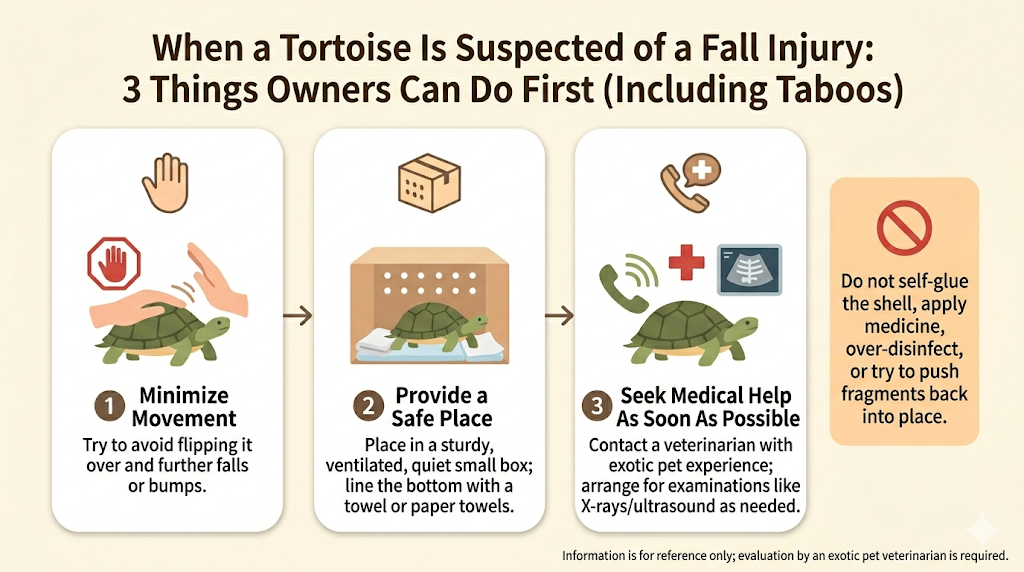
- Minimize Movement: Place the turtle in a stable, ventilated, and quiet box lined with towels or paper towels to prevent further injury.
- Avoid DIY Repairs: Do not attempt to glue the shell, apply excessive disinfectants, or push cracked pieces back into place, as this increases infection risks.
- Contact an Exotic Vet: Seek a professional evaluation involving digital X-rays or ultrasounds to determine the extent of internal damage.
Frequently Asked Questions (FAQ)
- Can turtles really climb out of their tanks? Yes. Given enough leverage from filters or stones, they are very capable of climbing over the rim.
- If there are no visible injuries after a fall, is the turtle okay? Not necessarily. Internal injuries or shell cracks may take hours or days to manifest symptoms. Observation and a veterinary checkup are recommended.
- Can I treat a cracked shell myself? This is not recommended. Shell fractures often involve underlying bone damage or infection that requires professional medical treatment.
- Are open-top tanks suitable? Only if they have a highly effective escape-proof design. For most homes, a secure mesh lid is much safer.
- What kind of vet should I visit? Consult a veterinarian experienced in “Exotics” or reptiles, as their anatomy and injury management differ significantly from cats and dogs.
CityVet Turtle Clinic
Cityvet is committed to providing outstanding comprehensive veterinary medical services, upholding the core values of “professionalism, care, and trust”. We aim to offer reasonably priced services, utilize advanced equipment, and provide detailed explanations of various treatment methods to owners, ensuring comprehensive medical care for every pet. To book a turtle clinic appointment, please call the Tsuen Wan clinic at 2623 5500 or the Yuen Long clinic at 2477 9990. Our addresses are: G/F, 186 Sha Tsui Road, Tsuen Wan / G/F, Fuk Shun Building, 25 Ping Wai Street, Yuen Long.
Disclaimer: This article provides general information only and is not a substitute for professional medical diagnosis. Please consult a veterinarian if you have concerns about your pet’s health.