
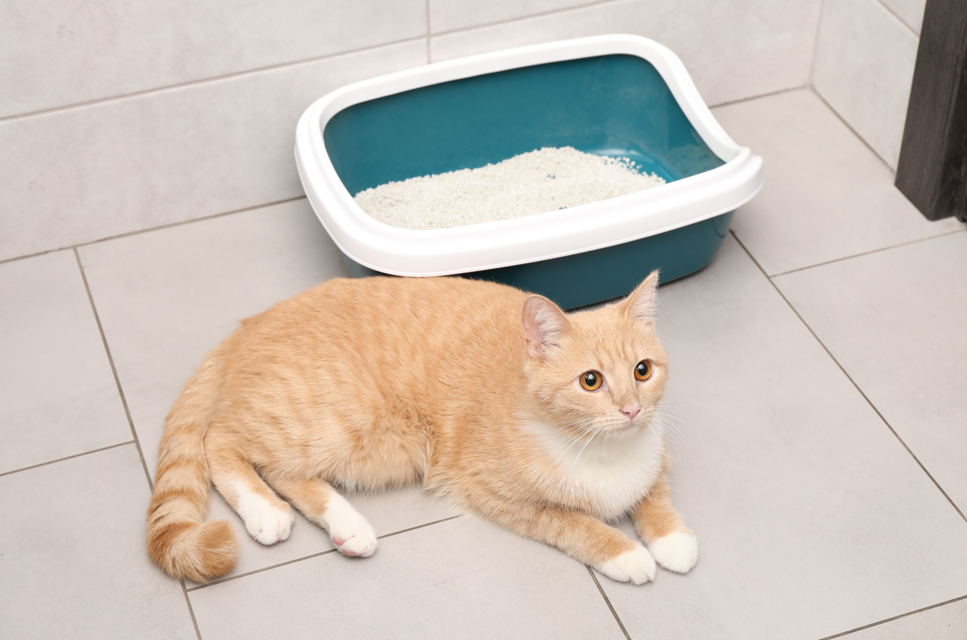
For cat owners, observing changes in the litter box is the most direct way to understand their cat’s health. If you notice your cat frequently entering and leaving the litter box, straining for a long time only to pass a few drops of urine, or even urinating inappropriately outside the box, this is by no means “naughtiness” but a strong warning sign of a feline urinary system problem. Feline Lower Urinary Tract Disease (FLUTD) is one of the most common reasons cats seek medical care in Hong Kong. If an internal medicine checkup is not conducted promptly, severe urinary tract obstruction can become life-threatening within 24 to 48 hours.
Underlying Reasons for a Cat’s Frequent Toilet Visits
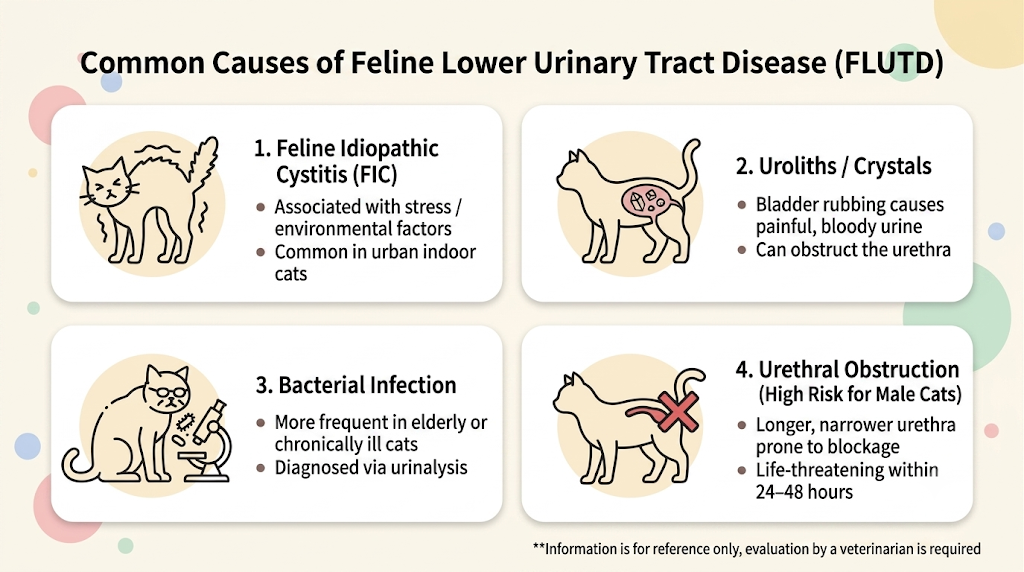
Urinary system problems in cats is a broad term encompassing various pathological conditions. Understanding the causes helps us address them more precisely:
Warning Symptoms of Feline Urinary System Problems
When cats experience discomfort during urination, they will exhibit the following clinical symptoms:
- Increased frequency of urination: Constantly entering and leaving the litter box, but passing an extremely small volume of urine each time.
- Difficulty urinating (Stranguria): Displaying abnormal straining postures, appearing to exert great effort when urinating, and sometimes emitting painful cries.
- Hematuria: The urine color appears pink, bright red, or contains blood streaks.
- Inappropriate urination: Because urination is accompanied by pain, cats may associate the “litter box” with “pain,” turning instead to soft sofas, carpets, or beds to urinate.
- Frequent licking of the genitals: Attempting to soothe localized discomfort or stinging sensations.
- Lethargy and vomiting: If a complete obstruction occurs, toxins accumulate within the body (uremia), causing the cat to become weak and vomit.
Professional Internal Medicine Examination and Diagnosis
When you bring your cat to the clinic, the veterinarian will perform a series of professional examinations to identify the root cause:
Urinalysis
This is the foundation of diagnosis. The veterinarian will check the urine specific gravity, pH value, and observe under a microscope for the presence of bacteria, red blood cells, white blood cells, or crystals. This helps determine whether the issue is simple inflammation or a stone problem.
Abdominal X-ray Examination
X-rays can effectively detect most types of urinary tract stones (such as calcium oxalate stones) and evaluate their position and size.
Abdominal Ultrasound Scan
Ultrasound allows for a more detailed observation of the bladder wall thickness, the presence of polyps, and minute crystals or structural abnormalities that cannot be visualized on X-rays. This is highly useful for diagnosing idiopathic cystitis.
Blood Tests
If a cat exhibits difficulty urinating, blood tests can evaluate kidney function parameters (such as BUN and creatinine) and electrolyte balance. Serum potassium levels are of particular concern, as urinary tract obstructions can lead to hyperkalemia, which hazards cardiac function.
Treatment Directions: How Will Your Veterinarian Help Your Cat?
The treatment plan depends on the underlying cause:
- Relieving Obstruction: If a urinary tract obstruction occurs, the veterinarian will first perform sedation/anesthesia and place a urinary catheter to relieve the blockage and flush the bladder. Hospitalization for an IV drip is typically required to metabolize toxins.
- Medication: This includes anti-inflammatory painkillers (to reduce bladder pain), smooth muscle relaxants (to minimize urethral spasms), or antibiotics (targeted at bacterial infections).
- Prescription Diets and Dietary Adjustments: The veterinarian may recommend switching to a urinary prescription diet to dissolve specific crystals and regulate urine pH.
- Increasing Water Intake: Diluting the urine is key to reducing crystal formation.
Prevention is Better Than Cure: How to Maintain Urinary Tract Health
- Drink More Water: Encouraging your cat to drink water is the top priority for prevention. You can use pet fountains, increase the proportion of wet food, or place water bowls in different corners.
- Reduce Stress: Maintain a regular daily routine, and provide sufficient hiding spaces as well as vertical activity zones. Utilizing feline pheromone products can also help soothe emotions.
- Environmental Hygiene: Ensure the litter box is clean. In principle, the number of litter boxes at home should follow the rule of “number of cats + 1”.
- Weight Management: Obese cats carry a higher risk of developing urinary tract diseases.
Critical Signals for Emergency Medical Attention
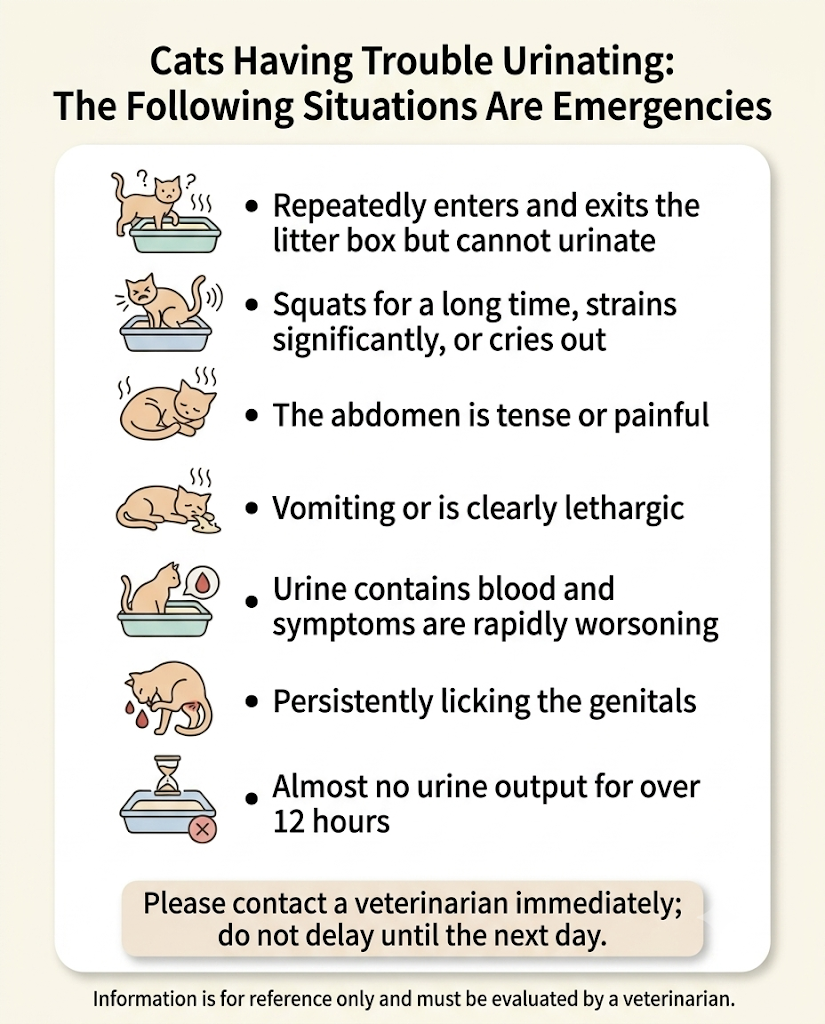
If your cat (especially a male cat) is completely unable to pass urine for more than 12 hours, screams when trying to urinate, vomits, or appears extremely weak, this constitutes a medical emergency. Please contact a veterinarian immediately; do not delay until the next day to avoid causing permanent kidney damage or life-threatening situations.
In CityVet, our medical team possesses extensive experience in handling various internal medicine emergencies. Based on the examination results, we will explain the condition and treatment options in detail to safeguard your beloved cat’s health alongside you.
Frequently Asked Questions
Why are male cats more prone to urinary tract obstruction than female cats?
The urethral structure of male cats is narrower and longer than that of female cats, and the distal end is particularly tight. This means that once minute crystals, blood clots, or inflammatory secretions appear in the bladder, they can easily become lodged in the urethra, resulting in complete obstruction. Therefore, if a male cat exhibits frequent urination or frequent straining in the litter box, owners must be extra vigilant.
Is a cat urinating inappropriately out of a bad mood or to seek revenge?
This is a common misconception. Cats do not urinate inappropriately out of revenge. Usually, inappropriate urination is due to physical discomfort (such as urgency or pain caused by cystitis) or feeling stressed about the current litter box environment. Treating inappropriate urination as a “cry for help” rather than “naughtiness” allows for early detection of urinary system problems.
As long as I switch to a urinary prescription diet, is there no need to worry about recurrence?
Prescription diets can effectively adjust urine composition and reduce crystal formation, serving as an important link in long-term management. However, idiopathic cystitis is closely linked to stress, and urinary stones can form again due to inadequate water intake. Therefore, in addition to diet, increasing water intake, reducing stress, and regular veterinary checkups are equally indispensable.
Does a cat passing blood in its urine definitely require antibiotics?
Not necessarily. Blood in the urine for many cats is caused by sterile inflammation due to idiopathic cystitis or stones, in which case antibiotics are not helpful. The veterinarian will perform a urinalysis to determine if a bacterial infection is present before deciding whether to use antibiotics. Blindly using antibiotics may lead to drug resistance issues.
CityVet Cat Internal Medicine Checkup
CityVet is committed to providing outstanding comprehensive veterinary care, guided by the core values of professionalism, compassion, and trust. We aim to offer reasonable fees, introduce advanced equipment, and explain treatment options clearly to pet owners, so that every pet receives full medical support. To book a cat internal medicine checkup consultation, please call our Tsuen Wan branch at 2623 5500 or our Yuen Long branch at 2477 9990. Address: G/F, 186 Sha Tsui Road, Tsuen Wan / Shop 2, G/F, Fuk Shun Building, 25 Ping Wui Street, Yuen Long.
Disclaimer
This article is for general information only and does not replace professional medical diagnosis. If you have any concerns, please book a veterinary examination as soon as possible.