
What is Pica? Why Do Pets Swallow Foreign Objects?
Pica refers to the repetitive consumption of non-food items (cloth, plastic, string, toys, etc.). Pica may be associated with anxiety, boredom, competitive/stealing behavior, or medical factors (such as chronic intestinal disease, nutritional problems). Research suggests that chronic intestinal disease can be a differential diagnosis for some cases of pica.
Why are Gastrointestinal Foreign Objects Dangerous?
They can cause intestinal blockage, perforation, peritonitis, and can be fatal in severe cases. Some foreign objects in the stomach can be removed with an endoscope; more severe cases require surgical removal. The sooner veterinary attention is sought, the lower the risk.
Linear objects or fabric (such as towels) are considered “linear foreign bodies”. These can cause the intestines to bunch up (plication), leading to ischemia and necrosis, often requiring resection of the affected segment of the intestine.
The Risk of “Pill Gun/Pet Piller” Rubber Tips Detaching
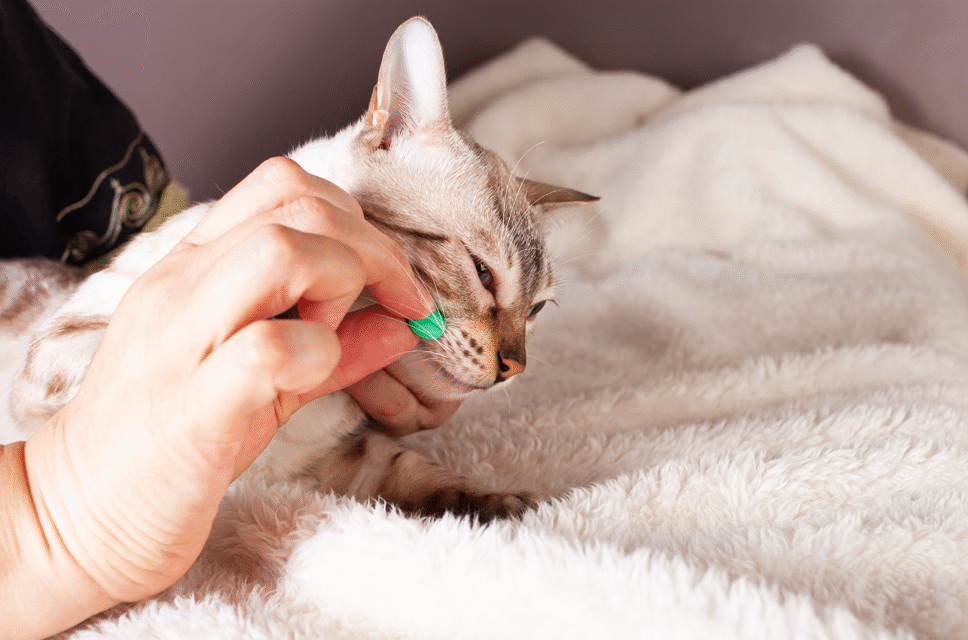
Recent literature reviews report that it is not uncommon for cats to swallow the detachable silicone tip of a pill gun during medication administration. Most cases require endoscopic removal under general anesthesia, while a few can be removed via induced vomiting or pass naturally. When purchasing, look for designs that cannot be easily detached and follow the correct usage instructions. If ingestion is suspected, seek medical attention immediately.
Symptoms and When to Seek Medical Attention
Symptoms include vomiting, drooling, restlessness, discomfort after meals, abdominal pain, no or small/dry/hard feces, or sudden anorexia/lethargy. If you suspect your pet has swallowed a towel, toy, linear object, rubber tip, or other foreign body, seek medical attention as soon as possible. Do not attempt to force-feed or pull the string at home.
Diagnosis and Treatment Procedures (Veterinary Clinic)
- Consultation and Physical Exam: Assess the time of ingestion, the type of object, and whether it is a linear foreign body.
- Imaging: X-rays/ultrasound; contrast studies or CT if necessary.
- Management:
- Stomach/Esophagus: Mostly removed endoscopically. Induced vomiting may be attempted after assessment in individual cases.
- Small Intestine Blockage/Perforation Risk: Surgical removal is preferred. Linear foreign bodies require inspection along the intestinal segment and may involve enterectomy and anastomosis.
- Complications: Dehydration, electrolyte imbalance, and peritonitis need to be addressed simultaneously.
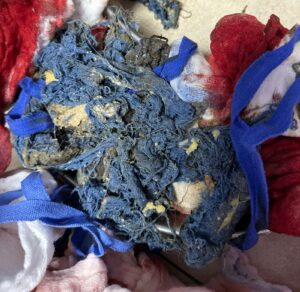
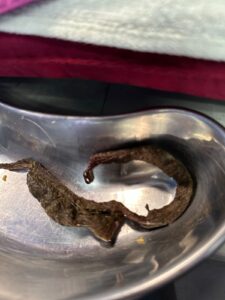
Case Study A (Large Dog | Pica leading to ingestion of “An Entire Towel”)
- Situation: Repeated vomiting after eating and lethargy. X-ray + ultrasound confirmed the towel was present in both the small intestine and the stomach.
- Veterinary Treatment: An exploratory laparotomy was performed under anesthesia, and the towel foreign body was removed from both the stomach and the small intestine. After the surgery, the dog was hospitalized for monitoring and rehabilitation as instructed and its condition was stable.
- Key Takeaway: Household fabric items (towels, rags, slippers) should be stored away. Pets with a history of pica require behavioral management and environmental enrichment.
Case Study B (Juvenile Cat | Ingestion of “Pill Gun Rubber Tip” during medication)
- Situation: Restlessness and mild drooling after being given medication.
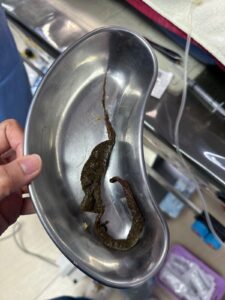
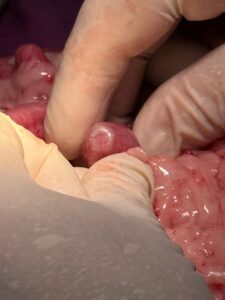
- Veterinary Treatment: X-ray + ultrasound imaging initially showed the silicone foreign body in the stomach. An exploratory laparotomy was performed under anesthesia, and the foreign body was found to have moved to the large intestine. The doctor, considering the high bacterial count in the large intestine and the greater likelihood of it passing naturally at that point, decided not to operate on the large intestine. The abdominal incision was sutured, and the cat was continuously monitored post-operation until it successfully passed the pill gun tip. The cat’s condition was stable.
- Key Takeaway: It is recommended to switch to non-detachable or locking-design pill guns and have two people cooperate during administration. Check the rubber tip for completeness before and after each use.
Prevention and Home Management
- Environmental Management: Store away fabric, strings, and plastic debris. Choose durable chew toys and replace them regularly.
- Behavioral and Medical Assessment: For pets with recurrent pica, a gastrointestinal and nutritional assessment is recommended. Behavioral training and stress reduction may also be necessary.
- Medication Safety: If a pill gun is needed, choose an integrated or non-easily detachable design. Check the parts before and after each use.
FAQ
- If my pet swallowed a small object but is still eating and drinking, can I observe it at home?
It is not recommended. Some foreign objects can move and suddenly block the digestive tract; linear foreign bodies are even more dangerous. Please seek veterinary attention as soon as possible. - What is the most dangerous aspect of towels or fabric?
Towels or fabric are “linear foreign bodies,” which can cause intestinal bunching, necrosis, and perforation. - Are pill guns always unsafe?
No; the risk mainly comes from the detachable rubber tip design and improper use. Choosing the right tool and checking the parts can significantly reduce the risk. - When can an endoscope be used, and when is surgery needed?
The treatment method depends on the foreign body’s “location, nature, size, and whether it is mobile.” In the two case studies above, surgery was performed or confirmed to determine the location and remove the object due to its location and nature. - Is pica related to health problems?
Possibly. Some cases are associated with chronic intestinal disease, so a gastrointestinal exam and nutritional assessment are recommended.
Cityvet Pica/Gastrointestinal Foreign Body Consultation
Cityvet is committed to providing outstanding comprehensive veterinary medical services, upholding the core values of “professionalism, care, and trust.” We aim to offer reasonably priced services, utilize advanced equipment, and provide detailed explanations of various treatment methods to owners, ensuring comprehensive medical care for every pet. Please call the Tsuen Wan clinic at 2623 5500 or the Yuen Long clinic at 2477 9990. Addresses: G/F, 186 Sha Tsui Road, Tsuen Wan / G/F, Fuk Shun Building, 25 Ping Wai Street, Yuen Long.
Disclaimer: This article provides general information only and is not a substitute for professional medical diagnosis. If you have any concerns, please schedule a veterinary appointment as soon as possible.