
Diet is key to a rabbit’s health, yet many owners fall into dietary traps due to a lack of understanding of nutritional needs—such as overfeeding fruits, using colorful mixed feeds, or giving human snacks. This article explores common dietary mistakes, analyzes the risks, and provides correct feeding recommendations.
Common Dietary Mistakes and Risks
- Excessive Fruit or Carrots: High sugar content can easily lead to obesity, GI stasis, and dental problems. Although carrots are popular, they are high in sugar and should only be fed occasionally in small amounts.
- Colorful Mixed Feed (Muesli): These contain grains, dried fruits, or seeds, which encourage picky eating and result in unbalanced nutrition; the high fat content in seeds can trigger hepatic lipidosis (fatty liver disease).
- Human Snacks or Bread: Salty or sugary snacks contain sugar and salt, which disrupt gut flora and increase the burden on the kidneys.
- Excessive Snack-type “Hay Products” (e.g., Hay Cubes, Hay Sticks): Many owners assume that because hay cubes and sticks are “made of hay,” they can be fed freely. However, they are mostly snacks or supplements, and some may contain starchy binders, sugar, or other additives. Long-term or excessive provision can easily lead to picky eating, reduced intake of staple hay, and increased calorie intake, affecting gastrointestinal stability and weight management.
- Lack of Hay: Hay provides fiber that stimulates gut motility and grinds down teeth. A lack of hay leads to overgrown teeth and GI stasis.
- Improper Watering Methods: Relying solely on a water bottle or failing to change the water bowl regularly can lead to unclean water sources.
Health Risks
- Gastrointestinal Issues: Excessive sugar and fat can imbalance gut flora, causing diarrhea, bloating, or GI stasis.
- Obesity and Liver Disease: High-sugar and high-fat diets lead to obesity, increasing the strain on the heart and liver.
- Dental Disease: Lack of fiber results in insufficient tooth wear, leading to overgrown teeth, sharp spurs, and malocclusion.
- Urinary Problems: Excessive carrots or spinach are high in calcium, which can easily lead to bladder stones.
Correct Dietary Advice
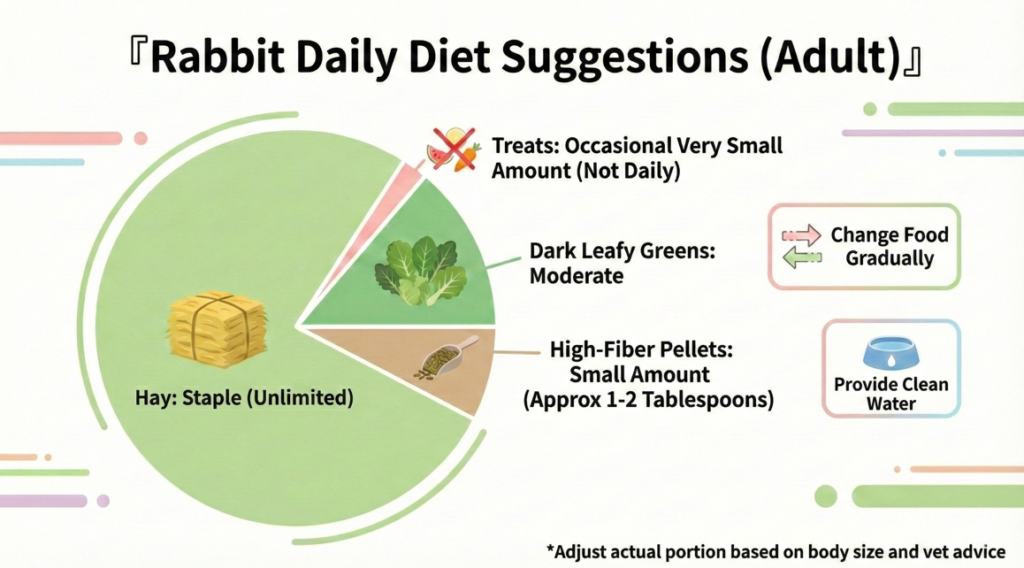
- Hay as the Staple: Provide unlimited Timothy hay, Orchard grass, or other high-fiber hays to promote gut motility and grind teeth.
- Moderate Pellets: Choose a single-formula high-fiber pellet diet, about 2 tablespoons per day; avoid colorful mixed feeds.
- Fresh Vegetables: Provide dark leafy greens (e.g., Choy Sum, Indian Lettuce, Cilantro) in moderation. If carrots and fruits are needed as rewards, follow the principle of “occasionally and in small amounts” (e.g., once a week or less) to avoid them becoming a daily habit.
- Treat Principles: Treat guidelines should be “occasional, extremely small amounts, and not daily.” Control not just fruits and snacks, but also treat hay cubes and sticks as snacks/supplements, not recommended for daily use. If used for interactive rewards, give only a “tiny amount” and deduct this from the daily pellet portion to prevent extra feeding from affecting hay intake.
- Water Management: Provide a clean water bottle or bowl, change the water daily, and clean the bottle regularly.
- Gradual Transition: When changing feed, mix old and new feed gradually to avoid sudden changes causing gastrointestinal upset.
Feeding Tips and Suggestions
- Fixed Schedule: Feed at the same time every day to help maintain regular gastrointestinal movement.
- Observe Droppings: Normal droppings should be pellet-shaped and dry. If soft or sticky stools are found, check the diet or seek medical attention.
- Control Treats: Only give small rewards during training or bonding to avoid habituating begging. Focus on small amounts of dark leafy greens and deduct from the daily pellet portion; avoid habitually providing fruits/snacks, and avoid treating hay cubes/sticks as “daily essentials.”
- Provide Chew Toys: Items like wooden blocks or hay ropes help grind teeth and reduce boredom.
Frequently Asked Questions (FAQ)
- Can I feed carrots every day? Not recommended. Carrots are high in sugar; a small amount once a week as a reward is sufficient.
- Is colorful mixed feed suitable for rabbits? No. Mixed feed easily leads to picky eating and nutritional imbalance; choosing a single-formula pellet feed is recommended.
- What if my rabbit’s water intake suddenly drops? It could be a gastrointestinal issue or a dirty water dispenser. Check the water source and observe appetite and droppings.
- Can I feed my rabbit bread or biscuits? Not recommended. Human snacks contain sugar, oil, and salt, which damage a rabbit’s gut health.
- Can hay cubes/sticks be given as a daily snack? Not recommended. Hay cubes and sticks are mostly snacks/supplements. Excess can cause picky eating, reduced hay intake, and increased calories. If used for interactive rewards, follow the “occasional, tiny amount, not daily” principle, and avoid products with added sugar or grains.
- How much feed is needed daily? Adult rabbits generally need only about 1–2 tablespoons of high-fiber pellets per day; the rest should be supplemented by hay and vegetables.
Cityvet Rabbit Clinic
Cityvet is committed to providing outstanding comprehensive veterinary medical services, upholding the core values of “Professionalism, Care, and Trust.” We aim to offer reasonable charges, utilize advanced equipment, and provide detailed explanations of various treatment methods to owners, ensuring comprehensive medical care for every pet.
Want to book an appointment for the Rabbit Clinic? Please call the Tsuen Wan branch at 2623 5500 or the Yuen Long branch at 2477 9990. Addresses: G/F, 186 Sha Tsui Road, Tsuen Wan / Shop 2, G/F, Fuk Shun Building, 25 Ping Wui Street, Yuen Long.
Disclaimer: This article provides general information only and is not a substitute for professional medical diagnosis. If you have any concerns, please schedule a veterinary appointment as soon as possible.