
Deciding whether to spay or neuter your beloved cat or dog is an important topic every owner will face. It’s not just about controlling the pet population; it also has a profound impact on their long-term health and behavior. Many people may have doubts about the surgical risks and post-operative care. This article will provide a comprehensive breakdown, covering the benefits of spaying/neutering, the best timing, the surgical procedure, potential risks, and the most important post-operative care, to help you make the wisest decision for your pet.
What is Spay/Neuter Surgery? (Male vs. Female)
Spay/neuter surgery is a general term, and the specific procedure varies by gender:
- Spaying (Female): The formal name is “ovariohysterectomy,” and the surgery involves removing both the ovaries and the uterus.
- Neutering (Male): The formal name is “orchiectomy,” and the surgery involves removing both testicles.
Both are routine surgical procedures performed under general anesthesia.
Why Should You Consider Spaying or Neutering Your Cat or Dog? A List of 8 Major Benefits
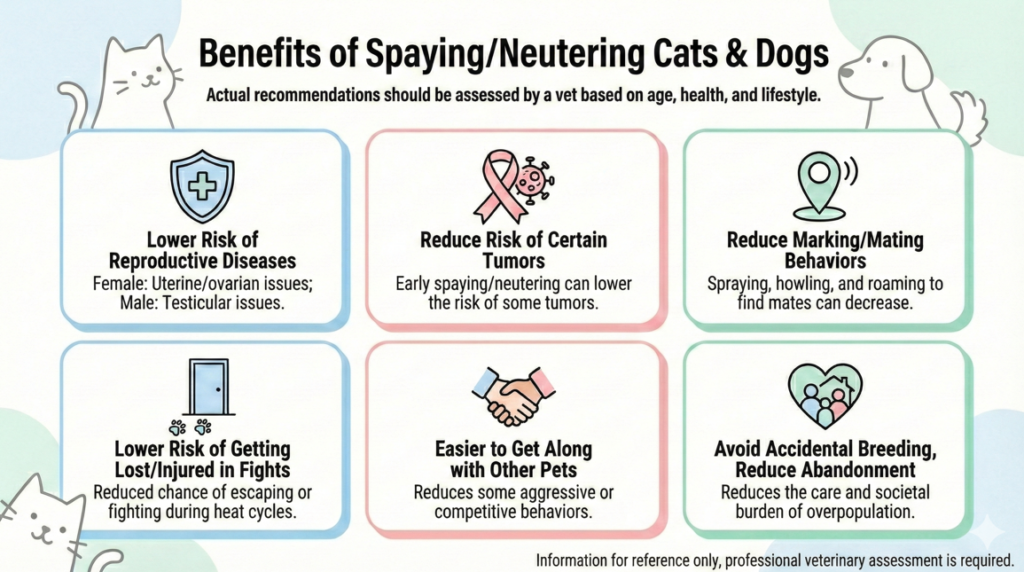
The benefits of spaying or neutering your pet go far beyond preventing reproduction.
- Preventing Serious Diseases
- Female Animals: It can significantly reduce the risk of mammary tumors (especially when spayed before the first heat) and can completely eliminate the risk of pyometra, ovarian cancer, and uterine cancer.
- Male Animals: It can prevent testicular cancer and significantly reduce the chance of prostate-related diseases (such as prostate inflammation and benign enlargement) in old age.
- Improving Behavioral Problems
- Reducing Marking: Unneutered male cats and dogs will spray urine to mark their territory, and this behavior is greatly reduced after neutering.
- Lowering Aggression: Male hormones are related to aggressive behavior, and neutering helps reduce fighting caused by territory or dominance.
- Eliminating Heat Cycle Troubles: Female cats and dogs in heat will howl and be restless, and may attract nearby male animals. Spaying can save them and their owners from these troubles.
- Reducing Running Away: Spayed or neutered pets are much less likely to try to run away from home in search of a mate.
- Preventing Unintended Pregnancies The birth of a litter of puppies or kittens not only requires a huge investment of time, effort, and money from the owner, but also adds to the burden on animal shelters. Spaying and neutering is the most direct and humane way to solve the problem of pet overpopulation.
- Extending Your Pet’s Lifespan Studies show that spayed or neutered cats and dogs have a relatively longer average lifespan because they have a lower risk of getting certain cancers and being in accidents (like fights or car accidents).
The Best Time for Spay/Neuter Surgery
It is generally recommended to spay or neuter a pet before it reaches sexual maturity, usually around 6 months of age. However, the best timing may vary depending on the breed, size, and individual health status. For example, the timing for spaying or neutering large breed dogs may require further discussion with a veterinarian. At Cityvet, our veterinary team will conduct a detailed evaluation of your pet and provide the most personalized professional advice.
The Spay/Neuter Surgical Procedure: From Pre-Op Check to Recovery
A safe and smooth spay/neuter surgery relies on a strict procedure.
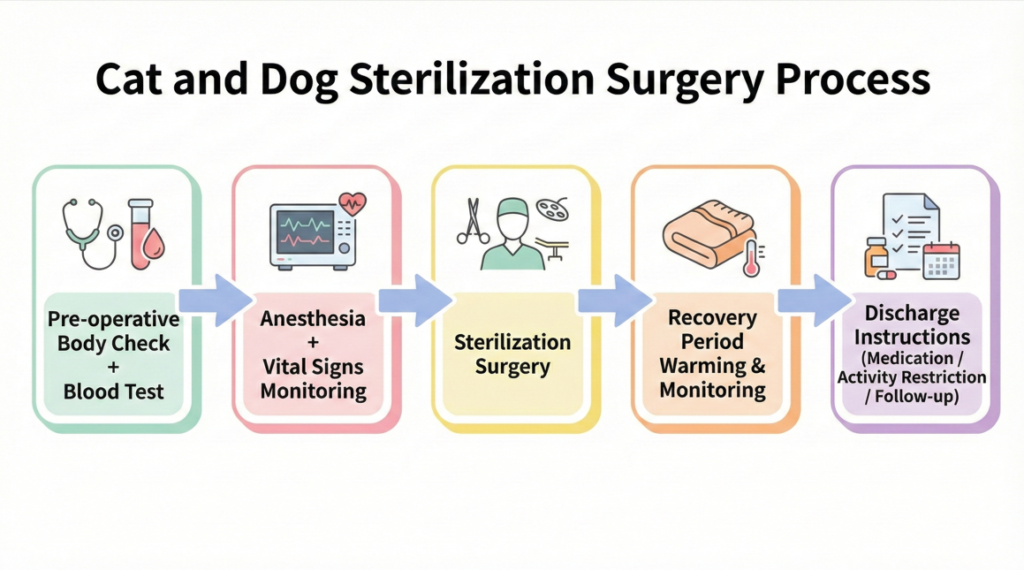
- Step 1: Pre-Op Physical Exam and Blood Test: Before the surgery, the vet will perform a detailed physical exam to ensure the pet is suitable for anesthesia. We also highly recommend a pre-op blood test to evaluate liver and kidney function, red and white blood cell count, etc., to minimize the risk of anesthesia.
- Step 2: Anesthesia and Monitoring: The entire surgery will be performed under strict anesthesia monitoring. We will use advanced equipment to continuously monitor the pet’s vital signs, such as heart rate, blood pressure, blood oxygen, and body temperature.
- Step 3: Surgical Procedure: The surgery is performed by an experienced veterinary team in a sterile environment. We will use intravenous fluids (saline drip) to maintain blood pressure and hydration and provide appropriate pain management.
- Step 4: Waking Up and Post-Op Observation: After the surgery, the pet will be moved to a quiet and comfortable recovery area where it will be closely monitored by a nurse until its condition is stable.
Surgical Risks and Common Complications
There is a certain risk with any anesthesia and surgery, but for healthy pets, the risk of spay/neuter surgery is very low. Potential risks include a reaction to the anesthetic, bleeding, infection, or poor wound healing. Choosing a veterinary clinic with complete equipment and a professional team can minimize these risks.
At-Home Post-Op Care Guide
The 10-14 days after the surgery are a critical period for recovery, and the owner’s careful care is essential.
- 1. Restrict Activity:
Avoid strenuous activities like running, jumping, or going up and down stairs to prevent the wound from opening. You must use a leash when walking outdoors.
- 2. Protect the Wound (The Importance of an E-Collar):
You must put an Elizabethan collar on your pet, or have it wear a protective suit, to strictly prevent it from licking or biting the wound. This is the most common cause of inflammation and infection.
- 3. Observe Appetite and Energy Level:
On the day of the surgery, the pet may have a poor appetite or be drowsy due to the effects of the anesthetic, which is normal. If this continues for more than 24 hours, or if you find the wound is abnormally red, swollen, oozing, or bleeding, please contact us immediately.
- 4. Medication Management:
You must give your pet the pain medication and antibiotics (if needed) as prescribed by the veterinarian and on time.
Frequently Asked Questions (FAQ)
Q1: Will my pet get fat after being spayed or neutered?
A1: Spaying or neutering will slow down a pet’s metabolism. The main cause of obesity is consuming too many calories and not expending enough. The owner just needs to moderately adjust the amount of food given (or switch to a food for spayed/neutered pets) and maintain a sufficient amount of exercise to effectively control the pet’s weight.
Q2: Does the surgical wound need to have stitches removed?
A2: This depends on the type of suture the veterinarian uses. Many surgeries now use absorbable inner sutures that do not need to be removed. If non-absorbable sutures are used, the pet will need to return to the clinic to have them removed about 10-14 days after the surgery. Our veterinarian will clearly inform you about this.
Q3: Can a pet be spayed or neutered while in heat?
A3: It is technically possible, but we do not recommend it. During the heat cycle, the blood vessels around the uterus and ovaries are engorged and swollen, which increases the risk and complexity of the surgery. It is best to wait until the heat cycle is over before scheduling the surgery.
Q4: Will spaying or neutering change my pet’s personality?
A4: Spaying and neutering mainly changes behaviors influenced by hormones, such as aggression, urine spraying, and roaming. The pet’s original personality, such as being affectionate or lively, will not change because of it. Many owners even feel that their pet’s personality becomes gentler and more focused on the family after spaying or neutering.
Make a Wise Choice for Your Pet’s Long-Term Health
Cityvet is committed to providing outstanding comprehensive veterinary medical services, upholding the core values of “professionalism, care, and trust.” We aim to offer reasonably priced services, utilize advanced equipment, and provide detailed explanations of various treatment methods to owners, ensuring comprehensive medical care for every pet.
To book a spay/neuter consultation, please call the Tsuen Wan clinic at 2623 5500 or the Yuen Long clinic at 2477 9990. Addresses: G/F, 186 Sha Tsui Road, Tsuen Wan / G/F, Fuk Shun Building, 25 Ping Wai Street, Yuen Long.
Disclaimer: This article provides general information only and is not a substitute for professional medical diagnosis. If you have any concerns, please schedule a veterinary appointment as soon as possible.