

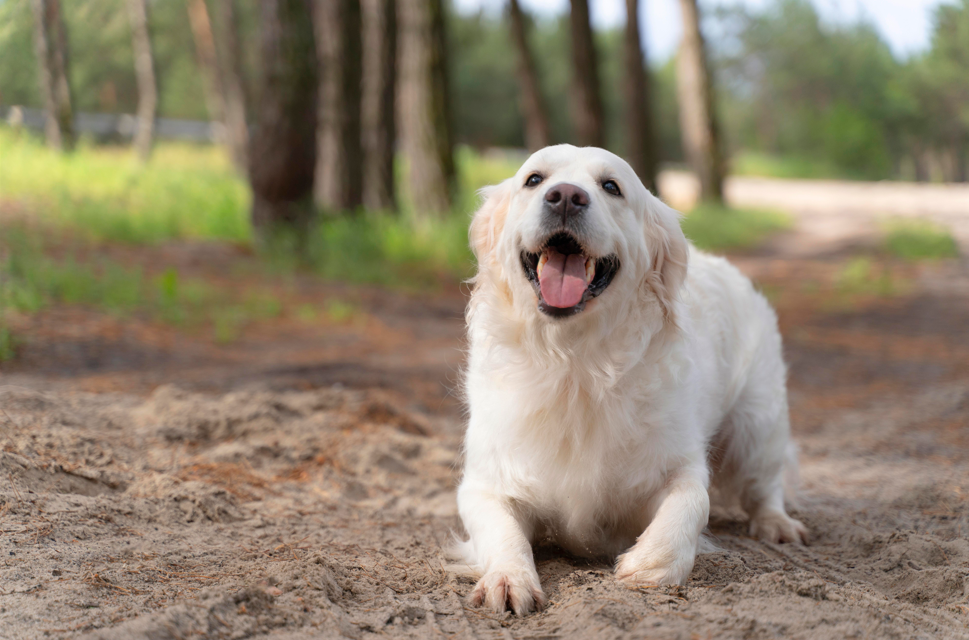
Hong Kong summers are hot and humid, and dogs rely only on panting to dissipate heat, making it harder for them to cool down than humans. Once heatstroke occurs, organ damage or life-threatening situations can arise within a short time. Owners who know how to identify signs early, perform correct first aid, and prevent it can significantly reduce the risk.
Why are dogs particularly prone to heatstroke?
- They rely on “panting” rather than sweating to dissipate heat, which has low cooling efficiency.
- Breeds with thick coats or short noses (such as Pugs and French Bulldogs) have narrower airways and find it harder to dissipate heat.
- In enclosed car cabins, stuffy corridors, or on hot asphalt roads, the temperature can be far higher than the perceived temperature.
- Dogs with high activity levels, excitement, obesity, or cardiopulmonary diseases are at higher risk.
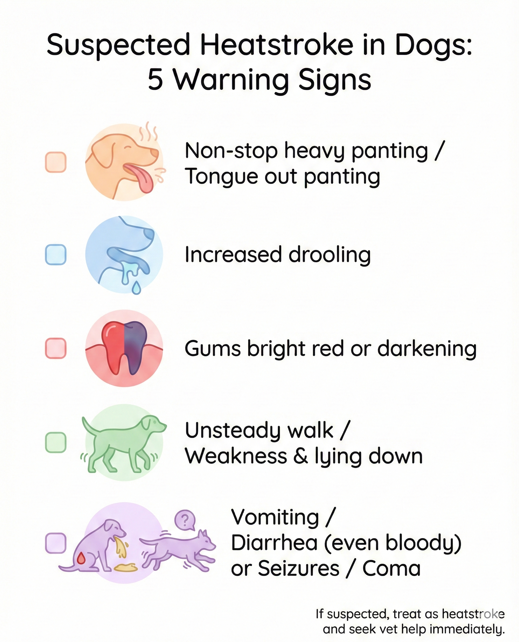
Common Symptoms of Dog Heatstroke Be highly alert if one or more of the following appear:
- Heavy panting, tongue extended and panting without stopping.
- Increased drooling, oral mucous membranes turning bright red or dark.
- Unsteady gait, weakness, lying down and refusing to get up.
- Vomiting, diarrhea, or even blood in stool/vomit.
- Confusion, convulsions, or coma. If in doubt, it is better to treat it as heatstroke and seek medical attention as soon as possible; do not wait for it to “get better on its own.”
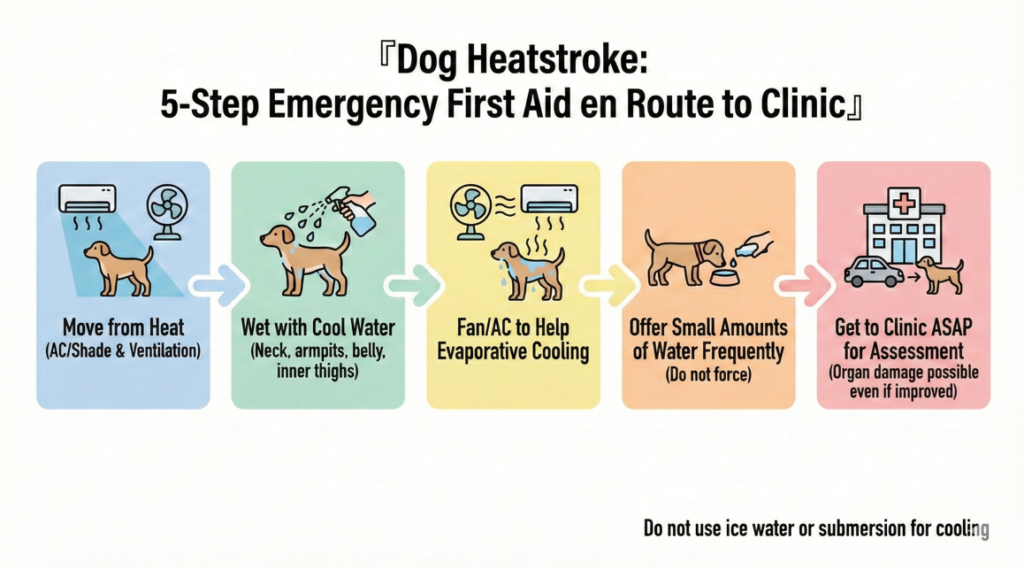
First Aid Steps for Dog Heatstroke (Perform while en route to the hospital)
- Immediately remove from the high-temperature environment: Move to an air-conditioned or ventilated, shaded area.
- Gentle cooling, do not use ice water: You can use slightly cool water (not ice water) to wet the body, focusing on the side of the neck, armpits, inner abdomen, and inner thighs.
- Fan or Air Conditioning to assist heat dissipation: Help evaporation to cool down, but avoid blowing directly at the head for too long.
- Provide small amounts of fresh water: Let them drink small amounts of water frequently; do not force water down, to avoid it entering the trachea.
- Arrange medical attention as soon as possible: Even if the dog seems to improve, there may still be hidden organ damage (such as to the kidneys or brain), so assess at a veterinary clinic as soon as possible.
Things NOT to do
- Do not use ice water directly or apply ice packs to the whole body, to avoid rapid vasoconstriction affecting heat dissipation.
- Do not submerge the dog completely in water, especially when consciousness is unclear, as it is easy to choke on water.
- Do not wait all night or until the next day to see a doctor.
Examinations and Treatments Vets May Perform
- Measure body temperature, heart rate, breathing, and blood pressure.
- Blood tests (kidney function, liver function, electrolytes).
- Intravenous fluids and electrolyte adjustment.
- Monitoring urine output and neurological status.
- Arrange hospitalization for observation and further treatment if necessary.
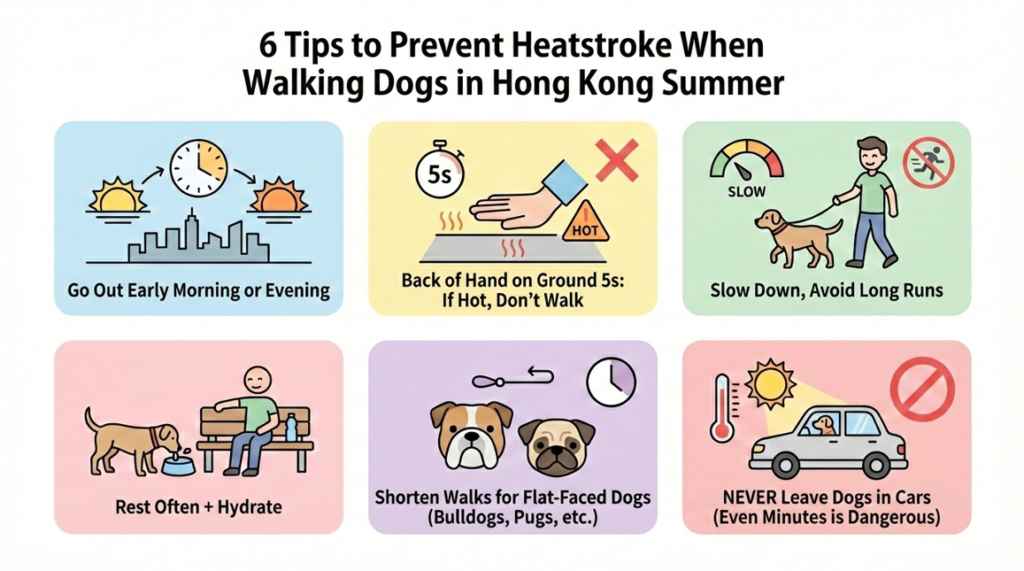
Hong Kong Summer Walking Safety Guide
- Time Selection: Switch to early morning or dusk, avoiding the periods when the sun is strongest at noon and in the afternoon.
- Ground Temperature: Asphalt and floor tiles are much hotter than the air; before going out, place the back of your hand on the ground for 5 seconds—if it feels hot, it means it is too hot for the dog’s paws.
- Walking Pace: Slow down and avoid long-distance running; arrange more rest and water stops during outings.
- Special Attention for Short-Nosed Dogs: Short-nosed breeds like Pugs, French Bulldogs, Shih Tzus, and Boston Terriers are advised to have shorter outings, more rest, and carry water with them.
- Never leave the dog in the car: Even if the window is left open a crack, and even if it is just for “a few minutes,” the temperature in the car cabin can soar rapidly.
Home and Daily Prevention
- Provide plenty of fresh water and multiple water bowl locations.
- Keep the indoors ventilated or turn on air conditioning and fans.
- Provide shaded rest areas; outdoor dogs need shade and ventilation.
- Summer grooming can involve moderate trimming, but avoid shaving too short to prevent sunburn.
- For elderly, obese dogs, or those with a history of cardiopulmonary disease, discuss suitable summer exercise levels and check-ups with a veterinarian.
FAQ
- How to tell the difference between heatstroke and normal panting?
If the dog is still panting heavily, has a red tongue, deteriorates in spirit, or has an unsteady gait after resting in a cool place for a while, heatstroke should be suspected. - Does the dog need a follow-up visit if it fully recovered from heatstroke?
It is recommended to follow the vet’s arrangement for follow-up checks on blood and organ function, as some damage may appear later. - Can short-nosed dogs swim to cool down in summer?
There may be a risk of drowning, requiring strict supervision and appropriate protective equipment; suitability should be assessed by a veterinarian and professional trainer. - Will they be more prone to heatstroke again after having it once?
It is possible. Dogs with a history of heatstroke need extra care in summer, and exercise levels should be conservative. - Can cooling vests or ice pillows be used?
They can serve as aids, but cannot replace a cool environment and sufficient water intake.
Cityvet Dog Clinic
Cityvet is committed to providing outstanding comprehensive veterinary medical services, upholding the core values of “professionalism, care, and trust,” providing reasonable charges, introducing advanced instruments, and explaining treatment methods in detail to owners to provide comprehensive medical care for every pet. Want to book an appointment for the dog clinic? Please call the Tsuen Wan branch at 2623 5500 or the Yuen Long branch at 2477 9990. Address: G/F, 186 Sha Tsui Road, Tsuen Wan / Shop 2, G/F, Fuk Shun Building, 25 Ping Wui Street, Yuen Long.
Disclaimer: This article provides general information only and cannot replace professional medical diagnosis. If in doubt, please book a veterinary examination as soon as possible.