

Common Pet Poisoning List: Chocolate, Grapes, Lilies, etc. (First Aid Principles)
Seemingly ordinary snacks and flowers in the home can be fatal poisons for dogs and cats. Understanding common sources of poisoning and first aid principles helps reduce the occurrence of tragedies.
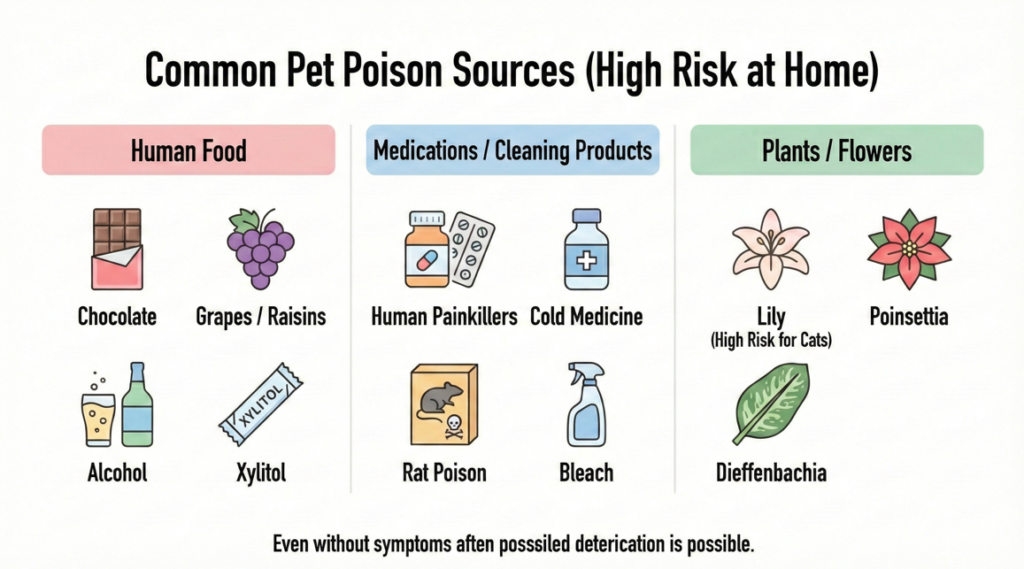
Common Poisoning Sources (1): Human Food
- Chocolate and Cocoa Products: Contain theobromine and caffeine, causing vomiting, diarrhea, rapid heartbeat, tremors, convulsions, etc. Dark chocolate has higher toxicity.
- Grapes and Raisins: Can cause acute kidney injury in some dogs; even small amounts may carry risks.
- Alcohol and Alcohol-containing Foods: Can cause central nervous system depression, hypoglycemia, and hypothermia.
- Products with Sweeteners (like Xylitol): Certain sugar substitutes can cause hypoglycemia in dogs, seriously leading to liver damage.
Common Poisoning Sources (2): Medications and Cleaning Supplies
- Human Painkillers/Cold Medicine: A small pill can be a fatal dose for dogs and cats. Never administer them yourself.
- Rat Poison/Insecticides: Have serious effects on blood coagulation and the nervous system.
- Household Cleaners, Bleach: Accidental drinking or licking residual foam can irritate the mouth and stomach.
Common Poisoning Sources (3): Plants and Flowers
- Lilies (Especially for Cats): Inhaling pollen, licking pollen off fur, or chewing leaves can all cause kidney damage.
- Poinsettia, Dieffenbachia, Orchids, etc.: Varying degrees of oral/gastrointestinal irritation or other toxic reactions.
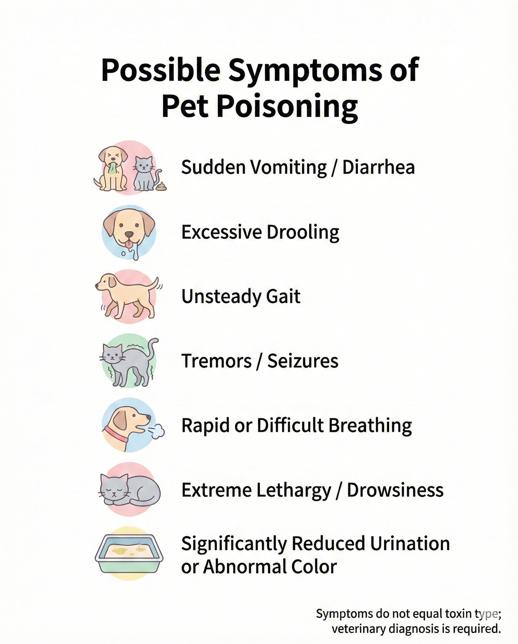
Possible Symptoms of Poisoning
- Sudden vomiting, diarrhea, or drooling.
- Unsteady gait, trembling, convulsions.
- Rapid or difficult breathing, abnormal heartbeat.
- Extremely poor spirit, drowsiness, coma.
- Significantly reduced urine or abnormal color.
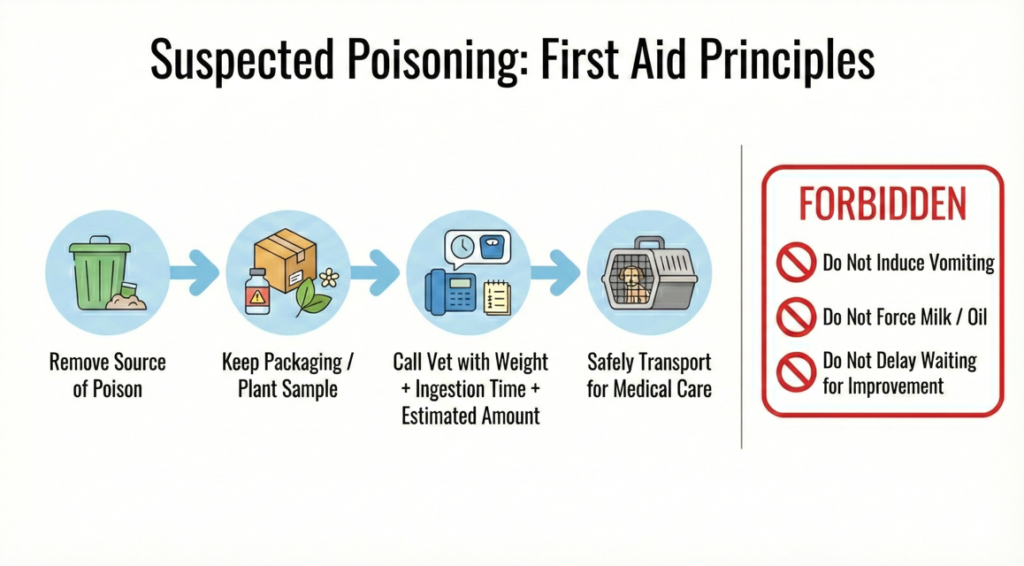
First Aid Principles When Suspecting Pet Poisoning
- Immediately remove the poison source: Remove remaining food or plants to avoid contact by other pets.
- Keep packaging or plant samples: Bring them to the clinic for the doctor to judge ingredients and dosage.
- Do not induce vomiting or force-feed milk/oil yourself: Some poisons are not suitable for induced vomiting; incorrect handling increases risk.
- Contact the veterinary clinic as soon as possible: Inform them of breed, weight, contact time, and possible amount ingested to allow medical staff to prepare.
- Monitor breathing and consciousness: Keep warm and stable on the way; be extra careful with transport safety if there are seizures or difficulty breathing.
Possible Hospital Treatments
Depending on the type of poison, intake time, and clinical symptoms, treatments may include:
- Inducing vomiting, gastric lavage, or administering activated charcoal (vet judges suitability).
- Intravenous fluid support, monitoring blood pressure and urine output.
- Blood tests and imaging to assess liver/kidney function and risk of internal bleeding.
- Symptomatic treatment (anti-vomiting, anti-convulsant, protecting gastric mucosa, etc.).
- Hospitalization for observation for several days to a week or more if necessary.
Prevention: Simple Home Safety Checklist
- Do not use pets as tools to “clean up leftovers.”
- Place all medicines, cleaners, and insecticides out of reach of pets.
- Before buying bouquets, check if they contain high-risk plants like lilies, especially avoiding them if there are cats at home.
- Educate family and children not to randomly feed “human snacks” to pets.
FAQ
- A small piece of chocolate fell on the floor and the dog ate it; does it need to see a doctor?
Depending on the type and intake amount, it is recommended to call the vet providing weight, breed, chocolate type, and approximate grams for the doctor to assess risk. - The cat licked lily pollen but looks normal; can I observe first?
It is recommended to seek medical attention as soon as possible and inform them of the plant type, as kidney damage may appear later. - Can I induce vomiting at home myself?
Not recommended. Inducing vomiting requires professional judgment on suitability and should be done in a safe environment. - The dog ate grapes but a whole day has passed; is a check-up still needed?
When there is a risk of poisoning, regardless of how much time has passed, it is still recommended to check blood and kidney function as soon as possible. - Can milk or egg whites “detoxify”?
No single food applies to all poisons; improper handling may delay correct treatment.
Cityvet Pet Clinic
Cityvet is committed to providing outstanding comprehensive veterinary medical services, upholding the core values of “professionalism, care, and trust,” providing reasonable charges, introducing advanced instruments, and explaining treatment methods in detail to owners to provide comprehensive medical care for every pet. Want to book an appointment? Please call the Tsuen Wan branch at 2623 5500 or the Yuen Long branch at 2477 9990. Address: G/F, 186 Sha Tsui Road, Tsuen Wan / Shop 2, G/F, Fuk Shun Building, 25 Ping Wui Street, Yuen Long.
Disclaimer: This article provides general information only and cannot replace professional medical diagnosis. If in doubt, please book a veterinary examination as soon as possible.