


Skin problems are one of the most common reasons for vet visits for pets. From general allergic dermatitis to severe parasitic and endocrine diseases, skin issues affect the quality of life for dogs, cats, and exotic pets.
Types and Causes of Skin Diseases
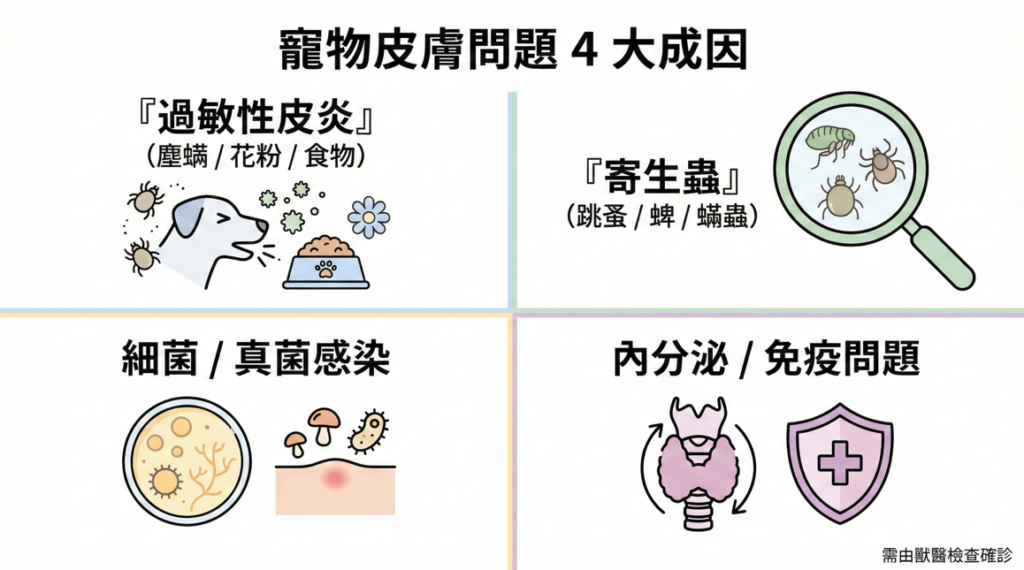
- Allergic Dermatitis: Caused by environmental allergens (dust mites, pollen), food, or contact with certain substances. Symptoms in dogs and cats include itching, rashes, and licking or scratching.
- Parasitic Infections: Fleas, ticks, and mites can all infest the skin, causing severe itching, hair loss, and dermatitis. Exotic pets like hedgehogs and rabbits are also prone to mite infestations.
- Bacterial and Fungal Infections: Folliculitis and fungal skin infections (like ringworm) can cause red, swollen skin, rashes, hair loss, and a foul odor. They often result from a secondary infection after the skin is broken from scratching.
- Endocrine or Immune Diseases: Conditions like hypothyroidism, Cushing’s disease, or over-bathing can lead to a loss of protective oils, causing dry skin and brittle hair.
- Nutritional Imbalances and Stress: A lack of essential fatty acids or vitamins, or long-term stress, can also weaken the immune system and cause skin diseases.
Symptom Identification and When to Seek Medical Attention Common symptoms of skin diseases include:
- Persistent itching, or licking and scratching a specific area or the entire body.
- Localized or widespread hair loss, or thinning hair.
- Red, swollen skin, papules, blisters, or scabs.
- A foul odor, oily skin, or dry flakes.
If skin problems persist for more than a few days, or are accompanied by a loss of appetite or fever, you should take your pet to the vet immediately.
Diagnosis Procedures and Treatment
- Consultation and Physical Examination: The vet will ask about diet, living environment, medication history, and recent lifestyle changes. They will observe the skin condition and the pet’s overall health.
- Skin Scraping and Microscopic Examination: Used to test for parasites or bacteria and fungi.
- Fungal and Bacterial Cultures: To confirm the type of infection and choose the appropriate antibiotics or antifungal medication.
- Allergy and Food Trials: To rule out or find potential allergens.
- Blood and Endocrine Tests: To evaluate thyroid or adrenal function.

Treatment depends on the cause of the disease and may include topical creams, oral antibiotics or antifungal medications, or injections for parasites or immune-modulating drugs. Severe cases may require long-term management. At the same time, owners need to cooperate by improving environmental hygiene, adjusting their pet’s diet, and reducing stress.
Prevention and Home Care
- Balanced Diet: Choose high-quality food and increase essential fatty acids and vitamins. Avoid feeding high-fat or high-sugar treats.
- Regular Parasite Control and Protection: Use regular topical or oral parasite medication as recommended by a vet to prevent fleas and ticks.
- Keep the Environment Clean: Regularly vacuum and wash pet beds and toys. Use non-aromatic bedding or cleaning agents with low allergen content.
- Appropriate Bathing and Grooming: Dogs and cats should be bathed every one to several months (depending on the breed and living environment). Avoid over-cleaning. Exotic pets like rabbits and hedgehogs usually do not need water baths.
- Stress Reduction and Activity: Provide toys, companionship, and appropriate exercise to reduce anxiety or boredom-induced scratching and biting.
Frequently Asked Questions (FAQ)
- My dog keeps licking its paws, is it a skin disease? It could be an allergy, parasites, or pain. If the licking and biting are persistent and accompanied by redness and swelling, you should see a vet as soon as possible.
- What should I do if my cat is losing hair in patches? Localized hair loss could be a fungal or mite infection. A skin scraping and a vet’s prescribed treatment are needed.
- Do exotic pets also need topical medication? Yes. If exotic pets like hedgehogs or rabbits have a parasitic or fungal infection, they should use topical or oral medication as prescribed by a vet.
- Is an allergy test necessary? If the skin problems are recurrent or cannot be diagnosed for a long time, an allergy test can find potential allergens.
- Can a change of season or diet cause skin disease? Yes. Seasonal changes and dietary changes can lower immunity or cause allergies. Be sure to make gradual adjustments and observe the reaction.
Cityvet Pet Skin Disease Clinic Cityvet is committed to providing outstanding comprehensive veterinary medical services, upholding the core values of “professionalism, care, and trust”. We aim to offer reasonably priced services, utilize advanced equipment, and provide detailed explanations of various treatment methods to owners, ensuring comprehensive medical care for every pet. To book a pet skin disease clinic appointment, please call the Tsuen Wan clinic at 2623 5500 or the Yuen Long clinic at 2477 9990. Our addresses are: G/F, 186 Sha Tsui Road, Tsuen Wan / G/F, Fuk Shun Building, 25 Ping Wai Street, Yuen Long.
Disclaimer: This article provides general information only and is not a substitute for professional medical diagnosis. If you have any concerns, please schedule a veterinary appointment as soon as possible.