

Snakes and lizards are exotic pets that can be difficult to notice when they are sick. Their parasite problems often worsen due to owner negligence. Hong Kong’s humid climate and certain living conditions can easily lead to reptiles becoming infected with internal and external parasites. This article will introduce common types of parasites, how they are transmitted, symptoms, and the treatment process. It will also provide advice on prevention and how to improve the living environment.
Common Types of Parasites
- Internal Parasites: These include roundworms, whipworms, and protozoa (such as flagellates and coccidia). They live in the intestines or internal organs, causing weight loss, loss of appetite, diarrhea, or constipation.
- External Parasites: These include ticks, lice, and mites, which live on the skin or between scales. They cause red, swollen skin, damaged scales, and even secondary bacterial infections.
- Protozoa: Protozoa like liver flukes may be present in unclean raw food and can cause liver damage.
Transmission and Risk Factors
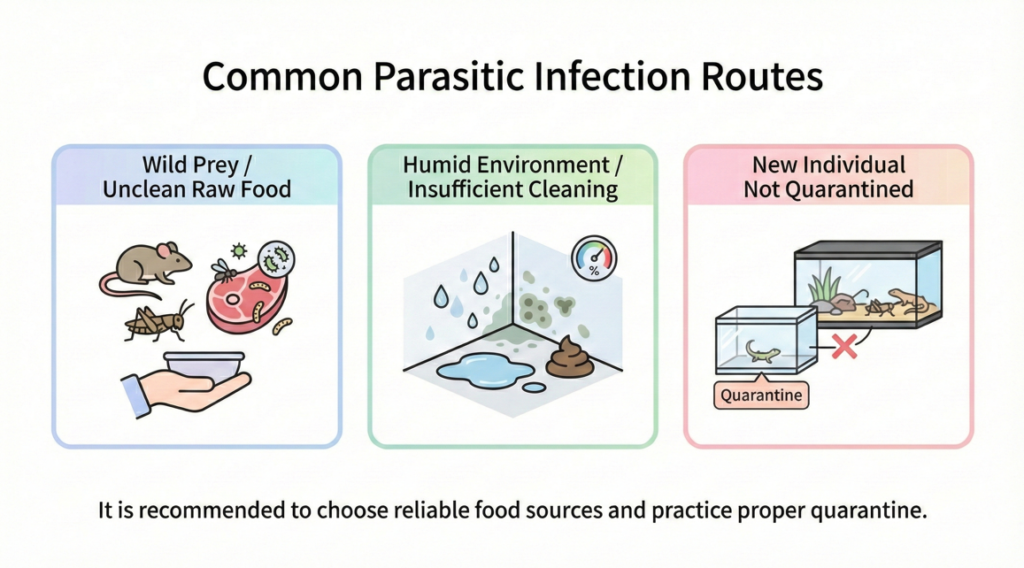
- Wild Food: Feeding wild-caught insects or mice may introduce parasites. It is recommended to use live or frozen food from a breeder.
- Poor Environmental Hygiene: A damp and unclean cage is a breeding ground for external parasites.
- Insufficient Quarantine: Newly introduced animals that are not quarantined and checked can easily transmit parasites to other reptiles.
Symptoms and When to Seek Medical Attention Internal parasite infections often have no obvious signs until weight loss, abnormal bowel movements, or regurgitation is noticed. External parasites cause intense scratching, scale loss, red and swollen skin, or scabs. If you notice your snake or lizard refusing to eat, being lethargic, having muscle weakness, rapid breathing, or blood in its feces, you should take it to a vet for a check-up as soon as possible.
Hong Kong Reptile Clinic Examination Process
- Consultation and Environmental Questions: The vet will ask about the living environment, feeding methods, temperature and humidity management, and past medical history.
- Physical Examination: This includes measuring weight, checking the skin and scales, listening to its breathing, and palpating.
- Fecal Examination: A microscope is used to check for parasite eggs or protozoa in the feces.
- Skin Scraping: To check for external parasites and fungi.
- Blood Tests and Imaging: If an internal parasite problem is suspected, blood tests, X-rays, or an ultrasound will be done.
Treatment will involve oral or topical medication based on the type of parasite. During treatment, the cage must be thoroughly cleaned and disinfected, the bedding replaced, and the sick animal quarantined.
Prevention and Care Advice
- Control Food Source: Choose live or frozen food from experienced breeders. Avoid wild-caught food.
- Environmental Hygiene: Regularly replace bedding and clean food and water bowls. Maintain an appropriate temperature and humidity.
- Quarantine: Newly introduced animals should be quarantined for at least 4 weeks. Only put them with other animals after they are confirmed to be healthy.
- Regular Check-ups: It is recommended to have a fecal test at least once a year to detect parasite problems early.
- Avoid Cross-Contamination: Use separate tools to feed different animals to avoid transmission.
- Nutrition & Vitamins: A balanced diet and sufficient vitamins improve immunity and recovery. A stronger body is better equipped to resist parasites, lowering the risk of infection and recurrence.
Frequently Asked Questions (FAQ)
- If my snake isn’t eating, does it mean it has a parasite infection? Not necessarily. It could also be due to an inappropriate temperature, shedding period, or stress. If it refuses to eat for a long time and is losing weight, you should have it checked for parasites.
- Can I buy deworming medication for my snake or lizard myself? It is not recommended. Reptiles are sensitive to medication, so you should use the correct medication and dosage as directed by a veterinarian.
- Can external parasites be transmitted to humans? Some external parasites and ticks can carry diseases. You should wash your hands and clean the environment after handling sick reptiles.
- How can I avoid feeding parasites to my pet? Choose breeder-raised and tested food, and avoid feeding wild-caught animals.
- Is one check-up a year enough? If the environment is clean and the food source is safe, one check-up a year is sufficient. If you often take your pet outside or feed it live food, you should consider a check-up every six months.
Cityvet Snake, Lizard, and Reptile Clinic Cityvet is committed to providing outstanding comprehensive veterinary medical services, upholding the core values of “professionalism, care, and trust”. We aim to offer reasonably priced services, utilize advanced equipment, and provide detailed explanations of various treatment methods to owners, ensuring comprehensive medical care for every pet. To book a snake or lizard clinic appointment, please call the Tsuen Wan clinic at 2623 5500 or the Yuen Long clinic at 2477 9990. Our addresses are: G/F, 186 Sha Tsui Road, Tsuen Wan / G/F, Fuk Shun Building, 25 Ping Wai Street, Yuen Long.
Disclaimer: This article provides general information only and is not a substitute for professional medical diagnosis. If you have any concerns, please schedule a veterinary appointment as soon as possible.