
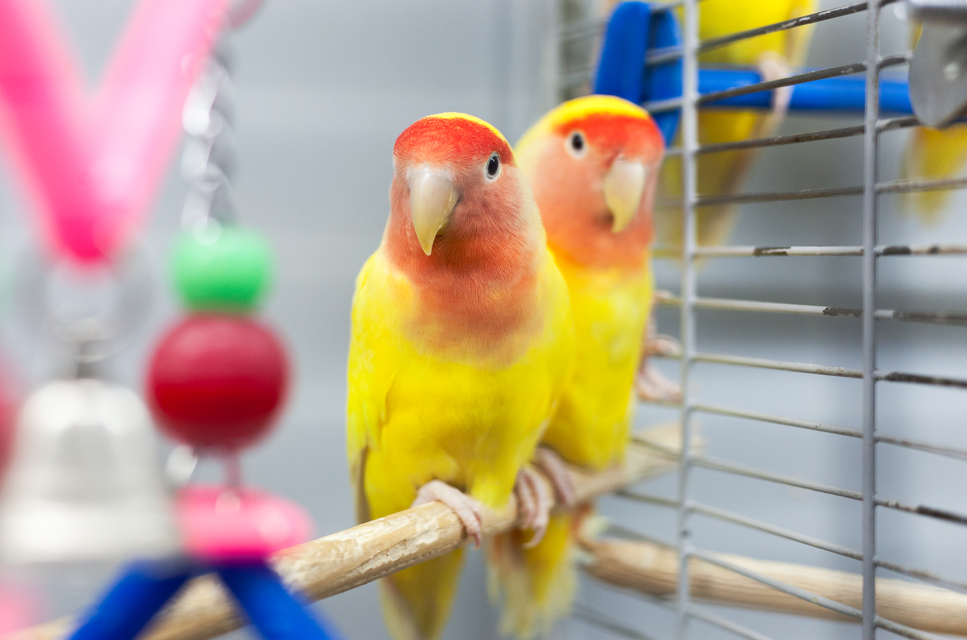
Ornamental birds such as parrots, finches, and budgerigars are lively, but because they are lightweight and have a fast metabolism, it can be difficult to notice when they are sick. Regular health checks can help with the early detection of respiratory, digestive, or feather problems.
Why Are Regular Health Checks Needed? It is often difficult to notice when birds are sick, and by the time obvious symptoms appear, the condition is usually already serious. A health check can detect early-stage diseases such as respiratory infections, internal organ lesions, parasites, or nutritional imbalances. Regular check-ups also help monitor changes in weight, diet, and behavior, which can lead to adjustments in care methods.
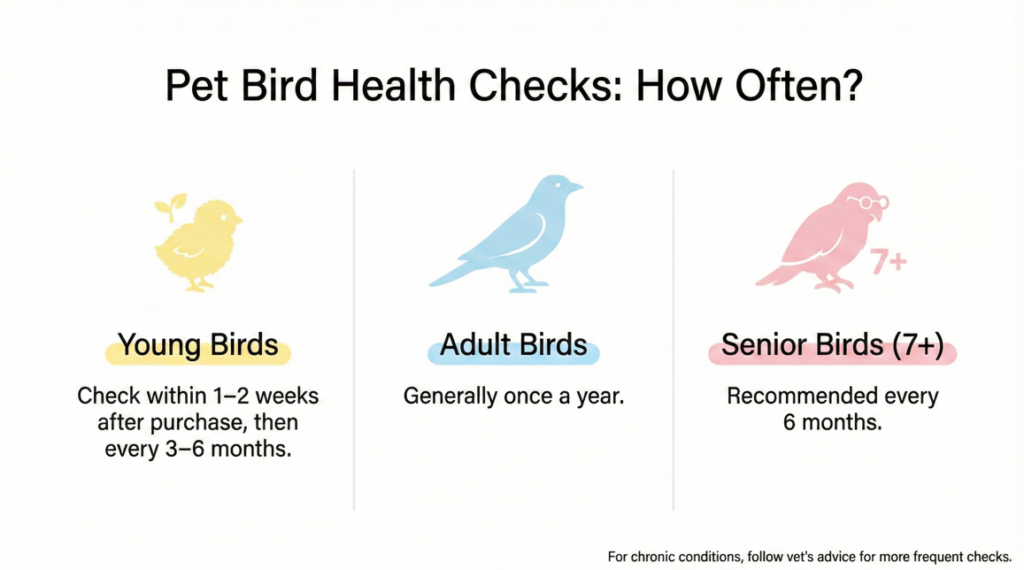
Recommended Check-up Frequency
- Young Birds: It is recommended to have a check-up within one to two weeks of purchase, and then every 3–6 months.
- Adult Birds: Generally once a year, but if there is a chronic illness or abnormal molting, the frequency should be increased as needed.
- Senior Birds: It is recommended to have a check-up every six months for birds over 7 years old, with the frequency increased as needed.
Check-up Items and Clinic Procedures
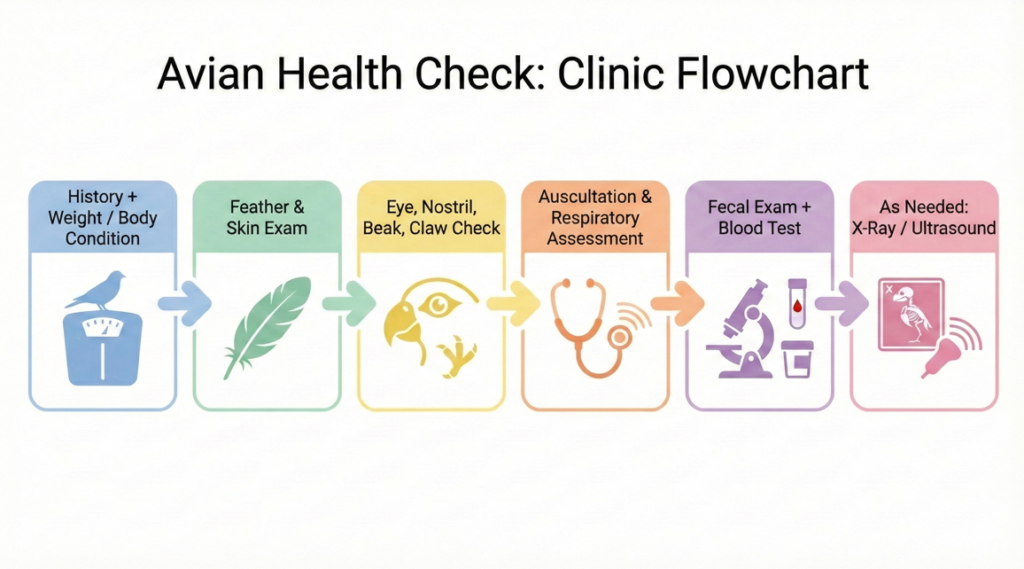
- Consultation and Weight Measurement: The vet will ask about the living environment, diet, and behavior. They will also measure the bird’s weight and assess its body condition.
- Feather and Skin Check: The vet will check the feather quality and look for any feather loss or skin lesions.
- Eye, Nose, Beak, and Nail Check: The vet will check if the eyes are clear, if there is any nasal discharge, and if the beak or nails are overgrown or have cracks.
- Auscultation and Breathing Assessment: The vet will listen to the bird’s heart and lungs to assess for any respiratory problems.
- Fecal and Blood Tests: A fecal test can detect parasites or abnormal gut flora. A blood test can evaluate liver and kidney function, check for anemia, and assess nutritional status.
- Imaging: X-rays or ultrasound may be performed as needed to check the internal organs and bones.
Preparation Before the Check-up
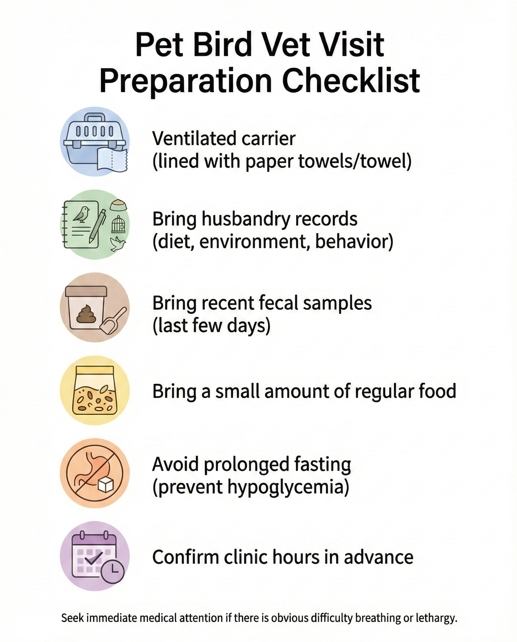
- Bring a log of care information, food, and a fecal sample from the past few days.
- Use a well-ventilated carrier lined with paper towels or a towel.
- Confirm the clinic appointment time in advance to avoid the bird going too long without food. You can bring a small amount of food to prevent low blood sugar.
Frequently Asked Questions (FAQ)
- How often does an ornamental bird need a check-up? It is generally recommended to have a check-up once a year. Young birds, those with chronic illnesses, or senior birds should have a check-up every six months.
- Do healthy birds also need a blood test? It is recommended. A blood test can show liver and kidney function, anemia, and nutritional status, allowing for early problem detection.
- Is anesthesia needed for a bird check-up? Anesthesia is not needed for a general check-up. Mild sedation may be considered if imaging or surgery is needed.
- Can I trim my bird’s beak or nails at home? It’s generally not recommended to trim the beak or nails yourself with scissors or nail clippers, as it’s easy to cut too short and cause bleeding or injuries. Birds may also struggle when stressed, which increases the risk of accidents. For routine at-home care, a safer approach is to adjust the setup in the cage:
– Nail care: Provide rougher perches or natural branches (in different diameters and materials) so your parrot can wear down its nails naturally through everyday standing and climbing.
– Beak care: Offer cuttlebone, a mineral block, or safe chew toys so your parrot can naturally file its beak and reduce the chance of overgrowth.
If your bird’s beak or nails are already overgrown, cracked, affecting grip or walking, or you suspect pain, it’s best to have a veterinarian or trained professional assess and handle it safely. - Do birds need to see a vet when they are molting? No, they don’t need to see a vet for a normal molt. If there is abnormal feather loss or stunted feather growth, you should have them checked by a vet as soon as possible.
Cityvet Bird Health Check
Cityvet is committed to providing outstanding comprehensive veterinary medical services, upholding the core values of “professionalism, care, and trust”. We aim to offer reasonably priced services, utilize advanced equipment, and provide detailed explanations of various treatment methods to owners, ensuring comprehensive medical care for every pet. To book a health check for your parrot or ornamental bird, please call the Tsuen Wan clinic at 2623 5500 or the Yuen Long clinic at 2477 9990. Our addresses are: G/F, 186 Sha Tsui Road, Tsuen Wan / G/F, Fuk Shun Building, 25 Ping Wai Street, Yuen Long.
Disclaimer: This article provides general information only and is not a substitute for professional medical diagnosis. If you have any concerns, please schedule a veterinary appointment as soon as possible.