

Sudden emergencies are the last thing any owner wants to encounter, but knowing common emergencies and how to handle them in advance can save a pet’s life. This article will introduce common pet emergencies in Hong Kong, at-home first aid tips, when a 24-hour vet is needed, and how to prepare for and respond to these situations.
Common Types of Emergencies
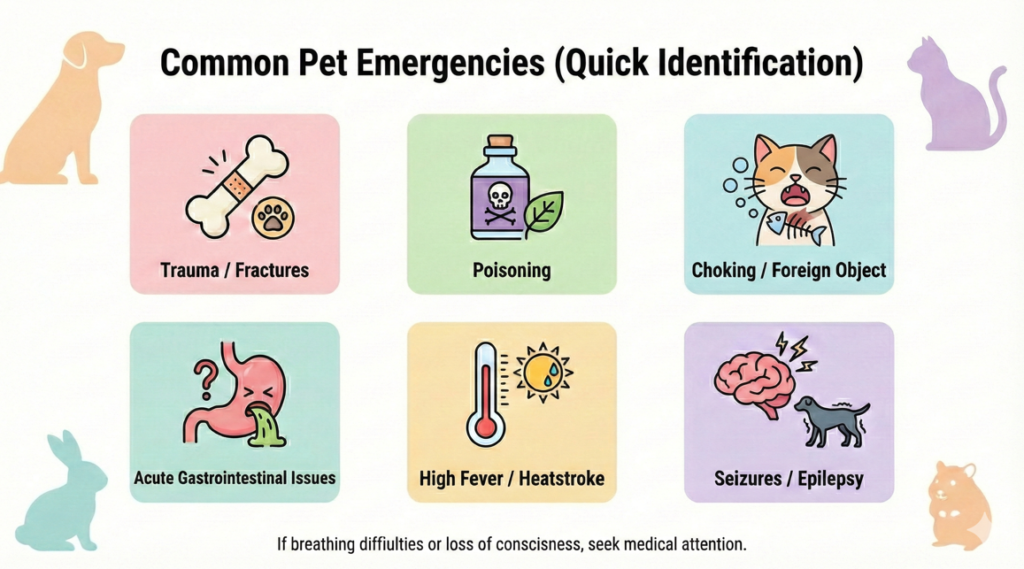
- Trauma and Fractures: This includes traffic accidents, falls from a height, or other injuries causing fractures and trauma.
- Poisoning: Caused by accidentally eating chocolate, onions, grapes, human medication, or other toxins. Symptoms include vomiting, convulsions, and drowsiness.
- Choking or Foreign Object Stuck in Throat: A small object or bone gets stuck in the trachea, causing difficulty breathing and drooling.
- Acute Gastrointestinal Problems: Severe vomiting, diarrhea, or abdominal bloating, which could be an intussusception, gastric torsion, or intestinal blockage.
- High Fever or Heatstroke: Especially in the summer or after over-exertion, a high body temperature can cause organ damage.
- Convulsions and Seizures: Abnormalities in the nervous system cause convulsions and need to be handled promptly.
Emergency Assessment and At-Home First Aid
- Check Consciousness and Breathing: If the pet is unconscious or has rapid breathing, it is an emergency.
- Immediately Remove the Hazard: In the case of poisoning, you should collect any remaining toxins for the vet to analyze.
- Stop Bleeding and Bandage: Use a clean gauze or towel to apply pressure to the bleeding area. Do not apply force to a broken bone.
- Cardiopulmonary Resuscitation: If the pet stops breathing, you can perform CPR as instructed by a veterinarian.
- Maintain Body Temperature: In cases of heatstroke, you need to cool the pet down; in cases of hypothermia, you need to warm it up. Use a wet towel to cool it down or a blanket to warm it up.
When Do You Need a 24-Hour Vet? You should go to a 24-hour emergency clinic immediately in the following situations:
- Persistent vomiting, bloody stools, or an inability to urinate.
- Unconsciousness or repeated convulsions.
- Accidental ingestion of a toxin or dangerous foreign object.
- A fracture or severe, unstoppable bleeding from a wound.
- Difficulty breathing or a foreign object stuck in the throat that cannot be coughed up.
- A high fever that doesn’t go down (body temperature over 40°C) or obvious signs of heatstroke.
Before heading to the emergency clinic, you can call them and let them know the symptoms so the medical staff can prepare.
Emergency Procedure
- Call Ahead: Contact a 24-hour vet or the nearest emergency center for professional guidance.
- Safe Transport: Use a carrier or vehicle to protect the pet and prevent a secondary injury.
- On-Site First Aid: Follow the instructions to temporarily stop bleeding, cool the pet down, or keep its airway open.
- Emergency Assessment: Upon arrival, the vet will immediately assess the vital signs and perform blood tests, imaging, or other emergency procedures.
- Hospitalization and Treatment: In severe cases, hospitalization may be needed. The vet will explain the cost and treatment plan to the owner.
Prevention and Emergency Preparedness
- First Aid Kit: Prepare a basic first aid kit at home with items such as gauze, styptic powder, a thermometer, and scissors.
- Emergency Contact Information: Write down the address and phone number of the nearest 24-hour vet clinic in advance.
- Home Safety: Put away items that are easily ingested, such as medication, cleaning supplies, and small objects. Put dangerous plants and food out of the pet’s reach.
- Instruct Family Members: Teach family members the correct way to handle emergencies and the contact procedures in advance.
Frequently Asked Questions (FAQ)
- What should I do if my dog accidentally eats chocolate? Immediately contact a vet. The pet may need to be induced to vomit or given activated charcoal. Do not induce vomiting yourself.
- What should I do if my pet is having a seizure? Keep the surrounding area safe to prevent it from getting hurt. Do not pull on its tongue. Record the duration of the seizure and seek medical attention immediately.
- How do I measure my cat’s or dog’s temperature? Use a pet thermometer and measure it rectally. If the temperature is over 40°C, you need to cool it down and seek medical attention immediately.
- Does a foreign object that has been swallowed always need to be surgically removed? It depends on the size and location of the object. Some can be removed with an endoscope. A vet needs to make the assessment.
- Do I need to have an oxygen tank at home? Generally, no. In special cases, you can rent one from a vet, and it must be used with professional guidance.
Cityvet Pet Medical Preliminary Assessment Service
Cityvet is committed to providing outstanding comprehensive veterinary medical services, upholding the core values of “professionalism, care, and trust”. We aim to offer reasonably priced services, utilize advanced equipment, and provide detailed explanations of various treatment methods to owners, ensuring comprehensive medical care for every pet. To get a pet medical initial assessment as soon as possible, our qualified veterinary technicians provide phone service for professional preliminary assessment services for your pet. Please call the Tsuen Wan clinic at 2623 5500 or the Yuen Long clinic at 2477 9990. Our addresses are: G/F, 186 Sha Tsui Road, Tsuen Wan / G/F, Fuk Shun Building, 25 Ping Wai Street, Yuen Long.
Disclaimer: This article provides general information only and is not a substitute for professional medical diagnosis. If you have any concerns, please schedule a veterinary appointment as soon as possible.