


“Wobbly Hedgehog Syndrome” (WHS) is a common neurodegenerative disease in hedgehogs that gradually leads to limb weakness, unsteady walking, and even paralysis. Although there is currently no cure, early diagnosis and appropriate care can extend their lifespan and improve their quality of life. This article will introduce the cause, symptoms, and care strategies to help owners better care for their sick hedgehogs.
Wobbly Hedgehog Syndrome Overview WHS is a progressive neurodegenerative disease that is thought to be related to genetic factors or immune abnormalities. It often starts at 2–3 years of age, affecting the hind limbs first and gradually spreading to the front limbs. The neurodegeneration leads to muscle atrophy and poor coordination.
Stages of Symptoms
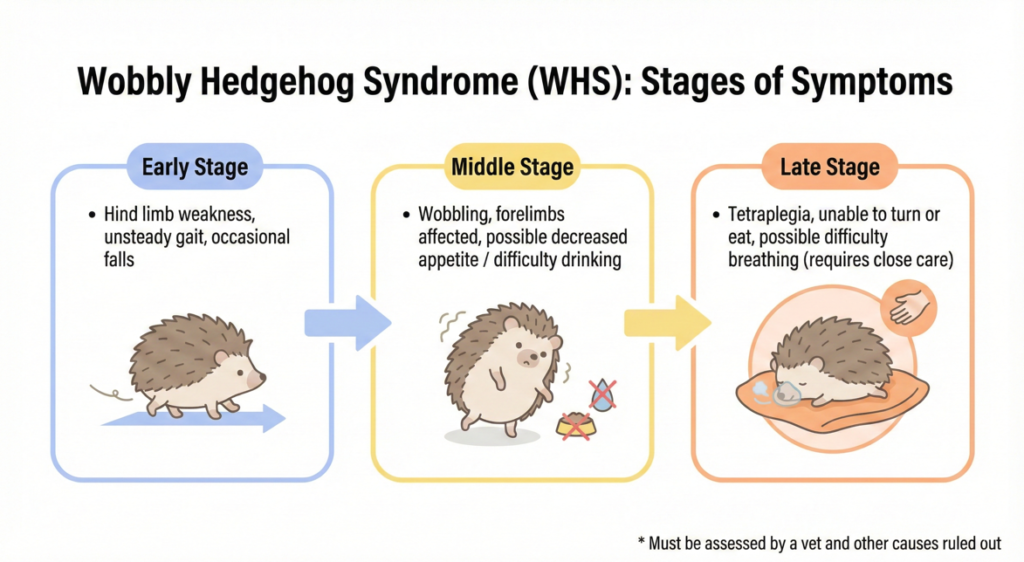
- Early Stage: Hind limb weakness, unsteady walking, occasional falls, or an asymmetrical posture.
- Middle Stage: The hind limbs gradually lose function, and the front limbs start to be affected. The hedgehog will walk with a “wobbling” gait. It may have a decreased appetite or difficulty drinking.
- Late Stage: The limbs are paralyzed, and the hedgehog cannot turn itself over or eat on its own. It will have difficulty breathing and will need around-the-clock care from the owner.
Diagnosis Methods The diagnosis of WHS relies mainly on the animal’s medical history and ruling out other diseases such as middle ear infections, vitamin deficiency, tumors, or spinal injuries. A vet will perform a neurological evaluation, blood tests, and imaging to rule out other possible causes.
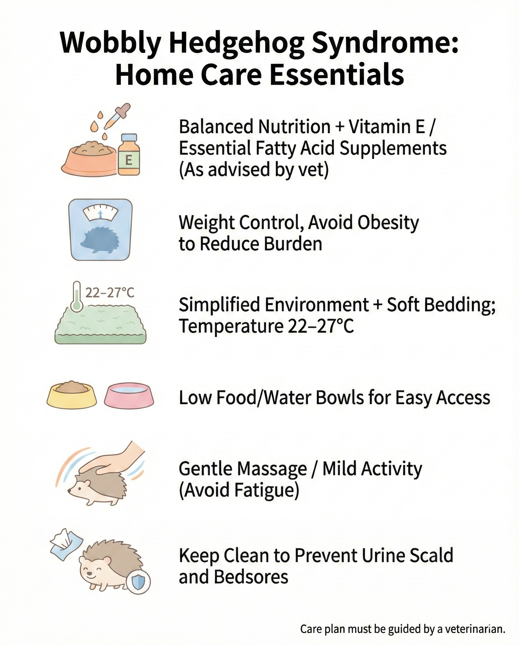
Care and Supportive Therapy Although there is no specific medication, the following methods can be used to improve quality of life:
- Nutritional Supplements and Weight Control: Provide a balanced, high-quality diet and insects, and supplement with vitamin E and essential fatty acids. Avoid obesity to reduce the burden.
- Environmental Adjustments: The cage should be simple and have soft bedding to make it easier to move around. Provide low food and water bowls. The temperature should be maintained at 22–27°C.
- Physical Therapy: Gentle massage or slowly moving the limbs in water can maintain muscle function. Be careful to avoid over-exertion.
- Medication Support: A veterinarian may recommend anti-inflammatory drugs, neuroprotective agents, or nutritional supplements.
- Hygiene and Care: Regularly clean the sick hedgehog to prevent urine burns and bedsores. Help it eat and drink.
Owner Mindset and Support Caring for a hedgehog with WHS requires patience and love. The owner should maintain close communication with the veterinarian, evaluate the pet’s quality of life, and make appropriate decisions when the time comes.
Frequently Asked Questions (FAQ)
- Is WHS contagious? No, it is a non-contagious neurodegenerative disease.
- Can WHS be reversed? There is currently no cure, but supportive therapy can slow down the progression of the disease and improve quality of life.
- Can a sick hedgehog move around freely? It should only be active in a safe area to prevent falls or injury. The activity space should be adjusted based on the stage of the disease.
- Does WHS require a special diet? You should provide a high-quality hedgehog diet, insects, and vitamin supplements, and avoid high-fat foods.
- When should I consider euthanasia for my hedgehog? When the hedgehog can no longer eat, move, or has respiratory failure, and its quality of life cannot be improved, you may need to discuss humane euthanasia with a veterinarian.
Cityvet Hedgehog Clinic
Cityvet is committed to providing outstanding comprehensive veterinary medical services, upholding the core values of “professionalism, care, and trust”. We aim to offer reasonably priced services, utilize advanced equipment, and provide detailed explanations of various treatment methods to owners, ensuring comprehensive medical care for every pet. To book a hedgehog clinic appointment, please call the Tsuen Wan clinic at 2623 5500 or the Yuen Long clinic at 2477 9990. Our addresses are: G/F, 186 Sha Tsui Road, Tsuen Wan / G/F, Fuk Shun Building, 25 Ping Wai Street, Yuen Long.
Disclaimer: This article provides general information only and is not a substitute for professional medical diagnosis. If you have any concerns, please schedule a veterinary appointment as soon as possible.