

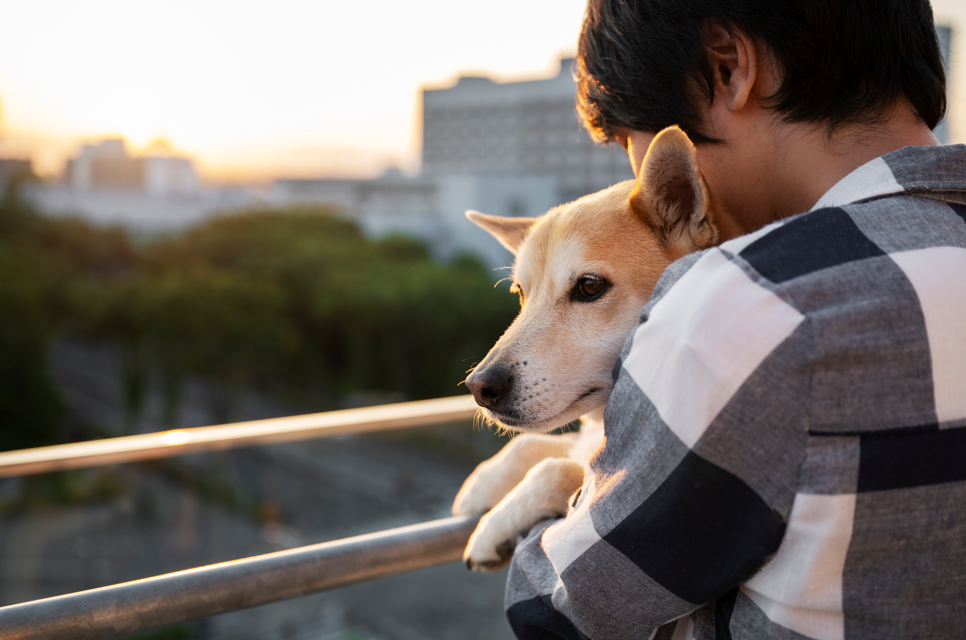
The time we spend with our furry friends is filled with endless joy and love. However, all good things must come to an end. When they are suffering from irreversible pain due to old age, serious illness, or a severe accident, we, as owners, may have to face one of the most difficult decisions of our lives—letting them say goodbye in peace and with dignity. This article hopes to provide some guidance and support to those of you who are going through this difficult time, helping you understand the options for pet end-of-life care and how to say a proper farewell.
Facing Goodbye: A Decision Full of Love and Courage
Considering euthanasia for a pet is never a decision to be taken lightly. It is not giving up, but a choice of compassion stemming from the deepest love, hoping to end their unbearable suffering. In this difficult time, please remember that you are not alone. Our veterinary team will be here to explore all possibilities with you, with professionalism and empathy.
How to Assess a Pet’s “Quality of Life”?
“When is the right time?” is a question every owner asks. Quality of life is a comprehensive concept, and we can use some objective indicators to help with the assessment.
The HHHHHMM Quality of Life Scale
This is a widely used assessment tool in the veterinary field, proposed by Dr. Alice Villalobos, that helps owners score their pet on seven aspects (0-10 points):
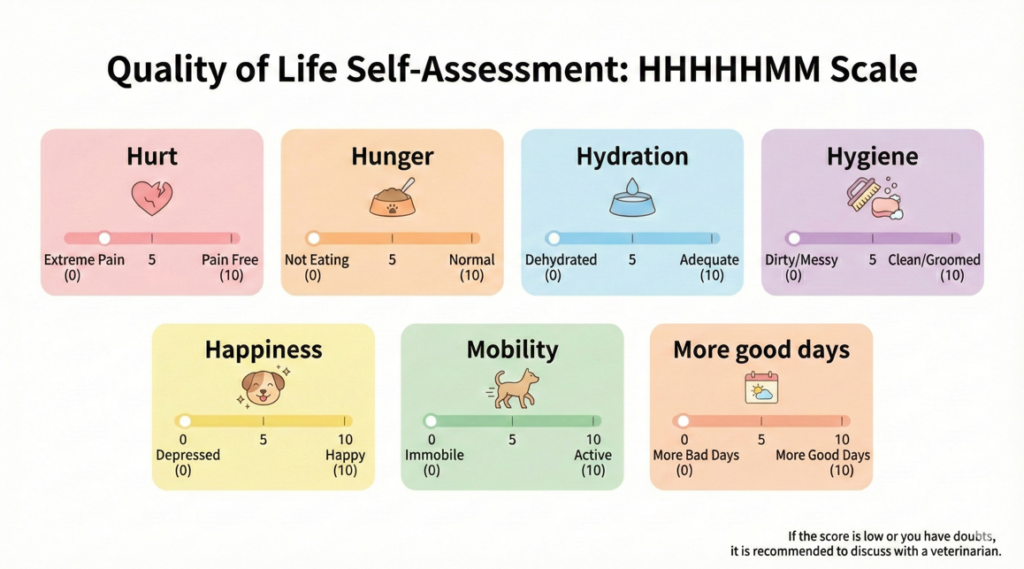
- Hurt: Can the pet’s pain be effectively managed with medication?
- Hunger: Can it still eat and absorb nutrients normally?
- Hydration: Is it getting enough water? Is it dehydrated?
- Hygiene: Can it still keep itself clean? Or does it need the owner’s help?
- Happiness: Does it still show interest in the people, things, and activities it likes (e.g., walks, toys)?
- Mobility: Can it stand and walk on its own?
- More: Does it have more good days than bad days?
When the scores on many of these indicators are low, it might be time for an in-depth discussion with your veterinarian.
Communicate Frankly with Your Veterinarian
Your veterinarian knows your pet’s condition best. They can provide an objective medical assessment, explain the future progression of the disease, and the pros and cons of continuing treatment, helping you make the decision that is most in line with your pet’s well-being.
About Euthanasia: What You Need to Know
- What is Euthanasia? Euthanasia is the intravenous injection of a high concentration of anesthetic medication that causes the pet’s heart and breathing to gradually stop in a painless and unconscious state. The process is like falling into a very deep sleep.
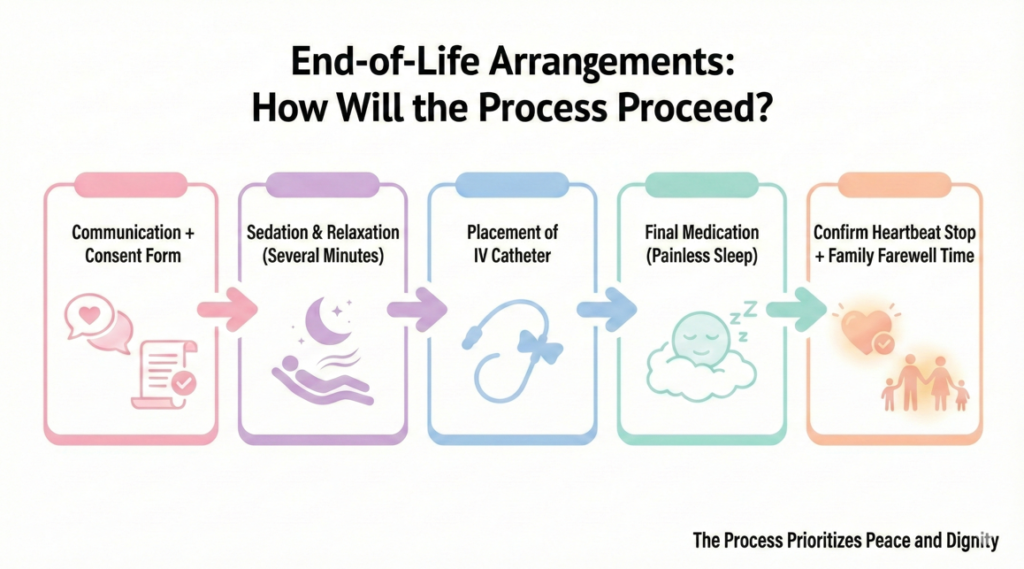
- What is the whole process like?
- Consent Form: You will need to sign a consent form, confirming that you understand and agree to the procedure.
- Sedation: In most cases, the vet will first give the pet a sedative injection to make it completely relaxed within a few minutes, relieving any tension or discomfort.
- IV Catheter: The vet or nurse will place an IV catheter in the pet’s front or back leg.
- Final Injection: When you and your family are ready, the vet will inject the final medication through the IV catheter. The medication works very quickly, and the pet will pass away peacefully in its sleep, usually within tens of seconds to a minute or two. The vet will use a stethoscope to confirm that the heartbeat has completely stopped.
- Can I be there to accompany it? Of course, you can. We encourage owners to be with their pet, petting it and talking to it, so that it can complete its final journey in your warm embrace and with a familiar voice. We will provide a quiet, private space in the clinic so you and your family have enough time to say a proper goodbye.
Preparing for Goodbye: Creating the Last Beautiful Memories
If the situation allows, you can arrange a “best day” for your pet one or two days before saying goodbye. You can prepare its favorite meal (with the vet’s permission), take it to its favorite park for some sun, and let all its family and friends who love it come to visit. Use a camera and your heart to capture its final moments.
How We Provide Support at Cityvet
We understand that this is a heartbreaking process. The Cityvet team will handle every detail in the gentlest and most respectful way. We will patiently answer all your questions, give you the time and space you need, and ensure your furry friend feels love and peace in its final moments, not fear and pain.
Arrangements After the Pet’s Passing
According to Hong Kong law, a pet’s remains cannot be disposed of at will. Owners need to commission a licensed pet funeral service company for cremation.
- Individual Cremation vs. Communal Cremation
- Individual Cremation: Your pet will be cremated alone, and you can take its ashes home.
- Communal Cremation: Your pet will be cremated with other pets, and the ashes will be handled in an environmentally friendly way and cannot be returned.
- Handling the Ashes You can choose to keep the ashes at home, turn them into memorial jewelry, or place them in a pet memorial garden or columbarium.
How to Deal with and Process Grief as an Owner?
The pain of losing a pet is the same as losing a family member. Allow yourself to grieve and do not suppress your emotions. Talking to family and friends, looking through old photos, and writing down your memories are all parts of the healing process. Remember, there is no timetable for grief, so please give yourself enough time.
Frequently Asked Questions (FAQ)
Q1: Will my pet feel pain during the euthanasia process?
A1: Not at all. The entire process is designed to be painless. The first sedative injection will make them deeply relaxed. The final medication works by stopping the central nervous system and cardiorespiratory function, and the pet will not have any awareness or pain.
Q2: How can I explain my pet’s passing to the children at home?
A2: It is recommended to be honest and gentle. Avoid using euphemisms like “fell asleep” or “went away” so they don’t develop a fear of sleep or separation. You can tell them that the pet was very old or very sick, and its body could no longer function, so it left peacefully and will no longer be in pain.
Q3: There are other pets at home. Will they grieve? How can I help them?
A3: Yes, animals have deep bonds. They may appear depressed, have a poor appetite, or constantly search for their deceased companion. Try to maintain their original routine and give them extra love and attention to help them get through this period.
Q4: What should I do if my pet passes away naturally at home?
A4: First, stay calm. You can contact your veterinary clinic or a licensed pet funeral service company directly. They will guide you through the next steps and arrange to pick up the remains. While you are waiting, you can place your pet in a cool place and wrap it in a clean towel.
In Your Toughest Moment, Let Us Walk with You with Professionalism and Care Cityvet is committed to providing outstanding comprehensive veterinary medical services, upholding the core values of “professionalism, care, and trust.” We aim to offer reasonably priced services, utilize advanced equipment, and provide detailed explanations of various treatment methods to owners, ensuring comprehensive medical care for every pet.
If you need to consult about a pet’s quality of life assessment or end-of-life services, please call: Tsuen Wan clinic at 2623 5500 or Yuen Long clinic at 2477 9990. Addresses: G/F, 186 Sha Tsui Road, Tsuen Wan / G/F, Fuk Shun Building, 25 Ping Wai Street, Yuen Long.
Disclaimer: This article provides general information only and is not a substitute for professional medical diagnosis. If you have any concerns, please schedule a veterinary appointment as soon as possible.