

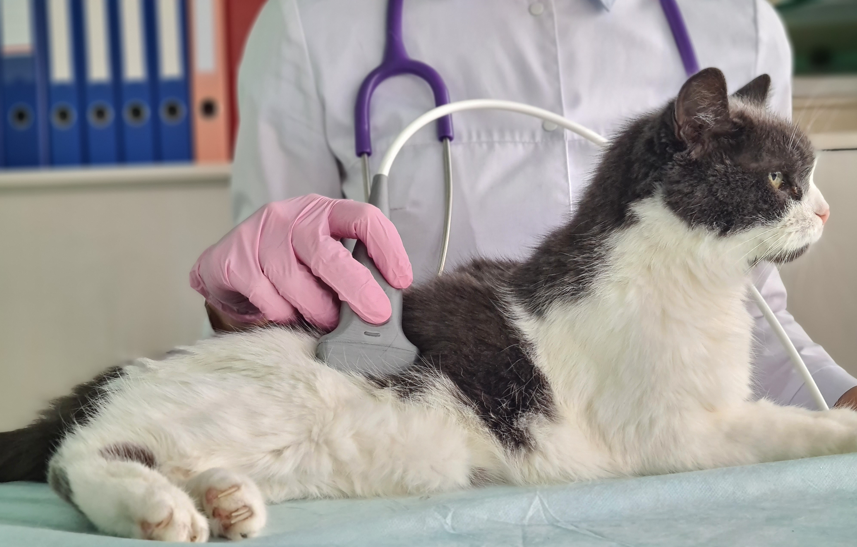
In Hong Kong, “cat kidney disease” is one of the most common and fatal diseases in felines, especially for senior cats. Feline Chronic Kidney Disease (CKD) is a progressive disease. When the kidneys gradually lose their ability to effectively filter metabolic waste from the blood, toxins build up in the body, leading to a series of serious health problems. Since cats are good at hiding illness, by the time symptoms appear, the condition has often progressed to the middle or late stages. This article will provide a detailed introduction to the early symptoms of cat kidney disease, diet management, and treatment methods to help you detect it early and provide the best care for your cat.
Main Causes and Early Symptoms of Cat Kidney Disease
- Causes: The causes of cat kidney disease are complex and may be related to aging, genetics, high blood pressure, kidney infections, or certain toxins.
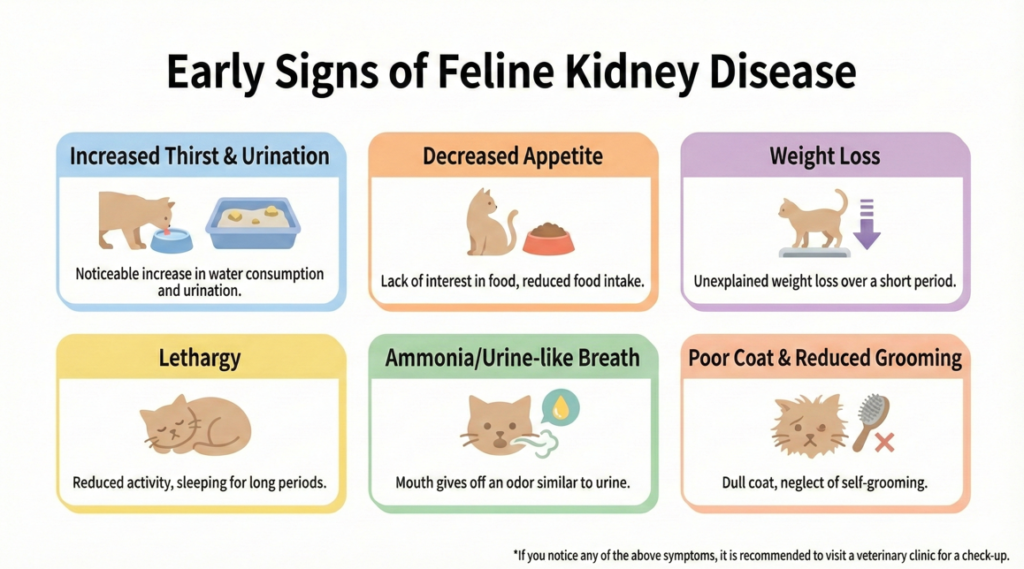
- Early Symptoms: Because the kidneys have a strong compensatory ability, the symptoms may not be obvious in the early stages. However, if you observe carefully, you may notice some subtle changes:
- Drinking More Water and Urinating More: This is the most common early symptom. When kidney function is damaged, the kidneys cannot effectively concentrate urine, leading to an increase in urine volume. The cat will then feel thirsty and drink more water.
- Loss of Appetite and Weight Loss: Kidney disease can make a cat feel nauseous and lose its appetite, which in turn leads to weight loss.
- Lethargy: The cat will become lazy, not want to play, and sleep for longer periods.
- Bad Breath: The buildup of toxins in the body can cause the breath to smell like urine or ammonia.
- Rough Coat: The cat will groom less due to discomfort, causing its fur to lose its luster.
When you notice any of the above symptoms, you should immediately take your cat to a veterinary clinic for an examination.
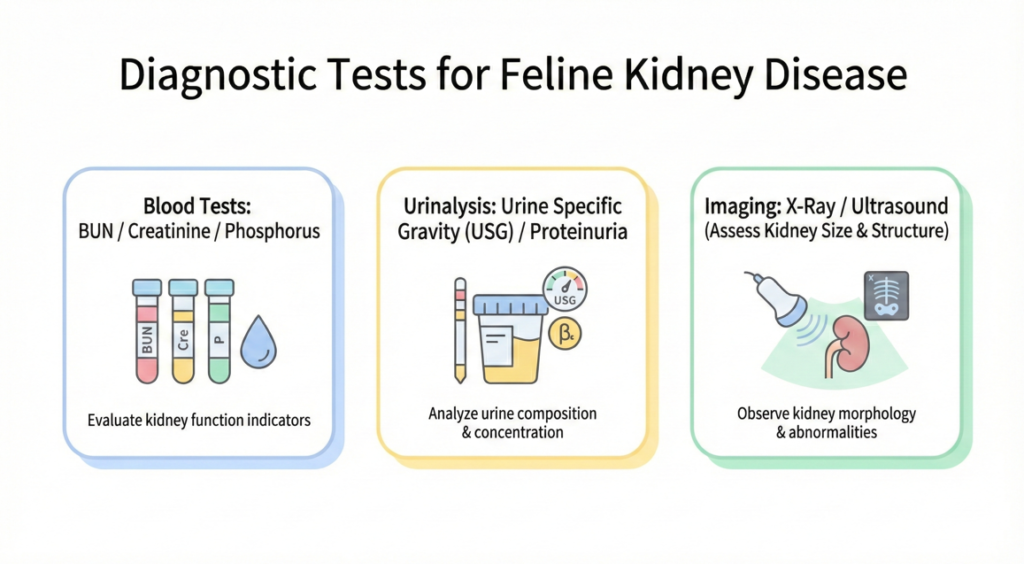
Diagnosis and Staging of Cat Kidney Disease A veterinarian will use the following tests to diagnose kidney disease:
- Blood Test: To check indicators like blood urea nitrogen (BUN), creatinine, and phosphorus.
- Urinalysis: To test the urine specific gravity and for proteinuria, etc..
- Imaging: Ultrasound or X-ray to assess the size and structure of the kidneys.
After the diagnosis, the veterinarian will stage the condition into four stages according to the International Renal Interest Society (IRIS) staging system to formulate a corresponding treatment plan.
Treatment and Home Management of Cat Kidney Disease Although cat kidney disease cannot be cured, it can be effectively slowed down and the quality of life can be improved with appropriate treatment and home management.
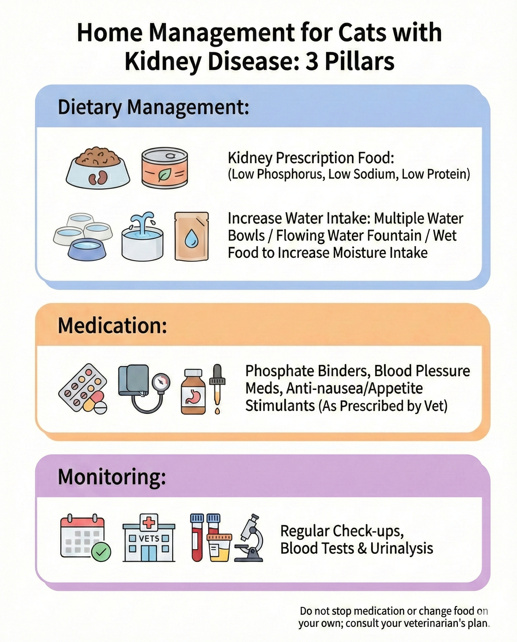
- 1. Diet Management
- Kidney Prescription Food: This is the core of kidney disease management. Kidney prescription food is usually “low in protein,” “low in phosphorus,” and “low in sodium”. This can reduce the burden on the kidneys and slow down the progression of the disease.
- Increase Water Intake: Encourage the cat to drink more water by providing multiple water bowls, using a water fountain, or replacing dry food with wet food.
- 2. Medication
- Phosphate Binders: Kidney disease can cause high blood phosphorus. A vet will prescribe phosphate binders to control blood phosphorus levels.
- Blood Pressure Medication: High blood pressure is a common complication of kidney disease. A vet will prescribe blood pressure medication to protect the kidneys.
- Anti-nausea Medication and Appetite Stimulants: For cats with a poor appetite, a vet may prescribe corresponding medication to improve the symptoms.
- 3. Regular Monitoring Even if the condition is stable, you need to have regular follow-up visits for blood and urine tests so the vet can adjust the treatment plan based on the data.
Frequently Asked Questions (FAQ)
Q1: Is cat kidney disease a type of “feline distemper”?
A1: No. Feline distemper is a gastrointestinal disease caused by a virus and is different from chronic kidney disease. However, feline distemper can indirectly lead to acute kidney failure.
Q2: Why can’t cats with kidney disease eat high-protein food?
A2: The metabolism of high-protein food produces more nitrogenous waste, which needs to be excreted by the kidneys. For damaged kidneys, this will increase the burden.
Q3: Can a cat with kidney disease have snacks?
A3: They should be avoided as much as possible. Many snacks are high in phosphorus, which will increase the burden on the kidneys. If you must give them, choose a low-phosphorus, low-sodium prescription snack and use it under a veterinarian’s guidance.
Q4: My cat doesn’t like to drink water, what should I do?
A4: You can use a water fountain, place several water bowls around, or add a small amount of unsalted boiled chicken broth to the water to make it more appealing.
Q5: Is cat kidney disease contagious?
A5: No, cat kidney disease is not contagious and does not spread among cats.
Cityvet Cat Kidney Disease Examination
Cityvet is committed to providing outstanding comprehensive veterinary medical services, upholding the core values of “professionalism, care, and trust”. We aim to offer reasonably priced services, utilize advanced equipment, and provide detailed explanations of various treatment methods to owners, ensuring comprehensive medical care for every pet. If you are concerned that your cat may have kidney disease, please book an examination as soon as possible. Call the Tsuen Wan clinic at 2623 5500 or the Yuen Long clinic at 2477 9990. Addresses: G/F, 186 Sha Tsui Road, Tsuen Wan / G/F, Fuk Shun Building, 25 Ping Wai Street, Yuen Long.
Disclaimer: This article provides general information only and is not a substitute for professional medical diagnosis. If you have any concerns, please schedule a veterinary appointment as soon as possible.