

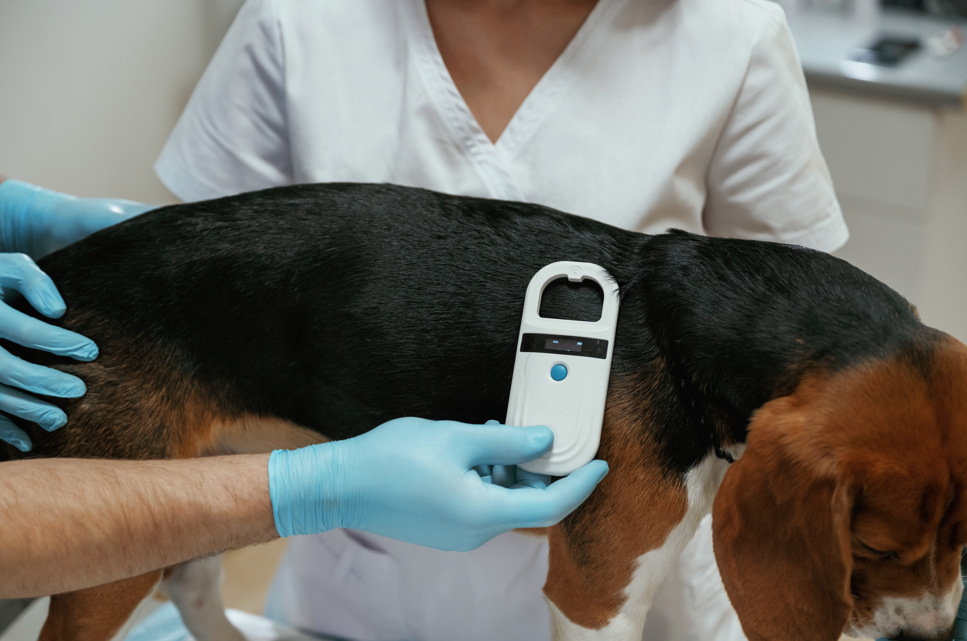
In Hong Kong, microchipping for dogs is a mandatory legal requirement, while for cats and other pets, it is an effective way to provide lifelong identity protection. A pet microchip is like an electronic ID card for your pet, greatly increasing the chances of being found if they get lost. However, many owners still have questions and myths about “pet microchipping”. This article will explain the importance of microchips, the implantation process, and clear up these common misunderstandings.
The Importance of Pet Microchips: Identity and Legal Protection
1. Hong Kong Legal Requirements According to the Hong Kong Rabies Regulation (Cap. 167), all dogs aged five months or older must be implanted with a microchip, licensed, and the license must be renewed annually. Dog owners who fail to comply may face fines.
2. Key to Being Found if Lost A microchip is a device the size of a grain of rice containing a unique identification number. When a lost pet is brought to a veterinary clinic, animal shelter, or the Agriculture, Fisheries and Conservation Department (AFCD), staff can read the number with a special scanner and contact the owner based on the registered information.
3. Cannot Be Forged or Lost Unlike dog tags or collars, a pet microchip is implanted under the skin, making it nearly impossible to lose or be maliciously removed. It is the only reliable and permanent proof of identity.
The Pet Microchip Implantation Process
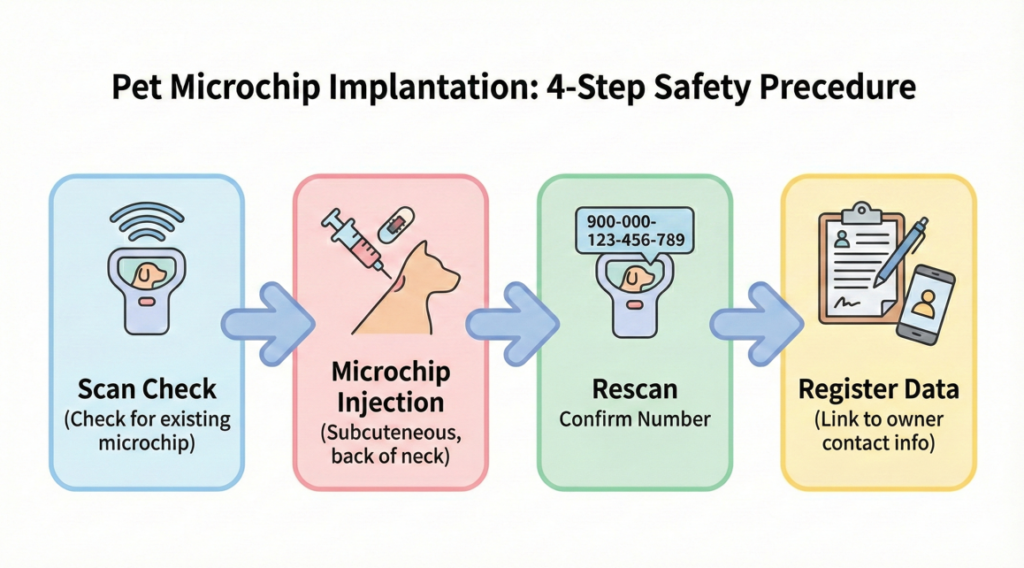
Implanting a pet microchip is a simple, fast, and safe procedure that usually does not require anesthesia:
- Check and Locate: The vet will use a scanner to check if the pet already has a microchip.
- Microchip Injection: Using a special syringe, the microchip is implanted under the skin, usually between the pet’s shoulder blades. The process is similar to a subcutaneous injection.
- Scan to Confirm: After implantation, the vet will scan the chip again to confirm the number can be read correctly and to note the exact location.
- Registration Process: The vet will assist you in registering the microchip number and owner’s details with the Agriculture, Fisheries and Conservation Department (AFCD).
Debunking 5 Common Pet Microchip Myths
Myth 1: A microchip is a GPS tracker.
Fact: A pet microchip is not a GPS tracker. It does not have a battery or positioning function. It is a passive device with a stored number. The number can only be read when scanned at close range by a special scanner.
Myth 2: Implantation is very painful for the pet.
Fact: The implantation process is similar to a standard subcutaneous injection. The pet will only feel a brief, mild sting. As it is a minimally invasive procedure, it does not require stitches or a long recovery time.
Myth 3: The microchip might move around in the body or cause rejection.
Fact: Modern pet microchips often have a special coating that helps them bond with the subcutaneous tissue, significantly reducing the risk of migration. The chip’s material is inert to the pet’s body, and allergic reactions or rejection are extremely rare.
Myth 4: Indoor cats don’t need a microchip.
Fact: Even indoor-only cats can get lost by accident (e.g., escaping through an open door or window). Cats can easily get frightened in an outdoor environment, and if they don’t have a microchip, the chances of being found are minimal. It is strongly recommended that cat owners also microchip their cats.
Myth 5: A dog tag or collar is good enough.
Fact: Dog tags and collars are easily lost, can fall off, or be damaged. The microchip, as the pet’s only permanent form of identification, provides the ultimate safeguard.
Frequently Asked Questions (FAQ)
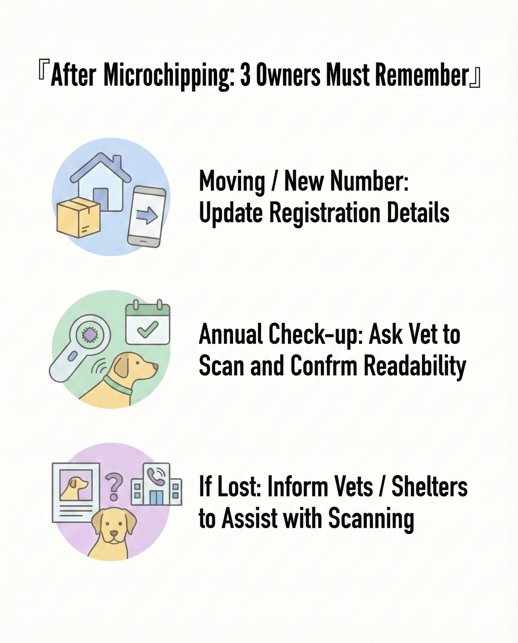
- Q: What should I do if my contact information changes after the microchip is implanted?
- A: If you move or change your phone number, you must proactively update your registration details with the Agriculture, Fisheries and Conservation Department (AFCD) to ensure the microchip number links to your current contact information.
- Q: Can a microchip stop working inside my pet?
- A: A microchip has no battery, so in theory, its lifespan is the same as the pet’s. However, it is still recommended to have your vet scan it once during the annual check-up to ensure it is functioning correctly.
- Q: Will my cat feel discomfort after the microchip is implanted?
- A: After implantation, the cat may feel slight sensitivity at the injection site for a few days, but it will adapt quickly.
- Q: I brought my pet to Hong Kong from overseas. Do I need to implant a new microchip?
- A: If you bring a dog to Hong Kong that already has a compliant microchip, you still need to complete the registration process with the AFCD and comply with Hong Kong’s licensing and vaccination requirements.
- Q: Will the microchip affect my pet’s CT or X-ray scans?
- A: No. The microchip will not interfere with diagnostic imaging like X-rays or CT scans.
Give Your Pet an Electronic ID for a Better Chance of Coming Home
Cityvet is committed to providing outstanding comprehensive veterinary medical services, upholding the core values of “professionalism, care, and trust.” We aim to offer reasonably priced services, utilize advanced equipment, and provide detailed explanations of various treatment methods to owners, ensuring comprehensive medical care for every pet. Want to microchip your pet? Please call the Tsuen Wan clinic at 2623 5500 or the Yuen Long clinic at 2477 9990. Addresses: G/F, 186 Sha Tsui Road, Tsuen Wan / G/F, Fuk Shun Building, 25 Ping Wai Street, Yuen Long.
Disclaimer: This article provides general information only and is not a substitute for professional medical diagnosis. If you have any concerns, please schedule a veterinary appointment as soon as possible.