

Environment for Senior Cats and Dogs Watching a pet transition from energetic youth to a calm and steady senior is a stage every owner goes through. The core of “senior pet care” is not just about regular vet check-ups, but also about the details of daily life. Senior cats and dogs experience degeneration in mobility, senses, and cognition. Creating a “comfortable home environment” for them can significantly improve their quality of life and reduce discomfort. This article provides 5 practical home care tips to help you accompany them as they age gracefully.
1. Home Environment Modification: Anti-Slip and Convenience
The most common problems for senior pets are joint degeneration and muscle weakness, leading to mobility issues.
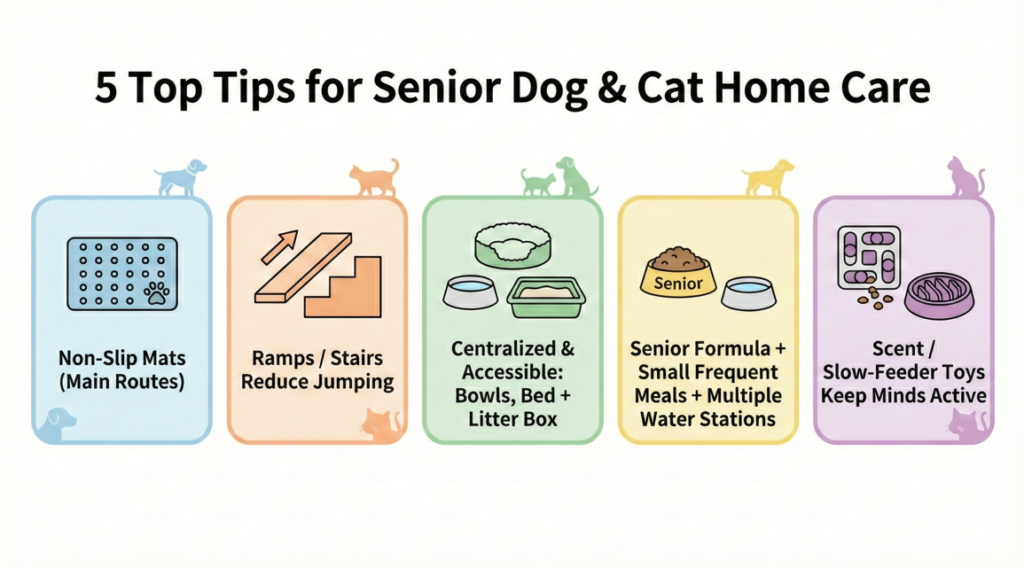
- Anti-slip Measures: Homes in Hong Kong commonly use tile or wood floors, which are very slippery for senior pets. It is recommended to place anti-slip mats or yoga mats along their main routes to prevent them from slipping or splaying.
- Reduce Jumping: Place pet ramps or stairs next to sofas or beds to reduce the pressure on their joints from jumping.
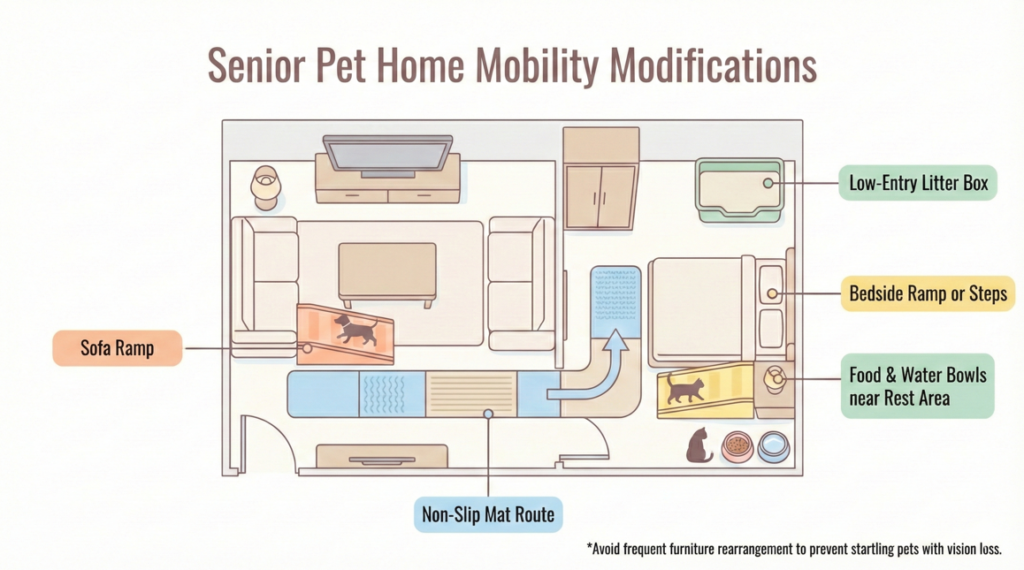
- Accessible Resources: Place their bed, food bowls, water bowls, and litter box (use a low-entry model) in a quiet, easy-to-reach location to avoid them having to travel long distances.
2. Nutritional and Dietary Adjustments
A senior pet’s metabolism slows down, and their digestive capabilities and nutritional needs change.
- Senior Formulas: Choose prescription diets or complete canned foods designed for senior cats and dogs. These formulas are often lower in calories (to prevent obesity), have high-quality protein (to reduce kidney load), and may have added joint supplements like glucosamine.
- Small, Frequent Meals: Consider splitting the daily portion into 2-3 meals to reduce gastrointestinal load.
- Ensure Hydration: Senior pets (especially cats) are prone to dehydration. Place water bowls in multiple locations or use a water fountain to encourage drinking.
3. Joint and Pain Management
Arthritis is the most common hidden killer in senior pets. They won’t cry out, but will express pain by “being unwilling to move.”
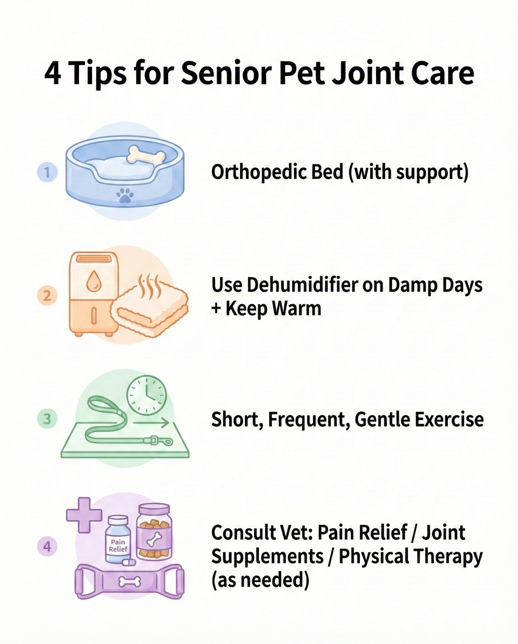
- Comfortable Bed: Provide a thick, supportive orthopedic bed to prevent them from sleeping directly on the cold floor.
- Gentle Exercise: Maintain moderate, gentle exercise, such as short walks, to help maintain muscle mass and joint flexibility.
- Professional Help: Don’t just see “walking slower” as normal aging. Consult a vet to discuss the need for pain medication, joint supplements, or physical therapy.
4. Maintain Mental Activity and Emotional Connection
Physical decline doesn’t mean mental decline.
- Mental Stimulation: For dogs, you can play gentle scenting games; for cats, provide new cardboard boxes or slow-feed toys to stimulate their brains.
- Sensory Aids: If the pet’s vision or hearing is declining, avoid moving furniture around. Make a soft sound or touch them before approaching to avoid startling them.
- Quality Companionship: Spend more time with them. Gentle grooming and massage are excellent ways to bond.
5. The Importance of Regular Health Checks
The cornerstone of “senior pet care” is always preventive medicine. As mentioned earlier, senior pets should have a health check every 6 months so the vet can detect and manage kidney disease, heart disease, or endocrine problems early.
Frequently Asked Questions (FAQ)
Q: My old dog has started urinating and defecating randomly in the house. Is this deliberate?
A: Unlikely. This is usually a health warning. Possible causes include a urinary tract infection, declining kidney function, joint pain (making it hard to get to the toilet in time), or cognitive dysfunction.
Q: Do senior pets need supplements?
A: Joint supplements (like glucosamine, chondroitin) and Omega-3 fatty acids are beneficial for many senior pets, but you should consult a vet before starting them to ensure the dosage and ingredients are appropriate.
Q: How can I tell if my pet is in pain?
A: Signs of pain in pets can be subtle, including: reluctance to be touched, panting, trembling, decreased appetite, hiding, or showing hesitation in certain positions (like getting up).
Q: What should I do if my senior cat is howling constantly?
A: Nighttime howling can be a sign of Feline Cognitive Dysfunction (FCD), but it can also be caused by hyperthyroidism, high blood pressure, or pain. Be sure to take your cat for a check-up.
Q: Hong Kong’s weather is humid. Any special notes for senior pet care?
A: In humid weather, arthritis pain can worsen. It’s very important to keep the home dry, use a dehumidifier, and provide a warm bed.
Want to consult about senior pet care or book a health check?
Cityvet is committed to providing outstanding comprehensive veterinary medical services, upholding the core values of “professionalism, care, and trust.” We aim to offer reasonably priced services, utilize advanced equipment, and provide detailed explanations of various treatment methods to owners, ensuring comprehensive medical care for every pet. Please call the Tsuen Wan clinic at 2623 5500 or the Yuen Long clinic at 2477 9990. Addresses: G/F, 186 Sha Tsui Road, Tsuen Wan / G/F, Fuk Shun Building, 25 Ping Wai Street, Yuen Long.
Disclaimer: This article provides general information only and is not a substitute for professional medical diagnosis. If you have any concerns, please schedule a veterinary appointment as soon as possible.