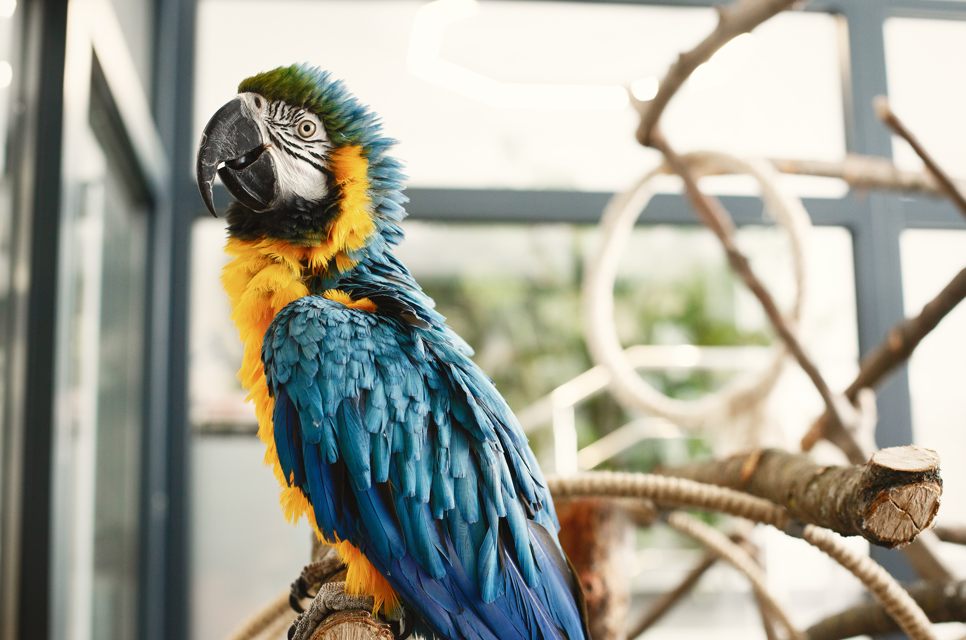
For Pet Birds in Hong Kong Birds, especially parrots, are extremely intelligent and sensitive animals. As “exotic pets,” the medical needs of “pet birds” are vastly different from cats and dogs. In Hong Kong’s pet-keeping environment, two issues most commonly trouble owners: accidents caused by “parrot leg rings,” and “parrot feather problems” (like feather plucking). Understanding the causes and prevention of these common issues, and knowing when to seek a professional avian vet, is crucial for protecting their health.
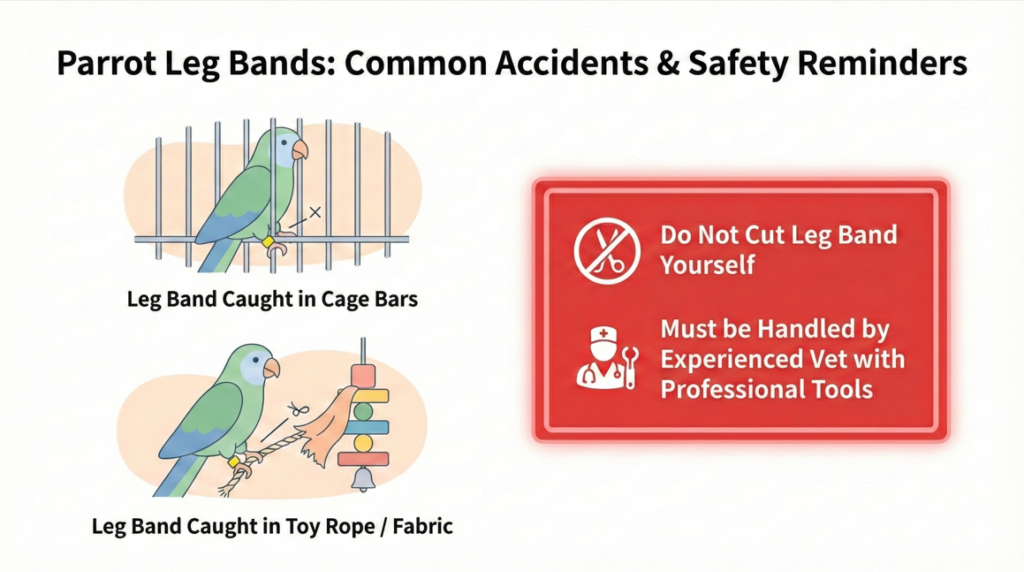
Parrot Leg Rings: A Hidden Household Risk
Leg rings are often used to identify a bird’s origin and age, but they can also become a potential trap.
- Common Accidents: The ring most often gets caught in cage gaps, toy strings, or fabric, causing the parrot to panic and struggle, which can lead to sprains, fractures, or even necrosis from restricted blood flow.
- Ring Biting: Some parrots, out of boredom, anxiety, or discomfort from the ring, will repeatedly chew on it, causing it to deform and compress the ankle, leading to swelling.
- Veterinary Advice: Unless used for breeding or specific identification, it’s advisable to consult a vet to assess if the leg ring should be removed for safety. NEVER try to cut the ring off yourself; this can easily cause serious injury. Ring removal must be done by an experienced vet using professional tools.
Feather Plucking: A Warning Sign of Physical and Mental Imbalance
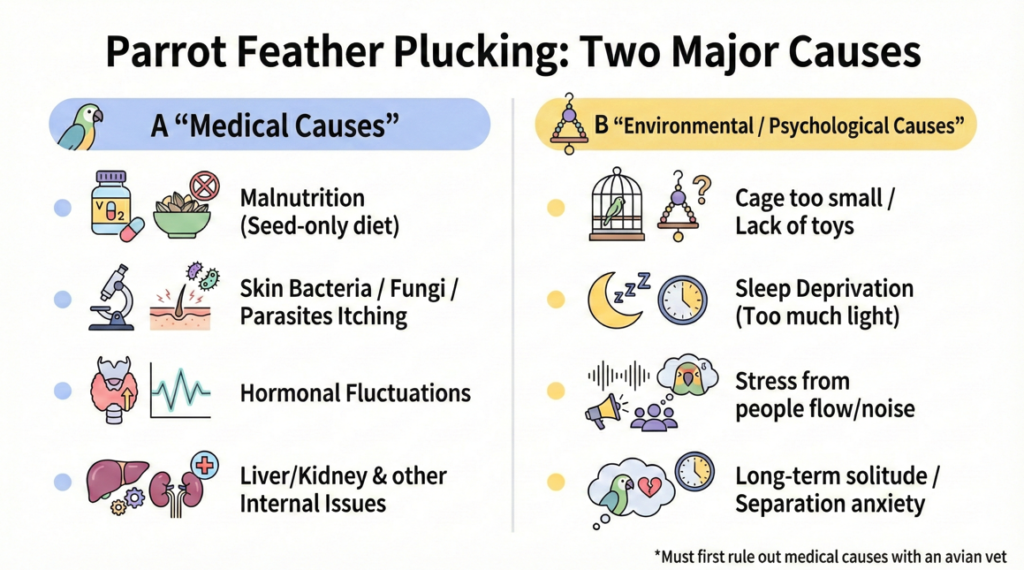
The most common of “parrot feather problems” is feather plucking—when a parrot repeatedly pulls out or chews its own feathers. This is not a single disease, but a sign of various underlying issues:
1. Medical Causes (Physiological)
- Malnutrition: A monotonous diet (like only eating sunflower seeds) lacking Vitamin A or other essential nutrients.
- Skin Problems: Skin infections (bacterial, fungal) or internal/external parasites causing itchiness.
- Hormonal Imbalance: Hormonal fluctuations during sexual maturity or breeding season.
- Internal Disease: Pain or discomfort from liver or kidney problems.
2. Environmental and Psychological Causes
- Boredom and Lack of Stimulation: The cage is too small, or there is a lack of sufficient toys or interaction.
- Environmental Stress: Improper cage placement (e.g., too high traffic), insufficient sleep (too much light), or a new pet/family member in the home.
- Anxiety or Obsessive-Compulsive Disorder: Parrots are highly social. Chronic loneliness or separation anxiety can lead to plucking.
Other Common Health Problems for Pet Birds in Hong Kong
- Respiratory Infections: A bird’s respiratory system is extremely sensitive and reacts strongly to secondhand smoke, aromatherapy, cleaning sprays, or cooking fumes, easily causing respiratory symptoms.
- Vitamin A Deficiency: Parrots on a seed-only diet are highly prone to Vitamin A deficiency, leading to lesions in the respiratory tract and oral mucosa.
When to Seek an “Avian Vet”
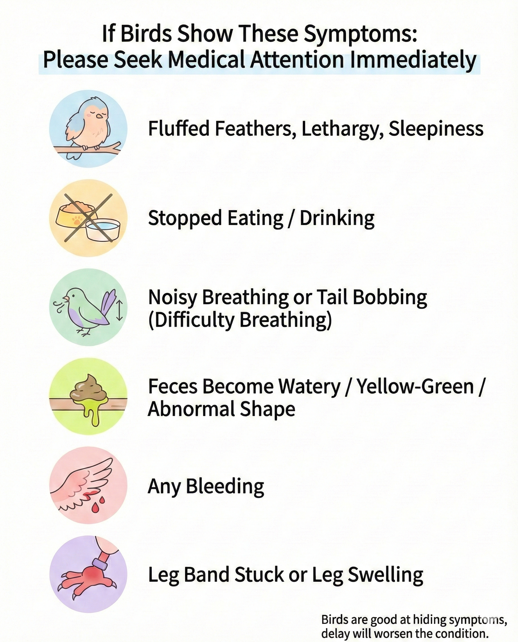
Birds are masters at hiding illness; it’s a survival instinct in the wild. When you observe any of the following, it usually means they are already very sick and need immediate medical attention:
- Fluffed-up feathers, lethargy, drowsiness.
- Stopping eating or drinking.
- Noisy breathing, tail bobbing (a sign of labored breathing).
- Abnormal droppings (e.g., watery, yellowish-green).
- Any bleeding or a stuck leg ring.
Common Questions (FAQ)
Q: Do parrots need regular vet check-ups?
A: It’s recommended to have at least one health check per year. Since birds are good at hiding illness, regular checks (including fecal and blood tests) are the only way to catch potential problems early.
Q: My parrot is plucking its feathers. What should I do?
A: Schedule an appointment with an avian vet immediately. The vet will first rule out all possible medical causes (like infection, malnutrition). If it’s confirmed to be behavioral, improvements must be made in environmental enrichment, lighting, and interaction.
Q: How can I prevent leg ring accidents?
A: Regularly check if the ring is too tight or deformed. Avoid toys with thin strings or small loops, and ensure cage bars are appropriately spaced with no gaps that could snag the ring.
Q: Can my parrot eat only seeds?
A: Absolutely not. A seed-only diet leads to severe nutritional imbalances and fatty liver disease. A parrot’s diet should be based on high-quality formulated pellets, supplemented with fresh vegetables and a small amount of fruit.
Q: Can I trim my parrot’s nails or beak myself?
A: It is not recommended. A bird’s nails and beak contain blood vessels and nerves. Improper trimming can easily cause significant bleeding and pain. It should be handled by a professional vet or an experienced person.
Professional Avian Medical Care to Protect Your Bird’s Health
Cityvet is committed to providing outstanding comprehensive veterinary medical services, upholding the core values of “professionalism, care, and trust.” We aim to offer reasonably priced services, utilize advanced equipment, and provide detailed explanations of various treatment methods to owners, ensuring comprehensive medical care for every pet. Want to book an appointment at our exotic pet clinic? Please call the Tsuen Wan clinic at 2623 5500 or the Yuen Long clinic at 2477 9990. Addresses: G/F, 186 Sha Tsui Road, Tsuen Wan / G/F, Fuk Shun Building, 25 Ping Wai Street, Yuen Long.
Disclaimer: This article provides general information only and is not a substitute for professional medical diagnosis. If you have any concerns, please schedule a veterinary appointment as soon as possible.