
Turtles are semi-aquatic or fully aquatic animals with long lifespans, but they are sensitive to their living environment. Hong Kong’s climate is humid, and temperatures fluctuate, so if water quality, temperature, or sunlight is insufficient, it can easily lead to diseases. This article will introduce common types of turtle diseases, symptoms, treatment procedures, and daily care tips to help owners keep their turtles healthy.
Common Types of Diseases
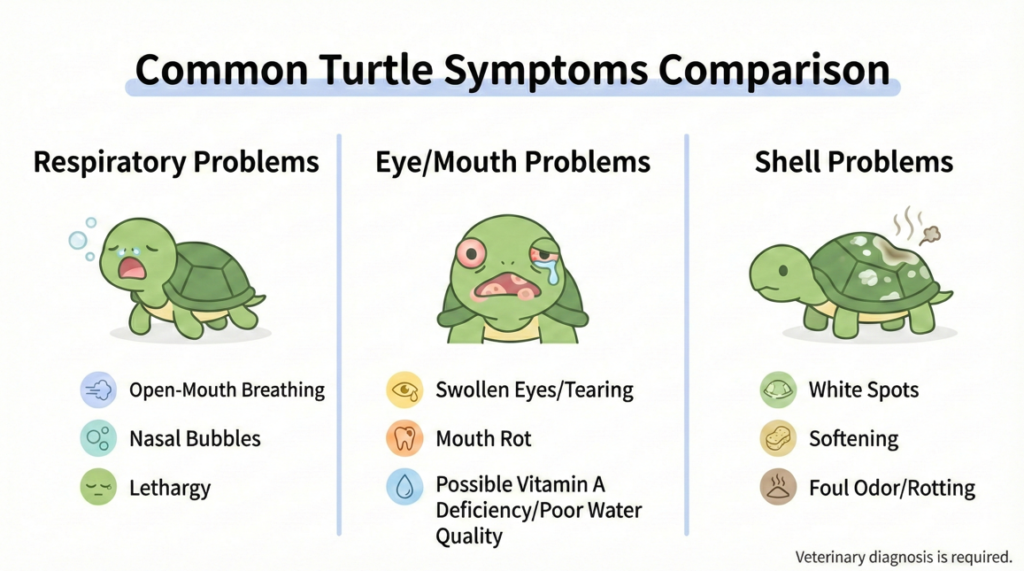
- Respiratory Infections: This includes pneumonia and rhinitis. Symptoms include open-mouth breathing, bubbles from the nostrils, a coughing sound when breathing, and lethargy. They are often caused by large temperature fluctuations, poor water quality, or high environmental humidity.
- Eye and Mouth Diseases: A lack of vitamin A or contaminated water can easily cause swollen eyes, tearing, blindness, or烂肉 in the mouth. A poor diet can also lead to mouth ulcers.
- Shell Softening or Rotting: A lack of calcium, insufficient UVB exposure, or prolonged exposure to dirty water can cause the shell to become soft or develop white spots and necrosis. Be sure to provide a basking area and an appropriate amount of calcium supplements.
- Digestive Problems: This includes refusing to eat, abdominal bloating, constipation, or diarrhea. These are often related to an improper diet or a temperature that is too low.
Warning Signs and When to Seek Medical Attention When a turtle shows the following signs, you should immediately take it to an exotic pet veterinarian:
- Persistent refusal to eat or significant weight loss.
- Rapid breathing, open-mouth breathing, or fluid from the nostrils.
- Swollen eyes, eyes that won’t open, or pus.
- White spots on the shell, a soft shell, or a foul odor.
- Abnormal waste, such as persistent diarrhea or a complete lack of defecation.
Diagnosis Procedures and Treatment A veterinarian will ask the owner about the living environment, food type, water quality management, and sun exposure. They will then perform a physical examination on the turtle, including measuring its weight, observing its breathing, and checking its eyes, mouth, and shell. If necessary, X-rays, blood tests, and fecal tests will be done.
Treatment depends on the cause of the illness: respiratory infections require antibiotics and warmth. Eye problems require vitamin A supplements, a better diet, and eye drops. Shell problems require adjusting calcium and vitamin D3, and checking environmental cleanliness. Some severe cases of shell rot may require debridement and antibacterial treatment.
Daily Care Advice
- Water Quality Management: Use dechlorinated water and install a filter. Regularly change part of the water, avoid drastic temperature changes, and keep the water temperature within the appropriate range for the species.
- UVB and Basking: Turtles need a UVB light source to synthesize vitamin D3. Also, provide a basking area so they can choose to bask or stay in the water. The UVB light needs to be replaced regularly.
- Balanced Diet: Tortoises should eat mainly vegetables and grass. Aquatic turtles can be supplemented with turtle food, small fish, and vegetables. Avoid feeding fried or high-fat foods.
- Monitor Weight and Food Intake: Regularly record your turtle’s weight and food intake. If there are changes, discuss them with a veterinarian early.
- Keep Them Warm: Provide a heat lamp or heating pad to maintain the water and land temperatures and avoid large temperature fluctuations.
Frequently Asked Questions (FAQ)
- What should I do if my turtle has a coughing sound when it breathes? This may be a respiratory infection or pneumonia. You should immediately take it to a veterinarian and adjust the temperature and water quality.
- How can I prevent my turtle’s shell from softening? Provide a UVB lamp, a basking area, and an appropriate source of calcium. Also, keep the water clean.
- Do aquatic turtles always need a heater? Most aquatic turtles need a constant temperature environment. You need to choose an appropriate heater or heat lamp based on the species.
- Can I feed my turtle meat or human food? It is not recommended. Too much meat or processed food can cause nutritional imbalances and obesity.
- How often does a turtle need a health check? It is recommended to have a full check-up every 6–12 months. If there are abnormalities, you should seek medical attention promptly.
Cityvet Turtle Clinic Cityvet is committed to providing outstanding comprehensive veterinary medical services, upholding the core values of “professionalism, care, and trust”. We aim to offer reasonably priced services, utilize advanced equipment, and provide detailed explanations of various treatment methods to owners, ensuring comprehensive medical care for every pet. To book a turtle clinic appointment, please call the Tsuen Wan clinic at 2623 5500 or the Yuen Long clinic at 2477 9990. Our addresses are: G/F, 186 Sha Tsui Road, Tsuen Wan / G/F, Fuk Shun Building, 25 Ping Wai Street, Yuen Long.
Disclaimer: This article provides general information only and is not a substitute for professional medical diagnosis. If you have any concerns, please schedule a veterinary appointment as soon as possible.