

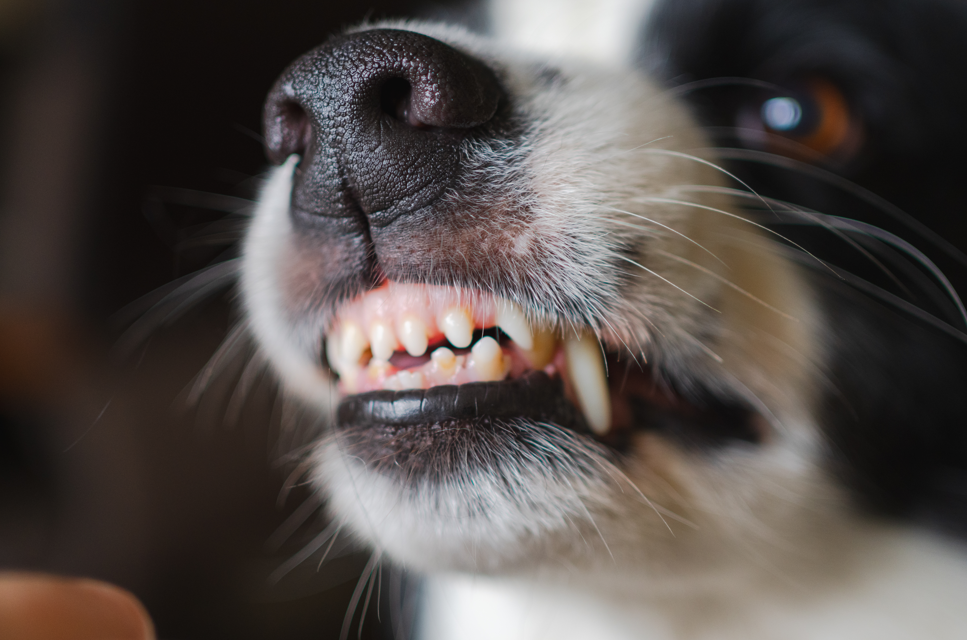
Have you ever been put off by your pet’s “bad breath”? Many people think bad breath in cats and dogs is normal, but it’s actually the most obvious warning sign that their oral health is in trouble. Oral problems can cause pain and affect eating. Severe periodontal disease can even cause bacteria to spread throughout the body, affecting vital organs like the heart, liver, and kidneys. This article will give you an in-depth look at the causes of periodontal disease in pets, the professional teeth cleaning process, and the most important daily care methods to help you protect your furry friend’s bright smile.
Does Your Pet Have Bad Breath? It Could Be a Sign of Periodontal Disease!
Statistics show that over 80% of cats and dogs over the age of three have some degree of periodontal disease. In addition to the most obvious symptom of bad breath, you should also look for the following signs:
- Yellowish-brown tartar on their teeth.
- Red, swollen, inflamed, or bleeding gums.
- Drooling, or even drool with blood in it.
- Hesitating when eating, chewing on only one side, or dropping food.
- Refusing to eat hard food or chew on toys.
- Not wanting their mouth or face to be touched.
If you notice any of these situations, you should book a detailed oral exam with a veterinarian as soon as possible.
What is Periodontal Disease? The Process from Plaque to Root Inflammation
Periodontal disease is a progressive process that starts with bacteria in the mouth.
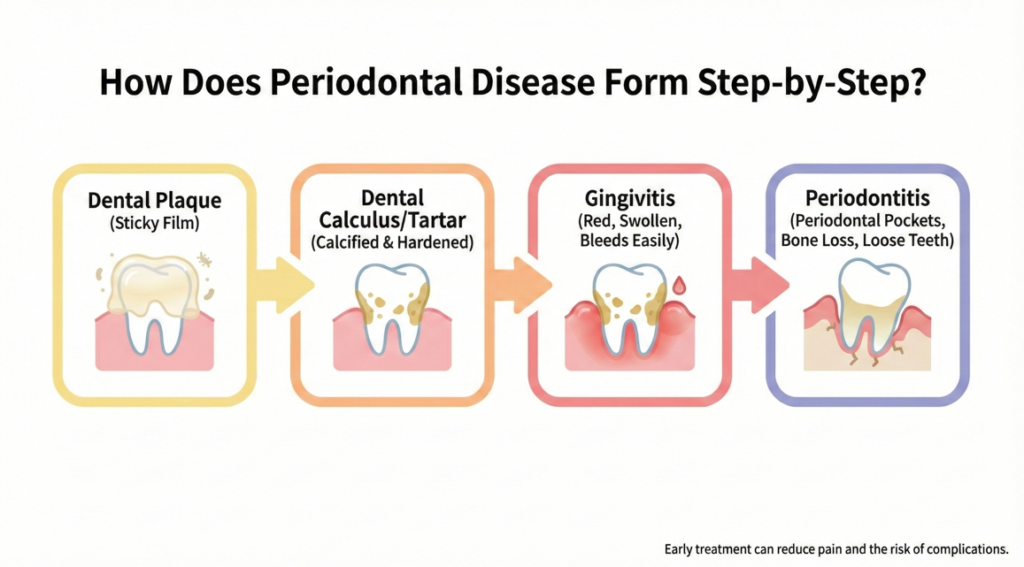
Stage 1: Plaque and Tartar Formation Food particles and bacteria form a sticky biofilm on the surface of the teeth, called “plaque”. If it’s not removed promptly, the plaque will combine with minerals in the saliva and harden into rough “tartar”.
Stage 2: Gingivitis Tartar provides more places for bacteria to hide, irritating the gums and causing them to become inflamed, red, swollen, and prone to bleeding. At this stage, the problem is still reversible.
Stage 3: Periodontitis If gingivitis is not treated, the inflammation will spread deep into the gums, destroying the supporting tissues around the teeth, including the periodontal ligament and the alveolar bone, forming a “periodontal pocket”.
Stage 4: Severe Periodontitis and Tooth Loss As the alveolar bone is continuously eroded, the teeth will start to loosen and the roots will be exposed, eventually leading to tooth loss. The entire process causes the pet a great deal of pain.
The Effect of Periodontal Disease on Overall Health Bacteria in the mouth can enter the bloodstream through the inflamed gum tissue and travel to other parts of the body. This may cause or worsen serious systemic diseases such as endocarditis, kidney disease, and liver disease. Therefore, treating periodontal disease is not just a “cosmetic” issue, but a serious matter concerning overall health.
Professional Dental Treatment Process (Cleaning and Polishing)
Professional dental treatment is far more than just scraping off surface tartar. It must be performed under general anesthesia to safely and thoroughly clean every tooth.
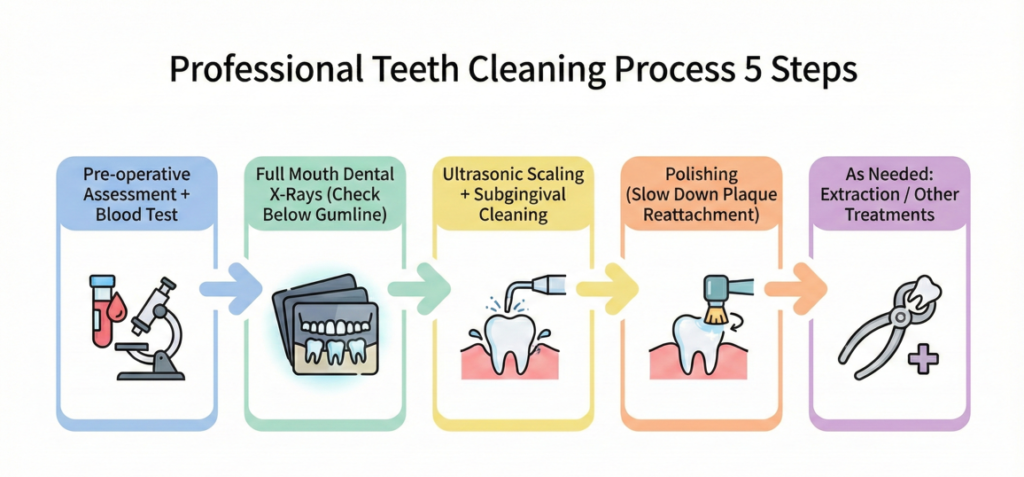
- Step 1: Pre-op Assessment and Anesthesia As with all surgeries, we will first perform a detailed physical and blood exam to ensure your pet is a suitable candidate for anesthesia.
- Step 2: Full Mouth Dental X-rays This is a crucial step. Many dental problems occur below the gum line and cannot be seen with the naked eye. Dental X-rays allow us to clearly assess the health of the tooth roots and alveolar bone and to determine if there are any dental root abscesses, bone loss, or fractures.
- Step 3: Ultrasonic Scaling and Subgingival Cleaning A veterinarian will use a professional ultrasonic scaler to shatter and remove the tartar and plaque on the tooth surface and below the gum line (in the periodontal pocket).
- Step 4: Polishing and Assessment After scaling, the tooth surface will be rough. We will use a special paste to polish each tooth, making the surface smooth again and slowing down the re-adhesion of plaque. The vet will then re-examine each tooth one by one.
- Step 5: Tooth Extraction or Other Treatments (If Applicable) If the X-rays and probing reveal that a tooth cannot be saved (e.g., severe looseness, a fractured root, or an abscess), the veterinarian will perform a professional tooth extraction while ensuring the pet receives sufficient pain relief.
Daily At-Home Oral Care: Prevention is Better Than Cure
Professional cleaning can remove existing tartar, but daily care by the owner is key to maintaining long-term health.
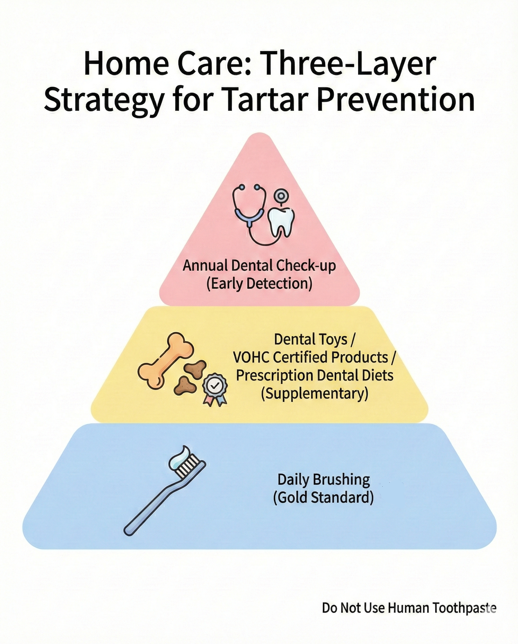
- Daily Brushing: The Gold Standard This is the most effective way to prevent plaque from turning into tartar. Use a pet-specific toothbrush and toothpaste and consistently brush your pet’s teeth daily. Do not use human toothpaste, as it contains fluorides and foaming agents that are harmful to pets.
- Dental Chews, Dental Toys, and Prescription Food There are many products on the market that have been scientifically proven to help reduce plaque and tartar formation, such as dental chews or prescription food certified by the VOHC (Veterinary Oral Health Council). These can be used as a supplement to brushing.
- Regular Oral Exams It is recommended to take your pet to the clinic for a comprehensive physical and oral exam once a year so that the vet can detect any potential problems early.
Frequently Asked Questions (FAQ)
Q1: Why does a pet need general anesthesia for teeth cleaning? Is the risk high?
A1: General anesthesia is necessary for three reasons: 1) to safely clean hidden areas below the gum line; 2) to perform full-mouth X-rays; and 3) to prevent the pet from struggling due to fear or the noise of the instruments, which could be dangerous to them and the operator. With sufficient pre-op assessment and strict anesthesia monitoring, the risk can be reduced to a very low level.
Q2: Is “anesthesia-free teeth cleaning” safe?
A2: We absolutely do not recommend it. Anesthesia-free cleaning can only remove some of the surface tartar. It doesn’t solve the root cause and cannot address the most crucial problems below the gum line. During the process, the pet can also be easily frightened and may even have its tooth enamel scratched, which can cause tartar to build up more quickly.
Q3: At what age should I start being concerned about my pet’s dental health?
A3: The earlier, the better! It’s best to start getting them used to having their mouth touched and brushed when they are still a puppy or kitten. It is generally recommended to have the first detailed oral exam when the pet is one year old to assess whether a professional cleaning is needed.
Q4: Besides bad breath, what are some other signs that my pet has a dental problem?
A4: Other signs include bleeding gums when playing with toys, a preference for soft food, making noise when chewing, pawing at its face or mouth, and becoming more irritable. Since pets are very good at hiding pain, by the time these behaviors appear, the oral problem may already be quite serious.
Don’t Let Oral Problems Affect Your Pet’s Quality of Life
Cityvet is committed to providing outstanding comprehensive veterinary medical services, upholding the core values of “professionalism, care, and trust”. We aim to offer reasonably priced services, utilize advanced equipment, and provide detailed explanations of various treatment methods to owners, ensuring comprehensive medical care for every pet.
To book a cat or dog dental exam, please call the Tsuen Wan clinic at 2623 5500 or the Yuen Long clinic at 2477 9990. Our addresses are: G/F, 186 Sha Tsui Road, Tsuen Wan / G/F, Fuk Shun Building, 25 Ping Wai Street, Yuen Long.
Disclaimer: This article provides general information only and is not a substitute for professional medical diagnosis. If you have any concerns, please schedule a veterinary appointment as soon as possible.