

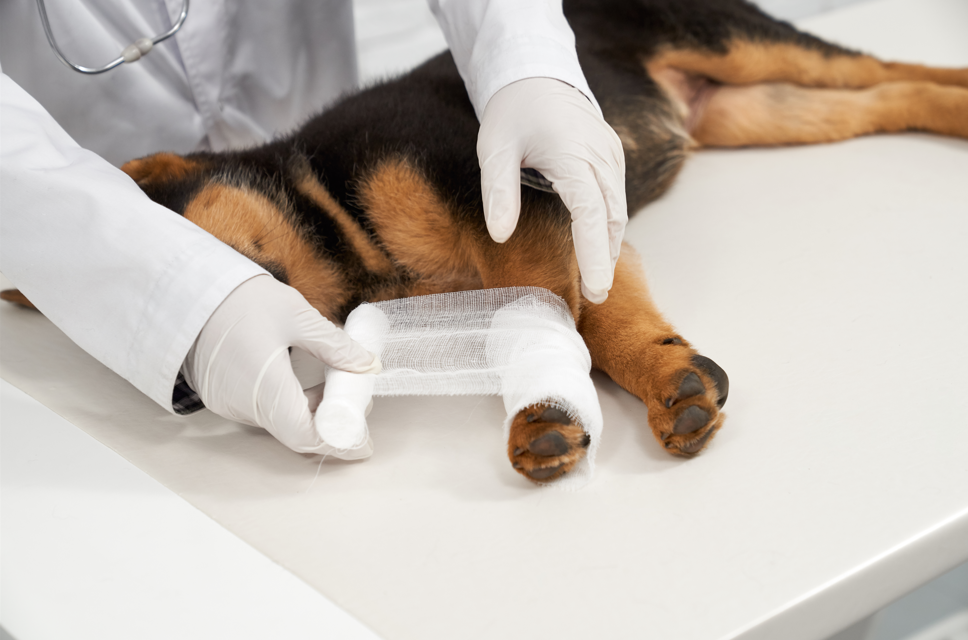
“Dog arthritis” (scientific name: Degenerative Joint Disease, DJD) is one of the most common chronic diseases in senior dogs, but it can also occur in younger dogs with congenital joint problems. This disease causes joint cartilage to wear down, leading to pain, stiffness, and decreased mobility. Many owners mistake this for their dog “just getting old,” thus overlooking the chronic pain they are enduring. Early symptom recognition and seeking veterinary diagnosis and treatment are key to managing arthritis and improving a dog’s quality of life.
Early Symptoms of Arthritis: Not Just “Getting Old”
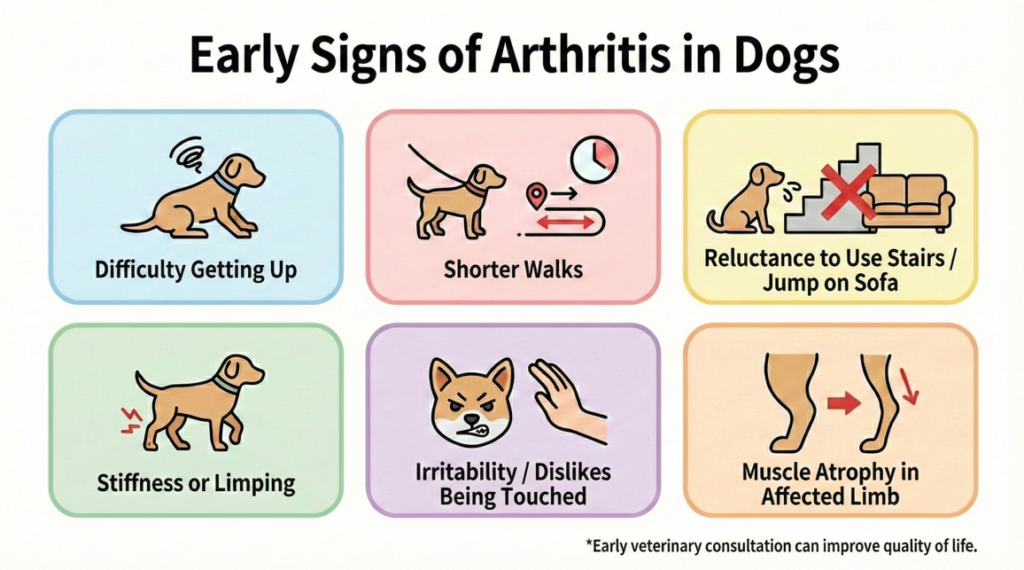
Arthritis pain is chronic, and dogs will gradually adapt, so symptoms are often subtle. Please watch for these changes:
- Difficulty Getting Up: Especially after sleeping or resting for a long time, they may struggle to stand.
- Reluctance to Move: No longer actively asking for walks, playing, or walks are noticeably shorter.
- Resists Certain Movements: Unwilling to go up or down stairs, or jump onto the sofa or into a car.
- Behavioral Changes: May become irritable or anxious due to pain, or reluctant to be touched on the affected area.
- Stiffness or Limping: A stiff gait when walking, or a noticeable limp.
- Muscle Atrophy: The muscles in the affected limb may become thinner due to disuse.
How a Professional Vet Diagnoses Arthritis
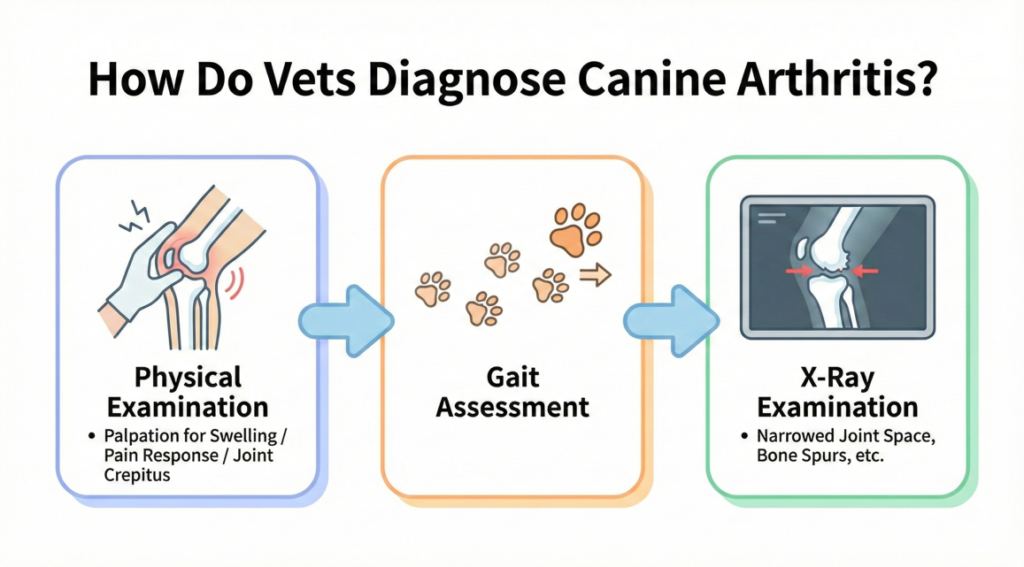
An accurate diagnosis is the foundation for a treatment plan. The vet will perform:
- Physical Exam: Palpating the dog’s joints to check for swelling, pain response, or “crepitus” (a grinding sound in the joint), and assessing their gait.
- X-rays: This is the gold standard for diagnosing arthritis. X-rays can clearly show joint changes, such as bone spur growth (osteophytes), joint space narrowing, and subchondral bone sclerosis.
Comprehensive Treatment Plan: A Multimodal Approach to Pain Management
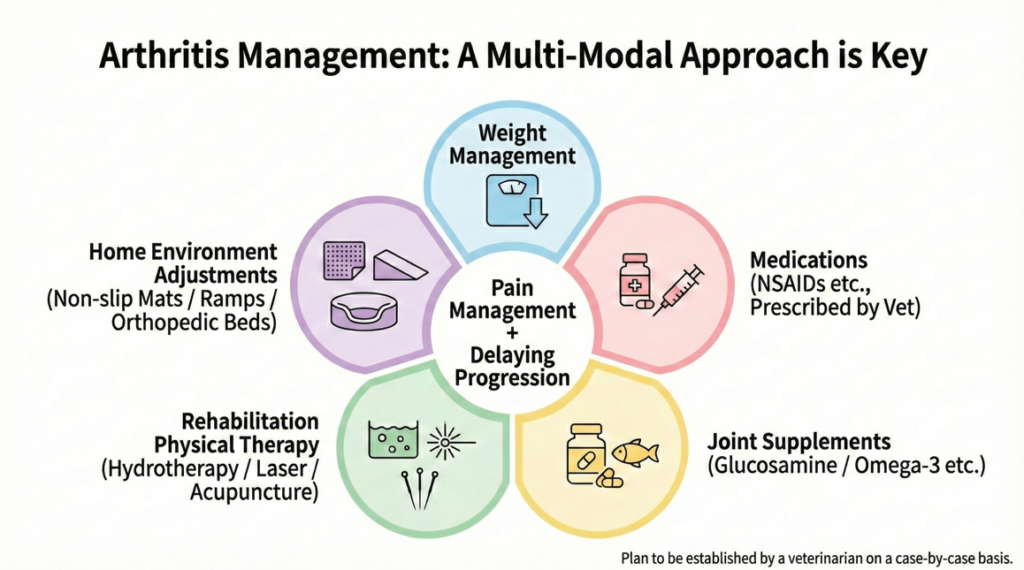
Arthritis cannot be cured, but it can be effectively managed. A vet will use a “Multimodal Therapy” approach to control pain and slow progression:
1. Weight Management
- This is the most important component. Losing weight significantly reduces the load on the joints and alleviates pain.
2. Medications and Supplements
- Non-Steroidal Anti-Inflammatory Drugs (NSAIDs): Vet-prescribed NSAIDs are effective for reducing inflammation and pain. Never use human medications, as they can be toxic.
- Joint Supplements: Glucosamine, Chondroitin, and Omega-3 fatty acids (from fish oil) help protect cartilage and reduce inflammation.
3. Rehabilitation and Physical Therapy
- This is a key non-drug option that helps strengthen muscles and maintain joint flexibility.
- Hydrotherapy: Walking or swimming in water uses buoyancy to reduce joint stress while exercising muscles.
- Laser Therapy: Low-level laser can promote blood circulation, reducing inflammation and pain.
- Acupuncture: Traditional Chinese Veterinary Medicine (TCVM) acupuncture has been shown to be effective for chronic pain relief.
4. Home Environment Adjustments
- Provide an orthopedic bed.
- Use pet ramps.
- Lay down anti-slip mats.
Frequently Asked Questions (FAQ)
Q: Can dog arthritis be prevented?
A: While it can’t be completely prevented (especially genetic factors), maintaining an ideal weight, moderate exercise, avoiding excessive high-impact jumping (especially in puppyhood), and providing quality nutrition can all help delay the onset of arthritis.
Q: Will my dog need to be on pain medication for life? Will it damage the liver or kidneys?
A: Chronic pain management is long-term. The vet will use the lowest effective dose and recommend regular blood tests to monitor the medication’s effect on liver and kidney function to ensure safety.
Q: Are joint supplements really effective?
A: Joint supplements are not drugs and cannot treat existing bone spurs, but they help protect remaining cartilage, slow the rate of wear, and provide anti-inflammatory effects.
Q: Does Hong Kong’s humid weather make arthritis worse?
A: Yes. Many owners report their dog’s arthritis is more noticeable during humid or cold weather. During these times, it’s important to keep them warm and the environment dry.
Q: Which dog breeds are at high risk for arthritis?
A: Large breeds (like Labradors, Golden Retrievers, German Shepherds) and dogs with specific genetic issues (like hip dysplasia) are at higher risk.
Is your dog experiencing joint pain or mobility issues?
Cityvet is committed to providing outstanding comprehensive veterinary medical services, upholding the core values of “professionalism, care, and trust.” We aim to offer reasonably priced services, utilize advanced equipment, and provide detailed explanations of various treatment methods to owners, ensuring comprehensive medical care for every pet. Please call the Tsuen Wan clinic at 2623 5500 or the Yuen Long clinic at 2477 9990. Addresses: G/F, 186 Sha Tsui Road, Tsuen Wan / G/F, Fuk Shun Building, 25 Ping Wai Street, Yuen Long.
Disclaimer: This article provides general information only and is not a substitute for professional medical diagnosis. If you have any concerns, please schedule a veterinary appointment as soon as possible.