

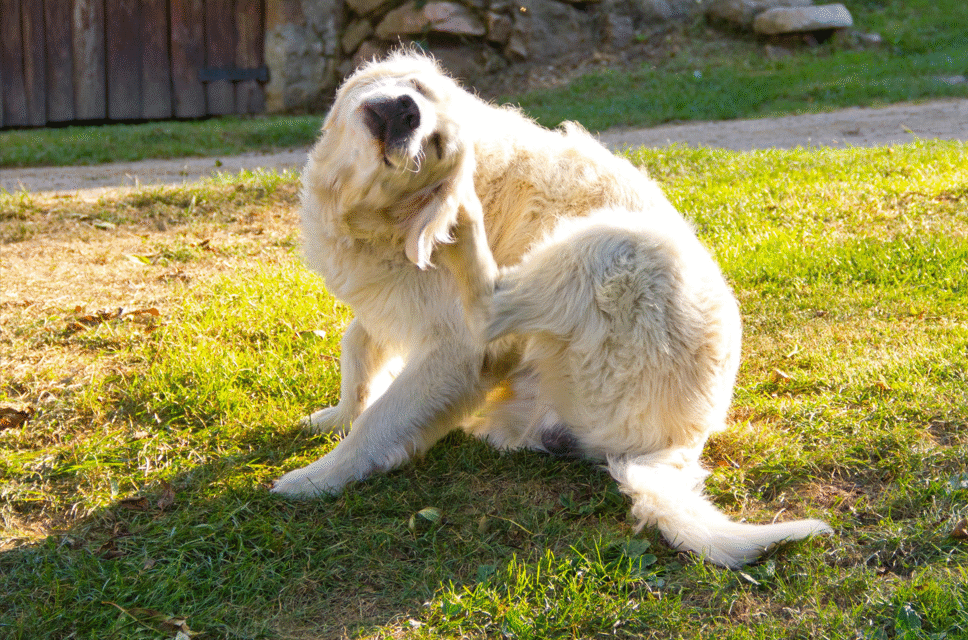
Seeing a dog constantly scratching, licking its paws, or rubbing its body day and night is a scene that causes distress and worry for every owner. A dog “itching” and “losing fur” are two of the most common reasons for visiting a veterinary clinic.
However, “itching” and “hair loss” are just symptoms, and the underlying causes are extremely complex. It could be allergies, but it could also be caused by “infection,” “parasites,” or even deeper “internal medical/immune system” problems (like hormonal imbalances).
If you assume it’s “allergies” without a proper diagnosis, you might delay treatment for the real condition. This article will provide an in-depth analysis of the differential diagnosis process for a dog’s itch and how veterinarians find the true root cause.
Professional Diagnosis: The Real Culprit Behind Itching and Hair Loss
When a dog presents with persistent itching or hair loss, the vet’s first priority is not to directly treat “allergies,” but to perform a series of “Differential Diagnoses,” acting like a detective to rule out possibilities one by one.
Differential Diagnosis Step 1: Is it a Superficial “Infection”? (Skin Cytology)
In Hong Kong’s hot and humid weather, once the skin barrier is compromised, bacteria and fungi (especially yeast) can easily overgrow, causing severe itching. Vets will use “Skin Cytology,” commonly known as an “impression smear” (using tape to get a sample from the skin), and look at it under a microscope.
1. Bacterial Infection (Bacterial Pyoderma)
- Features: This is one of the most common skin problems and is usually secondary (i.e., caused by another underlying issue).
- Symptoms: Red skin, papules (red dots), pustules (pimples), skin flakes (dandruff), hair loss, and may be accompanied by an odor.
- Diagnosis: Observing a large number of bacteria and inflammatory cells under a microscope via an “impression smear”.
2. Fungal / Yeast Infection
- Yeast (Malassezia):
- Features: Tends to grow uncontrollably in moist, oily skin environments (like ear canals, between toes, and in armpits).
- Symptoms: Causes intense itching, greasy skin, a strong body odor (a “musty” smell), and red skin that may even turn black and thicken.
- Diagnosis: Seeing “peanut-shaped” or “bowling pin-shaped” yeast under an “impression smear”.
- Ringworm:
- Features: Is contagious to humans (zoonotic).
- Symptoms: Typical symptoms are circular patches of hair loss, scaling, and broken hairs; itchiness varies.
- Diagnosis: The vet will use a “Wood’s lamp” for initial screening and a “Fungal Culture” to confirm.
Differential Diagnosis Step 2: Is it “Parasites”? (Skin Scraping)
If the above infections are ruled out, or if the infection looks suspicious, the next step is to check for deeper parasites. The vet will use a “Skin Scraping” to find the culprit.
1. Sarcoptes (Scabies)
- Features: Highly contagious, causes extremely intense itching, and can even be temporarily transmitted to humans.
- Common sites: Ear margins, elbows, hocks (ankles), and abdomen.
2. Demodex (Demodicosis)
- Features: Only proliferates when the dog’s immune system is suppressed (e.g., puppies, senior dogs).
- Symptoms: Typical symptoms are localized hair loss and red skin; it usually only becomes very itchy if there is a secondary bacterial infection.
Differential Diagnosis Step 3: Is it an “Internal Medical/Immune System” Problem?
If a skin infection recurs quickly after treatment, or if the pet (especially a small dog) shows symmetrical hair loss without strong itchiness, the vet will highly suspect an internal medical or endocrine (hormonal) disease is involved. These chronic diseases can only be confirmed through specialized blood tests.
1. Hypothyroidism
- Features: This refers to insufficient hormone secretion by the thyroid gland, leading to a general slowdown in metabolism.
- Symptoms: Symptoms are often subtle, including lethargy, unexplained weight gain, and cold intolerance. On the skin, it presents as symmetrical hair loss (on both sides of the body), sparse fur, and a very typical “Rat Tail”—hair loss on the tail, leaving it bald.
- Itchiness: The disease itself usually doesn’t cause severe itching, but it lowers the skin’s resistance, making it extremely prone to secondary bacterial or yeast infections, which then lead to itching.
2. Cushing’s Syndrome (Hyperadrenocorticism)
- Features: This is caused by excessive secretion of cortisol (a natural steroid) in the body, leading to decreased immunity.
- Symptoms: The classic “poly-symptoms”: excessive drinking (polydipsia), urination (polyuria), eating (polyphagia), a pot-belly, and hair loss. The skin becomes thin, loses elasticity, and shows symmetrical hair loss.
- High-risk group: This is one of the most common chronic diseases in small dogs and is particularly prevalent in breeds common in Hong Kong, such as Poodles and Pomeranians.
Differential Diagnosis Step 4: Pinpointing the “Real” Allergen
After ruling out all the “infectious,” “parasitic,” and “endocrine” causes above (or if itching persists after treating them), the vet will then investigate the underlying cause of the dog’s allergies.
- Flea Allergy Dermatitis (FAD)
- Food Allergy
- Environmental Allergy (Atopy)
Professional Veterinary Treatment Plans
Treating dog skin disease focuses on “multimodal therapy,” which requires finding and treating the root cause:
- Control infection and parasites: This is the top priority. Based on the diagnosis, the vet will prescribe oral or topical antibiotics, antifungals, or anti-parasitic drugs.
- Manage endocrine diseases: If blood tests confirm hypothyroidism or Cushing’s, the dog will need to start long-term oral medication to stabilize hormone levels.
- Relieve itching and inflammation: While treating the root cause, the vet may use medication (like steroids or new immunomodulators) to quickly “put out the fire” and break the “itch-scratch-infection” vicious cycle.
- Supportive care: Using a vet-prescribed medicated shampoo is a key part of treatment, effectively cleaning the skin and inhibiting bacteria and yeast.
- Allergy management: Only after all infectious and internal medical problems are controlled will the vet start to manage the allergies, for example, by switching to a prescription diet, using immunotherapy, or giving allergy medication.
Frequently Asked Questions (FAQ)
Q: My dog is always scratching, why does the vet need to do a “skin scrape” and “impression smear”?
A: This is for “differential diagnosis”. The vet must use a “skin scrape” and “microscope” to check for parasites (like Demodex, Sarcoptes) and an “impression smear” to check for bacterial or yeast infections. The symptoms of these problems are almost identical to allergies and must be ruled out first.
Q: My dog’s skin is greasy and smells bad. Is it allergies?
A: This is very likely a classic symptom of a “yeast (Malassezia)” infection. Yeast infections are often secondary to allergies or occur in skin folds (like in French Bulldogs, Shar-Peis) and are very common in Hong Kong.
Q: My dog’s tail is losing fur and has become a “rat tail.” What’s the problem?
A: A “Rat Tail” is a very typical symptom of “Hypothyroidism,” which is an endocrine disease. However, it can also be caused by Demodex or severe allergies. You should get a blood test as soon as possible.
Q. Are Poodles and Pomeranians particularly prone to skin problems?
A: Yes, these small breeds are a high-risk group for certain chronic endocrine diseases, such as “Cushing’s Syndrome”. This disease causes decreased immunity and symmetrical hair loss and is often mistaken for allergies.
Q: Is my dog’s skin disease contagious to people or other pets?
A: It depends on the cause. Skin diseases caused by “Sarcoptes” (scabies) or “Ringworm” are highly contagious and can be transmitted to humans or other animals. However, problems caused by “Demodex,” endocrine imbalances, or most allergies (like atopy) are not contagious.
Dog Skin Allergy Medical Services
Cityvet is committed to providing outstanding comprehensive veterinary medical services, upholding the core values of “professionalism, care, and trust.” We aim to offer reasonably priced services, utilize advanced equipment, and provide detailed explanations of various treatment methods to owners, ensuring comprehensive medical care for every pet. Suspect your dog has skin allergies or parasite problems? Please call the Tsuen Wan clinic at 2623 5500 or the Yuen Long clinic at 2477 9990. Addresses: G/F, 186 Sha Tsui Road, Tsuen Wan / G/F, Fuk Shun Building, 25 Ping Wai Street, Yuen Long.
Disclaimer: This article provides general information only and is not a substitute for professional medical diagnosis. If you have any concerns, please schedule a veterinary appointment as soon as possible.