
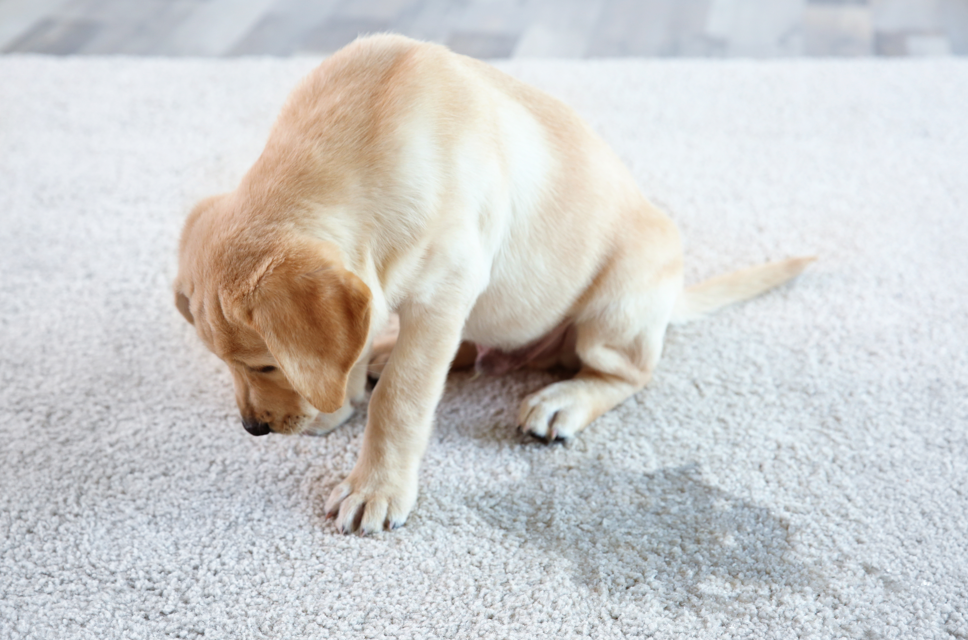
When a dog starts urinating in unusual places, it is not always a behavioural problem. The cause may be a urinary tract infection (UTI) or something more dangerous, such as urethral obstruction in a male dog. If left untreated, toxins can build up in the body and the condition can become life-threatening.
This article explains the common warning signs, diagnostic process, and emergency treatment approach for Hong Kong pet owners, so you know when your dog needs to see a veterinarian immediately.
How do urinary tract infections happen in dogs?
The urinary tract includes the kidneys, ureters, bladder, and urethra. When bacteria travel upward from the genital area into the urinary tract, infection can develop. Common contributing factors include:
- Incomplete urination or holding urine for long periods
- Reduced immunity, such as in senior dogs or pets with chronic illness
- Urinary stones or tumours
- Congenital or acquired anatomical abnormalities
Both male and female dogs can develop urinary tract infections, but because male dogs have a longer urethra, obstruction can become especially dangerous when it occurs.
Common signs of urinary tract infection: when should you suspect a problem?
Owners should watch for one or more of the following:
- Squatting frequently to urinate, but producing only small amounts each time
- Straining to urinate, crying out, or appearing painful during urination
- Urine that looks darker, contains blood, or has a strong odour
- Reluctance to be touched around the abdomen and lower energy
- Urinating indoors in places where the dog normally would not
If any of these signs are present, it is best to arrange an examination promptly rather than buying medication yourself or waiting to see if it improves.
Why can urethral obstruction in male dogs be fatal?
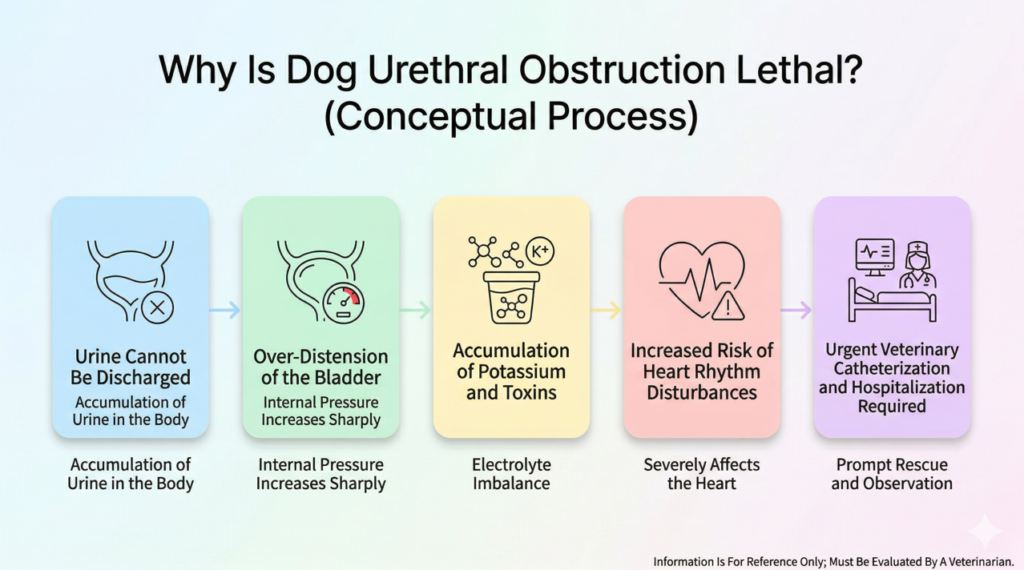
“Urinary obstruction” means urine cannot be passed out of the body normally. Common causes include stones, crystals, blood clots, tumours, or severe inflammation causing swelling and blockage of the urethra.
Once a blockage develops:
- Urine becomes trapped in the bladder, which may over-distend or even rupture
- Toxins such as urea and potassium cannot be eliminated, leading to uraemia and hyperkalaemia
- Hyperkalaemia directly affects cardiac conduction and can cause arrhythmias or even cardiac arrest
Emergency warning signs include:
- Repeated attempts to urinate with no urine coming out at all
- Constant licking of the genital area and obvious pain or crying
- A distended abdomen or marked tension and pain when touched
- Severe lethargy, weakness, unsteadiness, or vomiting
If urethral obstruction is suspected in a male dog, it should be treated as an emergency and a veterinary clinic should be contacted as soon as possible.
What will the veterinarian check after you arrive?
Depending on the case, the veterinarian may perform:
- History-taking and physical examination: including checking the size and tension of the bladder
- Urinalysis: to look for blood, white blood cells, bacteria, crystals, and other abnormalities
- Blood tests: to assess kidney function and electrolytes, especially potassium
- Imaging such as X-rays or ultrasound: to look for stones, tumours, or structural abnormalities
If obstruction is confirmed, the veterinarian may, depending on the case:
- Place a urinary catheter to relieve the blockage temporarily
- Recommend hospitalisation, intravenous fluids, and close monitoring in more severe cases
General treatment direction and hospital care
Treatment depends on the cause and severity, and may include:
- Antibiotics for urinary tract infection, taken for the full prescribed course
- Anti-inflammatory medication, pain relief, and medication to help urination
- Urinary catheterisation and bladder flushing
- Stone management, such as dissolution diets, lithotripsy, or surgery
- Hospitalisation with fluids and monitoring of kidney values and urine output
For home care, the veterinarian may advise:
- Increasing water intake by providing multiple bowls or adding wet food
- Managing body weight and diet to reduce the risk of stone formation
- Monitoring urination frequency and urine appearance
- Returning for repeat urine and blood tests when recommended
How can owners help prevent urinary problems in dogs?
- Provide clean drinking water that is easy to access, and encourage your dog to drink more
- Allow regular toilet breaks and avoid long periods of holding urine
- Arrange regular health checks, especially for senior dogs
- If you notice blood in the urine, frequent urination, or inability to urinate, do not self-medicate or delay seeking care
FAQ
Q1 | My dog has blood in the urine but is still eating normally and seems bright. Can I just observe first?
It is still best to have the urine checked by a veterinarian promptly. Blood in the urine can be caused by cystitis, stones, or even tumours, and early treatment is safer.
Q2 | Can a urinary tract infection clear up on its own?
Some very mild cases may seem to improve temporarily, but if the infection is not fully resolved it can recur or become more serious. The correct approach is to have the dog diagnosed by a veterinarian and complete the prescribed treatment.
Q3 | Does a male dog with urethral obstruction always need to be hospitalised?
Most obstructed cases do need hospitalisation for monitoring, fluids, and repeated blood and urine assessment, because severe electrolyte imbalance can become life-threatening very quickly.
Q4 | Does neutering prevent urinary tract problems?
Neutering mainly affects the risk of reproductive diseases. It may have some indirect influence on certain urinary issues, but it is not the only or main preventive measure for urinary tract infections or stones.
Q5 | Can I use human urinary medication or painkillers for my dog?
Absolutely not. Human medications may be toxic to dogs or have very different dosing requirements. Medication should only be prescribed by a veterinarian.
CityVet Canine Urinary Clinic
CityVet is committed to providing outstanding comprehensive veterinary care. Guided by the core values of professionalism, compassion, and trust, we aim to offer fair pricing, advanced equipment, and clear explanations of treatment options, so that every pet receives thorough medical support.
Would you like to book a urinary consultation for your dog? Please call our Tsuen Wan clinic at 2623 5500 or our Yuen Long clinic at 2477 9990. Address: G/F, 186 Sha Tsui Road, Tsuen Wan / Shop 2, G/F, Fook Shun Building, 25 Ping Wui Street, Yuen Long.
Disclaimer: This article provides general information only and cannot replace professional medical diagnosis. If you have concerns or suspect urinary obstruction, please book a veterinary examination or seek emergency support as soon as possible.