Cats are naturally animals that “conserve water.” When combined with stress, obesity, or insufficient water intake, they are prone to Feline Lower Urinary Tract Disease (FIC/FLUTD). Some male cats may suffer from urethral obstruction, which is an emergency. It is very important for owners to master early signs, as well as water and litter management.
What is FIC/FLUTD?
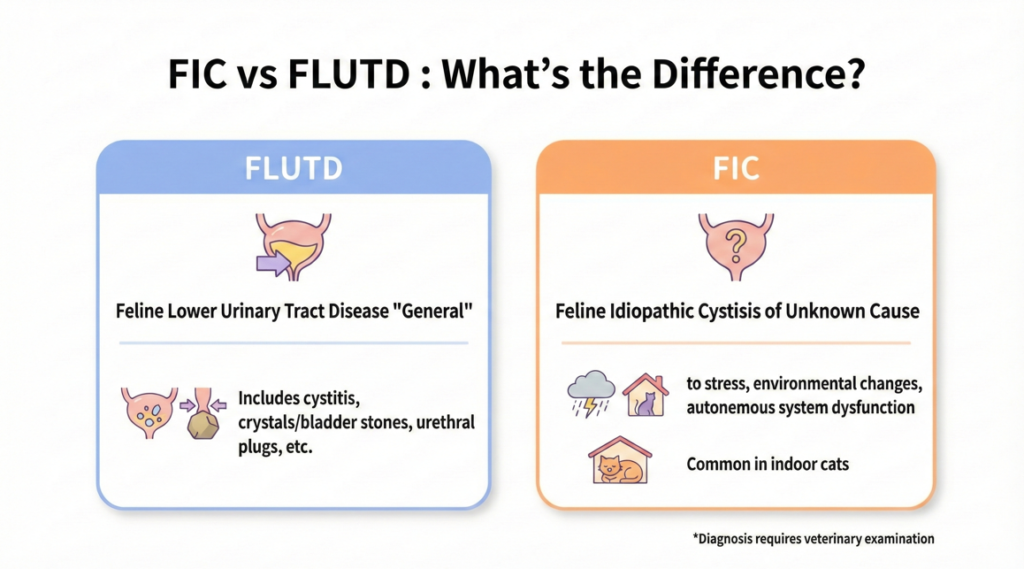
- FLUTD (Feline Lower Urinary Tract Disease): Broadly refers to a group of syndromes occurring in the bladder and urethra, including cystitis, urinary crystals/stones, urethral blockage, etc.
- FIC (Feline Idiopathic Cystitis): Idiopathic cystitis with unknown causes, related to stress, environmental changes, and autonomic regulation, common in indoor cats.
Common Symptoms and Warning Signs
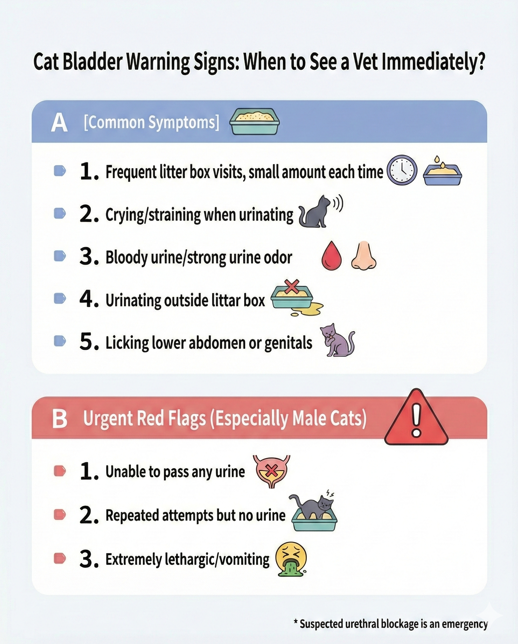
- Frequently entering and exiting the litter box, passing very little urine each time.
- Crying, pain, or straining with an elongated posture while urinating.
- Blood in urine, strong urine odor.
- Urinating indiscriminately outside the litter box, peeing on the bed/carpet.
- Licking the lower abdomen or urethral opening.
- If a male cat cannot pass urine at all, tries frequently without urine, has extremely poor spirit, or vomits, it is an emergency and requires immediate medical attention.
The Importance of Water Intake for Bladder Health
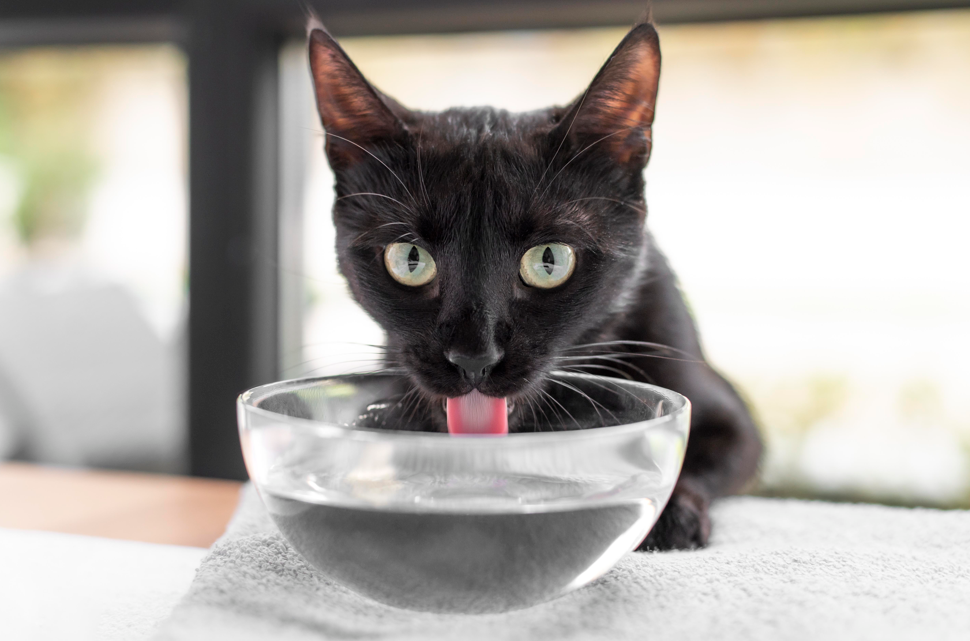
The more concentrated the urine, the easier it is to form crystals and irritate the bladder mucosa. Increasing water intake helps dilute urine, increase urination frequency, and flush out irritants.
Feasible methods include:
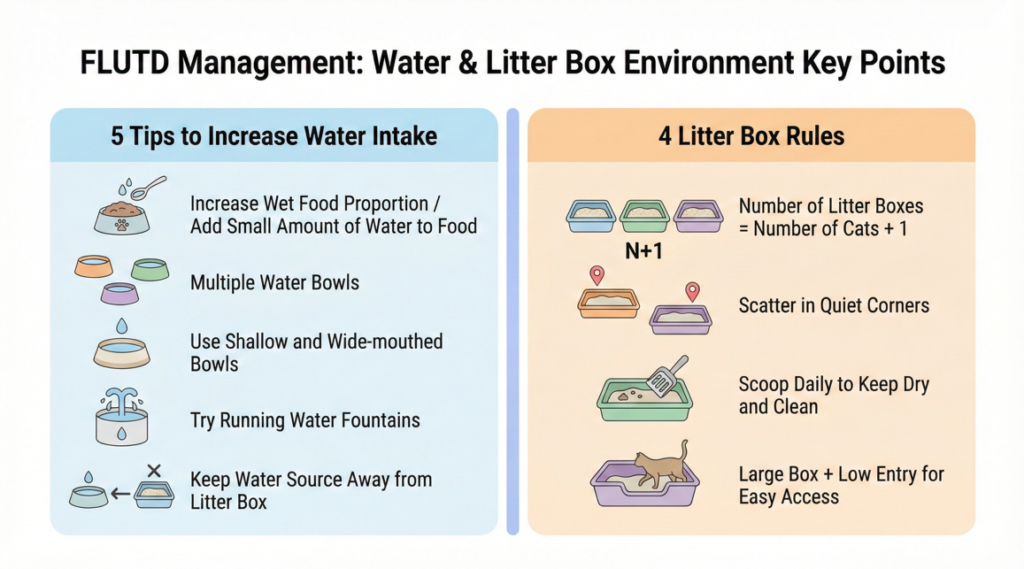
- Increasing the proportion of wet food, or adding a small amount of water to food.
- Providing multiple water bowls, using shallow and wide-mouthed bowls.
- Trying a water fountain to attract cats that love flowing water.
- Avoiding providing only a single water source near the litter box; some cats prefer water and toilet areas to be separate.
Small Details regarding Cat Litter and Toilet Environment
- Number of Litter Boxes: Generally recommended to be “number of cats in the home + 1,” scattered in different quiet corners.
- Litter Texture and Cleanliness: Keep dry and soft, scoop daily, and avoid odors and poor foot-feel that make them unwilling to enter.
- Litter Box Size and Height: Elderly or obese cats need lower edges and sufficient space.
- Environmental Stress: Avoid placing the litter box next to the washing machine, or in areas with frequent movement or loud noises.
Diagnosis and Treatment Options (Assessed by Veterinarian)
- Physical examination and palpation of the bladder.
- Urinalysis: pH, specific gravity, hematuria, white blood cells, presence of crystals.
- Imaging: X-ray or Ultrasound to assess for stones or bladder wall thickening.
- Arranged according to the situation:
- Pain relief and bladder soothing medications.
- Antibacterial treatment (if infection is confirmed).
- Special urinary prescription diet, increasing water intake.
- When a male cat has a urethral blockage, catheterization, bladder flushing, and hospitalization for monitoring may be required.
Environment and Stress Management (Especially for FIC)
- Maintain a stable routine and avoid sudden major changes.
- Provide hiding spaces and high platforms to increase a sense of security.
- Reserve a quiet room “just for them” to avoid conflicts with other pets.
- Use interactive toys, scent games, and short periods of play to help release stress.
Recurrence and Long-term Tracking
FIC and some FLUTD cases may recur repeatedly and belong to the “chronic management” type. Establish a long-term plan with the vet, including: diet, water intake, weight control, and regular follow-up urine tests.
FAQ
- If I only see one or two drops of bloody urine, can I observe first?
It is recommended to see a doctor as soon as possible, especially for male cats, to avoid missing the golden time for urethral obstruction. - Is it okay if the cat only eats dry food?
Yes, but the risk of lower urinary tract disease is higher. It is recommended to increase the proportion of wet food or use other methods to increase water intake. - Is FIC contagious?
FIC itself is not a contagious disease, but multi-cat households share stress and environmental factors, so management requires holistic consideration. - Must stones be operated on?
It depends on the location, size, and type of stone; some can be dissolved with the aid of prescription food, while others require surgery or other interventions. - Does the cat need to eat prescription food long-term after recovering?
Whether it is needed long-term depends on case risk and recurrence status, decided jointly by the veterinarian and owner.
Cityvet Cat Clinic
Cityvet is committed to providing outstanding comprehensive veterinary medical services, upholding the core values of “professionalism, care, and trust,” providing reasonable charges, introducing advanced instruments, and explaining treatment methods in detail to owners to provide comprehensive medical care for every pet. Want to book an appointment for the cat clinic? Please call the Tsuen Wan branch at 2623 5500 or the Yuen Long branch at 2477 9990. Address: G/F, 186 Sha Tsui Road, Tsuen Wan / Shop 2, G/F, Fuk Shun Building, 25 Ping Wui Street, Yuen Long.
Disclaimer: This article provides general information only and cannot replace professional medical diagnosis. If in doubt, please book a veterinary examination as soon as possible.