
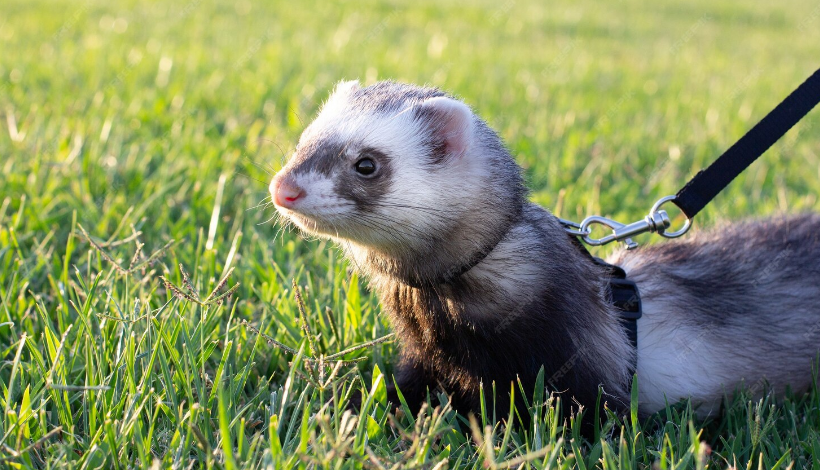
Ferrets are lively, curious animals loved by many families in Hong Kong. However, in exotic pet medicine they are also recognized as a species with a relatively high disease burden. After 3 years of age, the incidence of many chronic diseases rises significantly. Understanding and identifying the three most common major ferret diseases – insulinoma, adrenal disease, and lymphoma – is essential knowledge for every ferret owner. Early detection can greatly improve survival and quality of life.
Ferrets’ High Metabolic Rate and Health Risks
Ferrets are strict carnivores with a very fast metabolism, and their physiology is highly sensitive to hormonal and blood sugar fluctuations. Because of early breeding background and the influence of indoor lighting environments in Hong Kong, endocrine problems are relatively common. This means that even small behavioral changes may point to deeper internal disease.
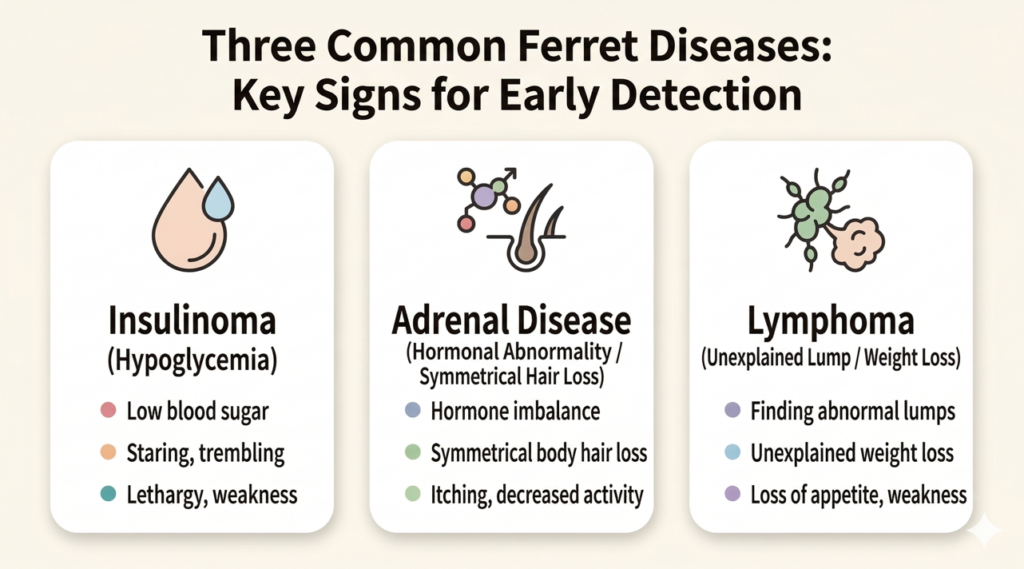
Disease 1: Insulinoma
Insulinoma is a functional pancreatic tumor that overproduces insulin, causing blood glucose levels to fall to dangerously low levels.
- Early warning signs:
- Blank staring episodes: The ferret may suddenly stop what it is doing and seem absent or disconnected.
- Drooling and pawing at the mouth: This is a classic sign of nausea caused by low blood sugar.
- Hind limb weakness: The ferret may walk unsteadily, wobble, or suddenly collapse.
- Clinical management: Veterinarians usually diagnose this condition with a fasting blood glucose test. Treatment may include oral steroids to suppress insulin secretion or surgery to remove visible tumor tissue. Owners should maintain a high-protein, very low-carbohydrate diet to avoid dramatic blood sugar fluctuations.
Disease 2: Adrenal Disease
Unlike adrenal problems in humans, adrenal disease in ferrets is mainly caused by overgrowth of adrenal tissue that produces excessive sex hormones such as estrogen or testosterone. This has been linked to prolonged irregular artificial lighting indoors in Hong Kong, as well as endocrine feedback changes associated with early neutering.
- Early warning signs:
- Symmetrical hair loss: Hair loss often begins on the tail and gradually spreads along both sides of the body.
- Swelling of the genital area: A neutered female ferret may develop vulvar swelling similar to being in season.
- Behavioral changes: Increased aggression or mounting behavior may be seen.
- Advanced treatment: Deslorelin implants are now widely considered a preferred option in clinical practice. These small implants effectively suppress abnormal hormone secretion and are often chosen to avoid surgical risk.
Disease 3: Lymphoma
Lymphoma is one of the most common malignant tumors in ferrets and can occur at any age. It may involve a single organ such as the spleen or lymph nodes, or affect multiple body systems.
- Early warning signs:
- Unexplained lumps: Firm masses may be felt under the jaw, in the armpits, or in the groin.
- Ongoing weight loss: Body weight continues to drop despite a normal appetite.
- Chronic diarrhea or rapid breathing: Signs vary depending on the organs affected by the tumor.
- Clinical intervention: Diagnosis relies on fine needle aspiration, tissue biopsy, and ultrasound examination. Although lymphoma is difficult to cure completely, chemotherapy or palliative treatment can still help maintain a good quality of life.
The Importance of Regular Health Screening
For ferrets over 3 years old, a full health check every six months is recommended. Baseline screening should include fasting blood glucose, blood biochemistry, and abdominal ultrasound. These tests can detect small pancreatic nodules or adrenal enlargement early, allowing intervention before disease progresses.
Home Care Recommendations in Hong Kong
When keeping ferrets in Hong Kong, light control deserves special attention. Ferrets should ideally have at least 12 hours of complete darkness each day for sleep, which may help regulate melatonin and reduce the risk of adrenal disease. At the same time, a stable high-protein diet is a cornerstone of maintaining blood sugar stability.
FAQ
- What should I do if my ferret suddenly collapses or has a seizure?
This may be severe hypoglycemic shock. Apply a small amount of honey to the gums immediately and seek veterinary care at once. - Is hair loss on the tail in a ferret just a skin problem?
Tail hair loss is often one of the earliest signs of adrenal disease, so endocrine causes should be ruled out first. - How often does a deslorelin implant need to be repeated?
It is typically replaced every 6 to 12 months, depending on the individual ferret’s clinical response. - Can lymphoma be prevented in ferrets?
There is currently no proven way to prevent lymphoma, but maintaining a healthy diet and reducing exposure to environmental carcinogens may be beneficial. - Is reduced activity normal in an elderly ferret?
Not always. Many owners mistake disease signs for simply old age, but weakness may actually be related to insulinoma and should be assessed by a veterinarian.
CityVet Ferret Consultation
CityVet is committed to providing outstanding, comprehensive veterinary care. Guided by our core values of professionalism, compassion, and trust, we aim to offer reasonably priced services, advanced equipment, and clear explanations of all treatment options, so every pet receives complete medical support.
To book a ferret consultation, please call our Tsuen Wan branch at 2623 5500 or our Yuen Long branch at 2477 9990. Address: G/F, 186 Sha Tsui Road, Tsuen Wan / Shop 2, G/F, Fuk Shun Building, 25 Ping Wui Street, Yuen Long.
Disclaimer: This article is for general information only and does not replace professional medical diagnosis. If you have concerns, please arrange a veterinary examination as soon as possible.