

Common reasons ferrets in Hong Kong are brought in for veterinary care
From a clinical perspective, ferrets have a fast metabolism and are sensitive to environmental and dietary changes. When they feel unwell, the signs may appear only as lower energy, sleepiness, or appetite fluctuation, so owners may easily think the ferret is simply “a bit off today”. Small exotic pets can change very quickly, so the condition should be watched closely and a consultation arranged when needed.
Common health problems in ferrets
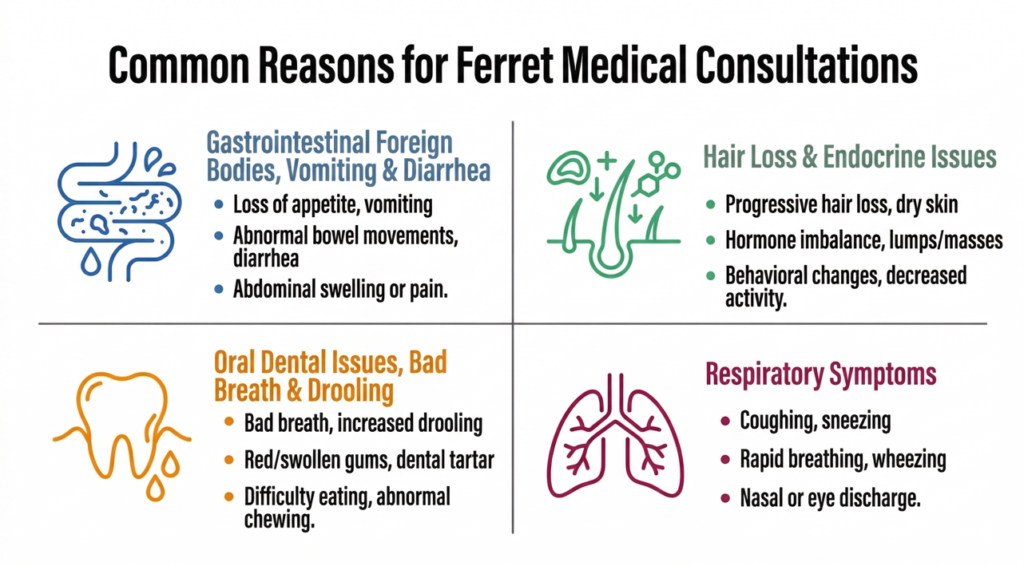
Gastrointestinal foreign bodies, vomiting, and diarrhoea
Vomiting, diarrhoea, or thinner stools may be related to gastroenteritis, a foreign body, or obstruction. Because ferrets are curious and active, environmental safety and prevention of accidental ingestion are especially important. If the owner notices sudden refusal to eat, repeated retching, diarrhoea, or a rapid drop in energy, a veterinary appointment should be arranged promptly.
Hair loss, skin, and endocrine problems
Hair loss, thinning skin, and itching may be related to skin disease or endocrine problems. When these changes are mild or localised, they are easy to delay addressing. But if they continue to spread, or are accompanied by changes in weight, energy, or appetite, veterinary attention should be sought promptly.
Oral, dental, and respiratory signs
Drooling, bad breath, or difficulty biting and chewing may be related to dental disease or oral pain. If breathing becomes rapid or noisy, respiratory problems should also be considered. These situations usually require veterinary examination rather than simply changing the food at home.
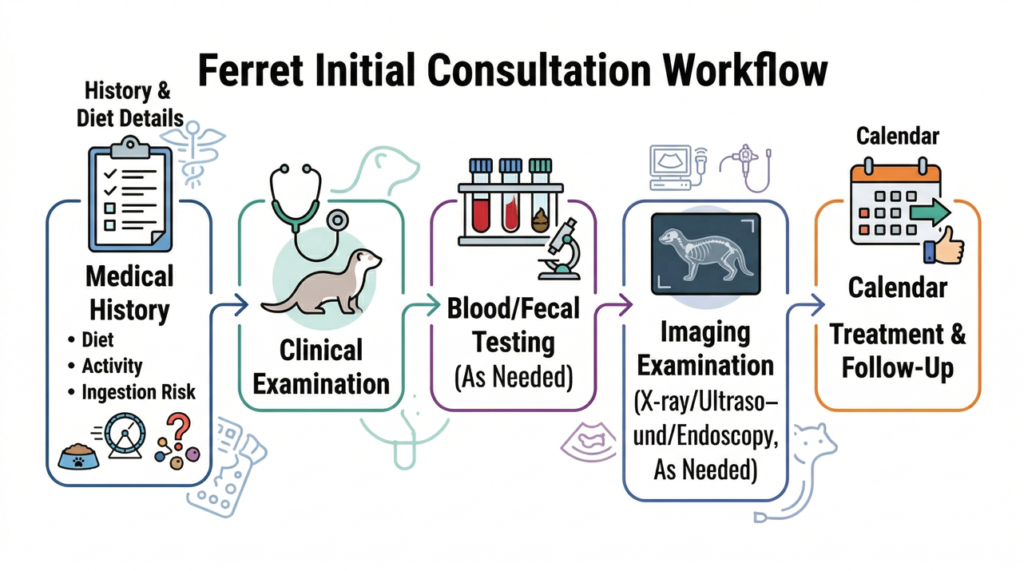
Consultation process and examination items
A ferret consultation usually begins with the history, diet, activity, and housing environment, followed by a clinical examination. Blood tests, faecal tests, and imaging such as digital X-ray, ultrasound, or endoscopy may be arranged when necessary. For owners, the greatest value of these checks is that they help clarify the true direction behind the symptoms rather than only dealing with the surface discomfort.
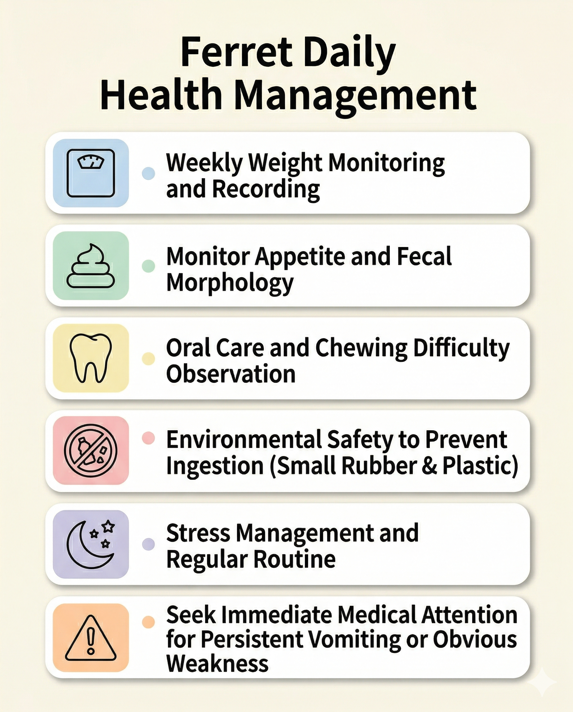
How can owners manage health on a day-to-day basis?
Daily ferret management should focus on body weight monitoring, oral care, environmental safety, preventing accidental ingestion, stress control, and everyday observation. If owners record appetite, stool output, and activity each week, early changes are usually easier to detect.
When should you seek veterinary attention quickly?
If a ferret develops sudden weakness, unsteady walking, marked dullness, persistent vomiting, diarrhoea, obvious breathing difficulty, or complete refusal to eat, the case is higher risk and veterinary care should be sought promptly. These small exotic pets can deteriorate quickly, so calling the clinic first to explain the situation is often safer than waiting until the next day.
FAQ
Q1: Does a ferret that vomits or has thinner stools need to see a vet?
A: Yes, because it may be related to gastroenteritis, a foreign body, or an obstruction.
Q2: Is hair loss in ferrets always seasonal shedding?
A: Not necessarily. It may also be related to skin disease or endocrine problems.
Q3: Is bad breath in a ferret just a strong mouth smell?
A: Not necessarily. Drooling, bad breath, and difficulty chewing may all be seen with dental disease or oral pain.
Q4: What checks are usually done during a ferret’s first consultation?
A: Common steps include history taking, clinical examination, laboratory testing, and imaging when needed.
Q5: What should I prepare before a ferret consultation in Hong Kong?
A: It is helpful to bring recent dietary records, stool details, changes in activity, and information about possible accidental ingestion risks.
CityVet Ferret Clinic
CityVet is committed to providing outstanding comprehensive veterinary care, guided by the core values of professionalism, compassion, and trust. We aim to offer reasonable fees, introduce advanced equipment, and explain treatment options clearly to pet owners, so that every pet receives full medical support.
To book a ferret consultation, please call our Tsuen Wan branch at 2623 5500 or our Yuen Long branch at 2477 9990. Address: G/F, 186 Sha Tsui Road, Tsuen Wan / Shop 2, G/F, Fuk Shun Building, 25 Ping Wui Street, Yuen Long.
Disclaimer: This article is for general information only and does not replace professional medical diagnosis. If you have any concerns, please book a veterinary examination as soon as possible.