


In Hong Kong’s humid, subtropical climate, the threat of “pet parasites” cannot be ignored. Whether it’s a dog that is frequently active outdoors or a cat that stays indoors, they can all be harmed by fleas, ticks, and heartworm. These three types of parasites not only affect the pet’s health, but some can even be transmitted to humans. Regular prevention is the only way to protect your pet. This article will detail the dangers of these three parasites and provide “Vet-Recommended Plans” to help you build a strong line of defense for your pet’s health.
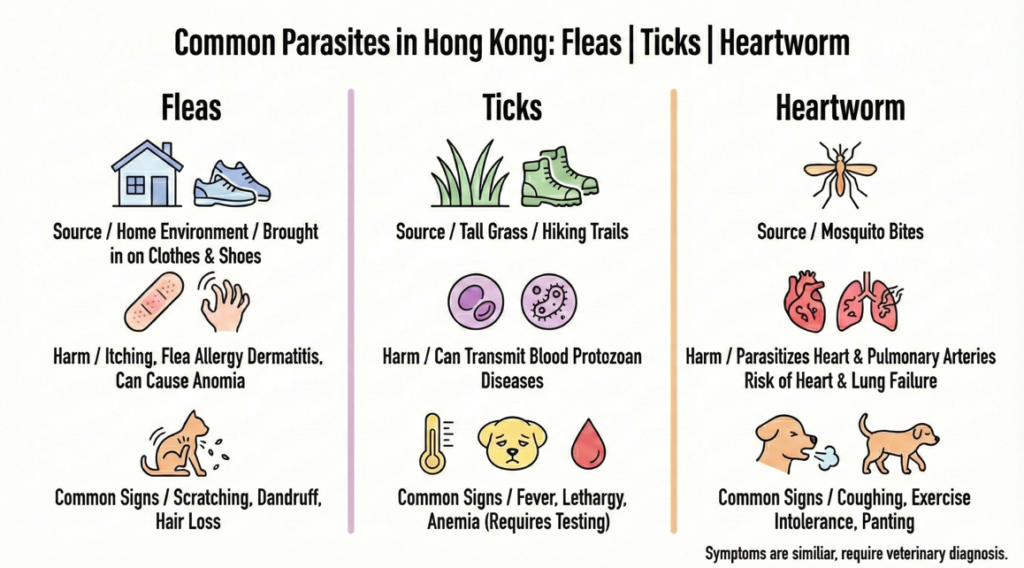
- Fleas: The Culprit of Itching and Skin Allergies
Dangers and Symptoms
- Skin Problems: Flea bites cause intense itching and dermatitis in pets, and in severe cases, “Flea Allergy Dermatitis (FAD)”.
- Anemia and Transmission: A large flea infestation can cause anemia in puppies or kittens. Fleas are also intermediate hosts for tapeworms.
Prevention Plan
- Year-Round: Fleas are active all year in Hong Kong, so prevention must be continuous.
- Environmental Control: Regularly wash pet bedding and carpets, and use environmental sprays or a vacuum cleaner to clean the home.
- Ticks: Transmitters of Deadly Diseases
Dangers and Symptoms
- Blood Diseases: Tick bites can transmit various fatal blood-borne diseases, such as Tick Fever (Ehrlichiosis, Babesiosis), which can severely damage a pet’s organs.
- Areas of Activity: Ticks are often found in grass, woods, or on hiking trails. In Hong Kong, owners who frequently take their dogs outdoors or to rural areas must be especially vigilant.
Prevention Plan
- Dual Protection: It is recommended to use two prevention products with different mechanisms, such as an oral medication combined with a topical spot-on or a repellent collar, for optimal effect.
- Check After Outings: After every trip outdoors, you must carefully check your pet’s fur, especially in the ears, between the toes, and in the groin area.
- Heartworm: The Invisible Killer
Dangers and Symptoms
- Transmission Route: Transmitted through mosquito bites. Mosquitoes are very active in Hong Kong, making the risk of transmission extremely high.
- Serious Consequences: Heartworms live in the pet’s heart and pulmonary arteries, causing cardiopulmonary failure, coughing, exercise intolerance, and can eventually lead to death.
Prevention Plan
- Monthly Oral Medication: Vets usually recommend giving pets a monthly oral heartworm preventive medication.
- Annual Screening: Even with regular medication, dogs still need an annual heartworm screening to ensure they are not infected.
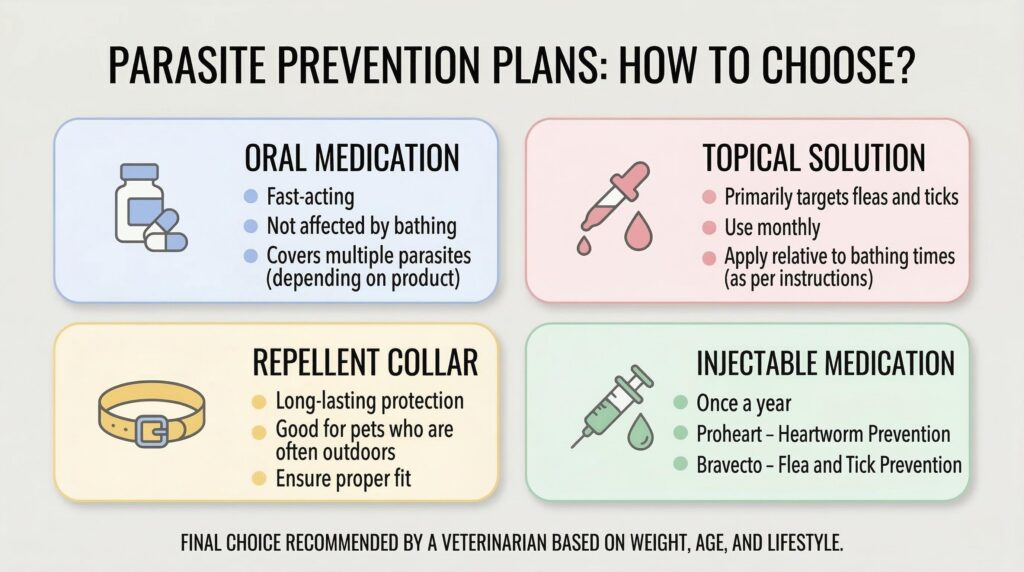
Vet-Recommended Parasite Prevention Plans Pet owners should consult their veterinarian to choose the most suitable “Vet-Recommended Plan” based on their pet’s age, weight, lifestyle, and health status. Common product types include:
- Oral Medications: Fast-acting, not affected by bathing, and prevent both internal and external parasites (like heartworm, fleas, ticks).
- Topical Spot-ons: Applied to the skin on the back of the neck, mainly targeting fleas and ticks.
- Parasite-Repellent Collars: Can continuously release repellent ingredients, providing long-term protection.
Frequently Asked Questions (FAQ)
- Q: Do indoor cats need flea and heartworm prevention?
- A: Absolutely. Fleas can be brought into the home on their owner’s clothes or shoes ; heartworm is transmitted by mosquitoes, which can easily fly into the house.
- A: Absolutely. Fleas can be brought into the home on their owner’s clothes or shoes ; heartworm is transmitted by mosquitoes, which can easily fly into the house.
- Q: How often does my pet need to be dewormed?
- A: Puppies and kittens need more frequent deworming. Adult pets should be given a broad-spectrum oral medication regularly, based on their living environment and the vet’s advice.
- A: Puppies and kittens need more frequent deworming. Adult pets should be given a broad-spectrum oral medication regularly, based on their living environment and the vet’s advice.
- Q: Can ticks be transmitted to people?
- A: Ticks themselves do not spread between pets and people, but they can also transmit diseases to humans if they bite them.
- A: Ticks themselves do not spread between pets and people, but they can also transmit diseases to humans if they bite them.
- Q: What is Tick Fever?
- A: Tick Fever is a blood-borne disease transmitted by ticks that destroys red blood cells and platelets, causing fever, anemia, and bleeding. It requires prompt treatment.
- A: Tick Fever is a blood-borne disease transmitted by ticks that destroys red blood cells and platelets, causing fever, anemia, and bleeding. It requires prompt treatment.
- Q: What should I do if I find a tick on my pet?
- A: You should immediately put on gloves and use tweezers or a special tool to grasp the tick close to the skin and pull it out completely. Then, kill it by submerging it in alcohol. Contact your vet as soon as possible for an examination and blood screening.
Protect Your Pet from the Threat of Parasites
Cityvet is committed to providing outstanding comprehensive veterinary medical services, upholding the core values of “professionalism, care, and trust.” We aim to offer reasonably priced services, utilize advanced equipment, and provide detailed explanations of various treatment methods to owners, ensuring comprehensive medical care for every pet. Want to create the most effective parasite prevention plan for your pet? Please call the Tsuen Wan clinic at 2623 5500 or the Yuen Long clinic at 2477 9990. Addresses: G/F, 186 Sha Tsui Road, Tsuen Wan / G/F, Fuk Shun Building, 25 Ping Wai Street, Yuen Long.
Disclaimer: This article provides general information only and is not a substitute for professional medical diagnosis. If you have any concerns, please schedule a veterinary appointment as soon as possible.