
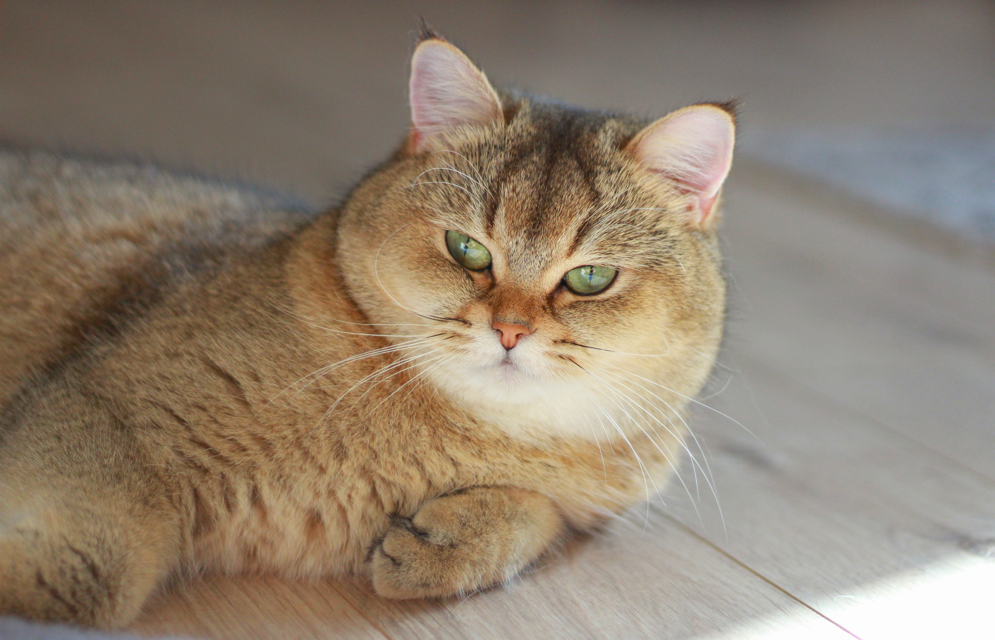
Obesity is one of the most common health problems in modern pets. A few extra kilograms may look cute, but can significantly increase the burden on joints, heart, and lungs, increase risks of diabetes, and shorten lifespan. The good news is: through scientific body condition assessment and stable diet and exercise plans, most pets can slim down healthily.
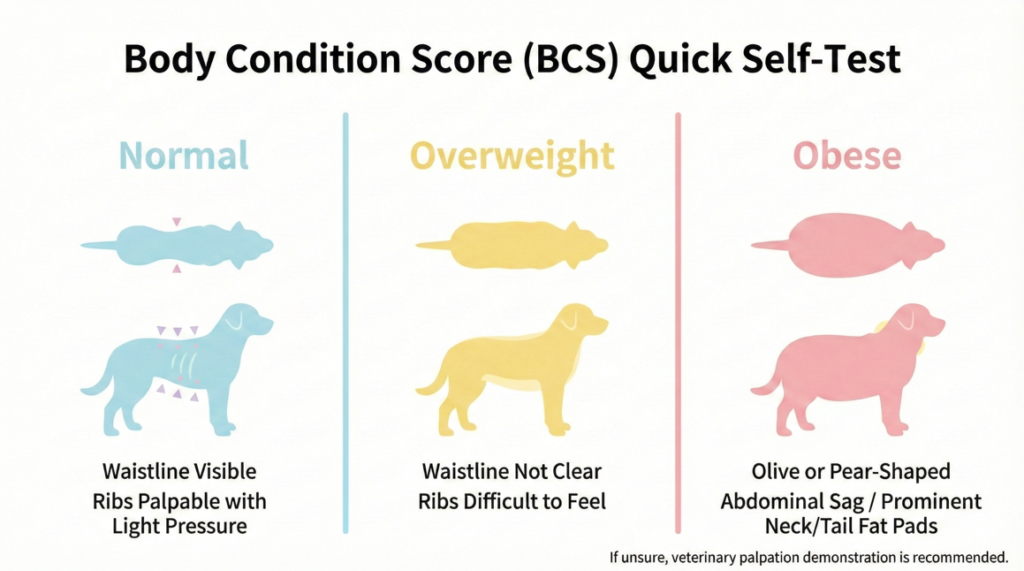
How to Judge if a Pet is Overweight? (Body Condition Score Concept)Veterinarians often use “Body Condition Score (BCS)” to assess if one is overweight:
- Normal: Waistline is obvious, ribs can be felt with light pressure, slight fat coverage.
- Overweight: Waistline is not obvious, ribs are hard to feel or require force to feel.
- Obese: Looks like an “olive/pear shape” from above, sagging abdomen, thick fat pads behind the neck.
You can also cooperate at home:
- Weigh regularly and record changes.
- Ask the vet to demonstrate how to palpate and assess body condition during check-ups.
Health Risks Brought by Obesity
- Increased burden on joints and spine, prone to arthritis and limping.
- Increased pressure on cardiopulmonary and circulatory systems.
- Increased risk of endocrine and metabolic problems (such as diabetes).
- Higher surgical and anesthesia risks.
- Decreased quality of life, reduced willingness to move forming a vicious cycle.
Setting Weight Loss Goals: Safe Speed is More Important than “Fast”
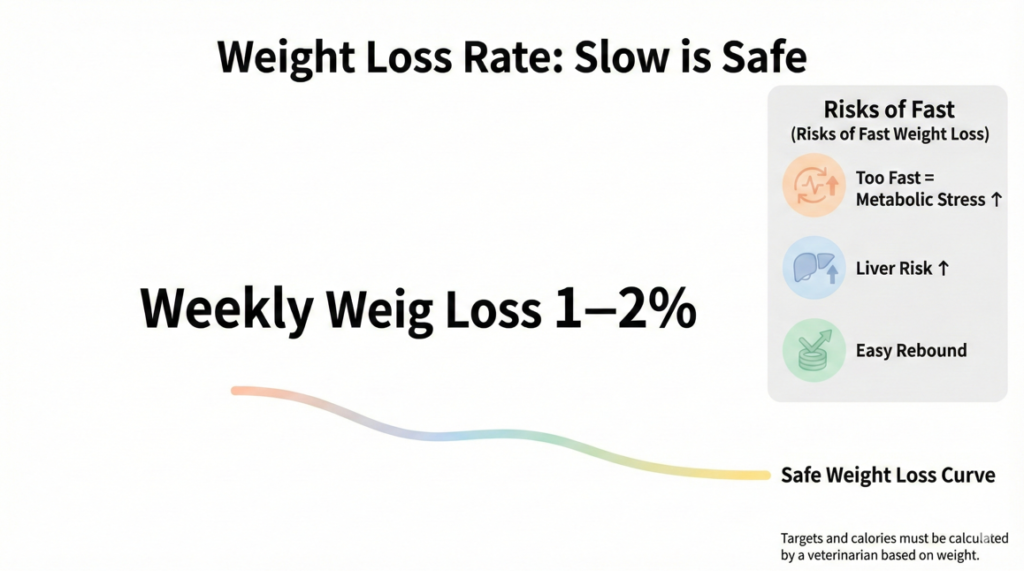
- Generally recommended to reduce body weight by about 1–2% per week; losing weight too fast affects metabolism and liver health.
- The vet calculates daily recommended calorie intake based on current weight and ideal weight.
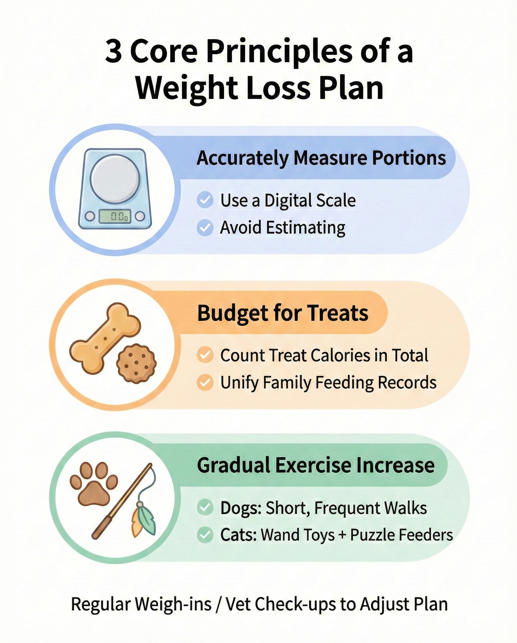
- Regular follow-up visits are needed during weight loss to adjust goals and calories according to actual progress.
Diet Adjustment: From “About a Scoop” to “Precise Measurement”
- Choose suitable weight management formulas or low-calorie high-fiber formulas.
- Use an electronic scale to measure portions per meal to avoid “visual estimation errors.”
- Design a “snack budget”: Count snack calories into the total daily calories.
- Family members and caregivers should unify feeding records to avoid “repeated feeding.”
- Avoid feeding pets with leftovers, fried foods, or human snacks.
Exercise Plan: Matching Physical and Joint Conditions
- Dogs: Start with multiple short walks daily, slowly increasing time and distance; avoid sudden high-intensity running or jumping.
- Cats: Increase daily activity through teaser wands, laser pointers, and puzzle feeder toys.
- Elderly pets or those with joint problems should first be assessed by a veterinarian for acceptable exercise types and duration.
Maintaining Results: From Short-term “Dieting” to Long-term “Management”
- After reaching ideal weight, do not immediately revert to the old diet; need to switch to a maintenance menu.
- Maintain monthly weigh-ins or quarterly check-ups to detect weight rebound early.
- Establish “non-food” rewards: Play more, walk, groom, etc.
FAQ
- Is it necessary to eat “diet food”?
Not necessarily, but weight management formulas make it easier to control calorie and nutritional balance, making them suitable as one of the weight loss tools. - Can I give absolutely no snacks during the weight loss period?
You can include a small amount of snacks in the daily calorie budget and choose low-calorie options to avoid extra “cheating.” - Isn’t it better to get thin faster?
Losing weight too fast increases metabolic and liver risks; stable and slow is safe. - Is the more exercise the better?
Exercise needs to match joint and cardiopulmonary conditions; excessive exercise can easily cause injury, so proceed gradually. - Does an elderly dog still need to lose weight?
Depends on joints, cardiopulmonary, and other disease conditions; for many elderly dogs, moderate weight loss can significantly improve mobility and quality of life.
Cityvet Pet Obesity Management/Nutrition Consultation Clinic
Cityvet is committed to providing outstanding comprehensive veterinary medical services, upholding the core values of “professionalism, care, and trust,” providing reasonable charges, introducing advanced instruments, and explaining treatment methods in detail to owners to provide comprehensive medical care for every pet. Want to book an appointment for the Pet Obesity Management/Nutrition Consultation Clinic? Please call the Tsuen Wan branch at 2623 5500 or the Yuen Long branch at 2477 9990. Address: G/F, 186 Sha Tsui Road, Tsuen Wan / Shop 2, G/F, Fuk Shun Building, 25 Ping Wui Street, Yuen Long.
Disclaimer: This article provides general information only and cannot replace professional medical diagnosis. If in doubt, please book a veterinary examination as soon as possible.