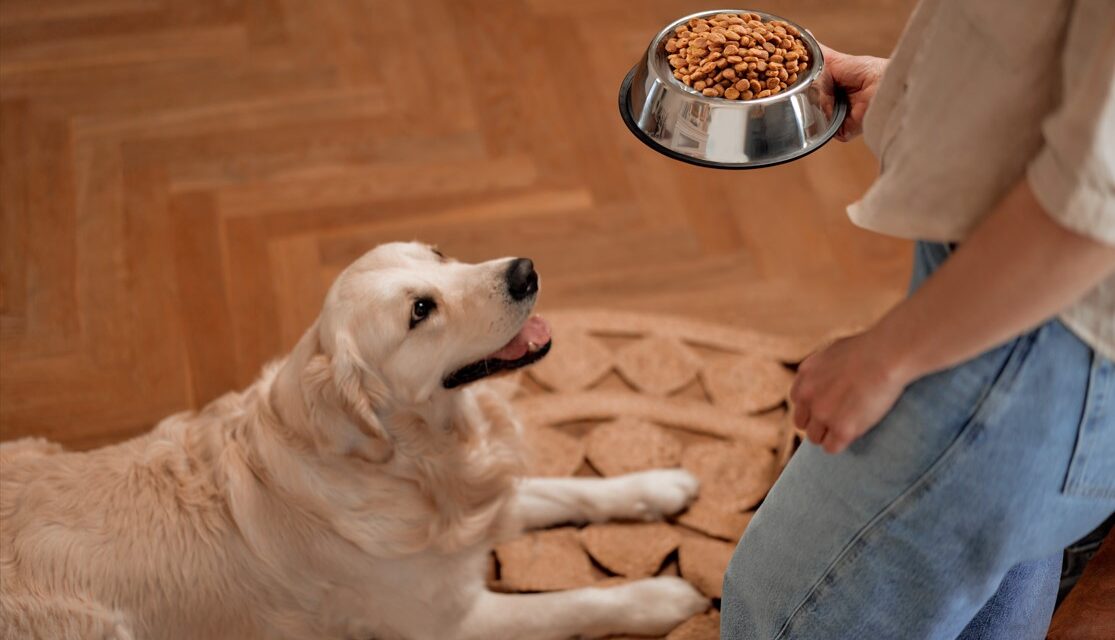
Many owners feel a bit nervous when hearing “fasting is required before surgery,” worrying that their beloved pet will be hungry, or they are unsure about how long to fast, whether water is allowed, and why this is necessary. In fact, correct pre-surgery fasting and water arrangements are a crucial step in ensuring anesthesia safety, effectively reducing the risks of vomiting, aspiration, and other complications.
The following content focuses on dogs and cats common in Hong Kong, introducing pre-surgery fasting times, water arrangements, the dangers of not fasting, and how owners can prepare for surgery at home.
Why is fasting required before surgery? The relationship between anesthesia and vomiting risk
Under general anesthesia or sedation:
- The pet’s swallowing reflex weakens, and the ability to protect the airway decreases.
- If there is still a large amount of food or water in the stomach, the chance of vomiting or reflux of gastric contents during anesthesia increases.
- Once vomit or gastric fluid flows back into the trachea/lungs (aspiration), it can cause severe pneumonia, suffocation, breathing difficulties, and can even be life-threatening.
Therefore, by fasting and restricting water before surgery to keep the stomach as empty as possible, these risks can be significantly reduced, making the anesthesia process safer and more stable.
How long should they fast before surgery? General Guidelines
Most Important: The instructions provided by the attending veterinarian shall prevail. Fasting times may be adjusted based on age, disease background, or type of surgery.
Generally, for healthy adult dogs and cats:
- Fasting time: Approximately 8–10 hours before surgery.
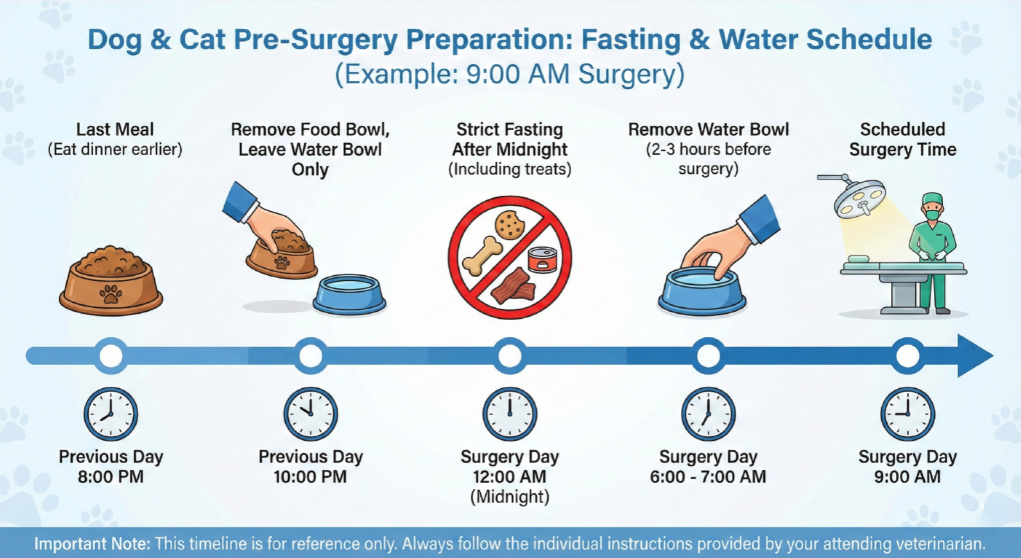
- Example: For a surgery scheduled at 9:00 AM, it is usually recommended to stop feeding after 12:00 AM (midnight).
- The last meal of the evening can be given slightly earlier than usual to allow the stomach and intestines time to digest.
Water Arrangements:
- In most cases, small amounts of fresh water can be provided until a few hours before surgery.
- Many clinics will recommend removing water 2–3 hours before surgery.
- If the doctor has specific instructions (e.g., for certain heart, endocrine, or juvenile patients), please follow those instructions.
Special Populations (Must ask the doctor individually)
- Young puppies/kittens
- Diabetes or other endocrine diseases
- Patients with severe kidney, liver, or heart disease
In these situations, fasting times may be shortened or require special arrangements, and decisions should not be made on your own.
What to note about water before surgery? The true meaning of “Less Water”
Many owners ask: “Does fasting mean they can’t even drink water?”
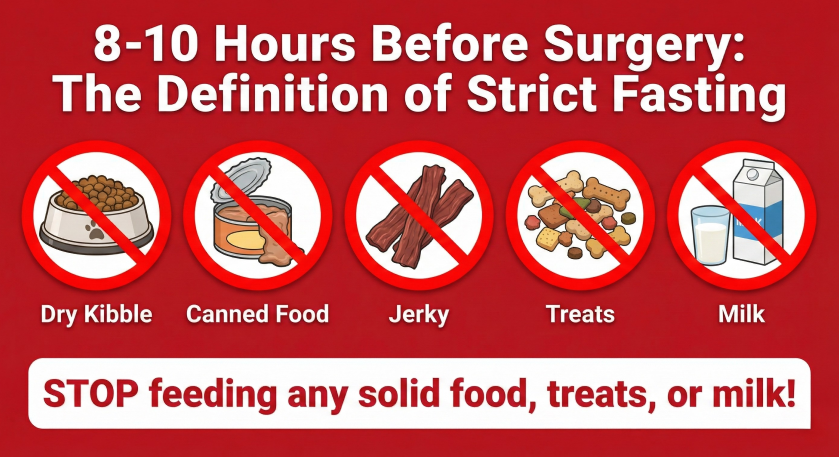
Actually, “fasting” generally refers to no longer eating any solid food, snacks, milk, canned food, jerky, etc.; water intake needs to be controlled according to individual circumstances. Common principles are as follows:
- The night before surgery:
- Fresh water can be provided as usual; just avoid excessive drinking.
- Approaching surgery time:
- Usually, according to clinic instructions, remove the water bowl 2–3 hours before surgery to avoid excessive fluid in the stomach.
If water is completely withheld from the pet for too long, it may make them too thirsty and increase stress; conversely, drinking a large amount of water too close to surgery increases the risk of vomiting and aspiration. So when we say “Fasting and limited water,” the key point is: Strictly stop eating; water intake should be moderate and removed a few hours before surgery.
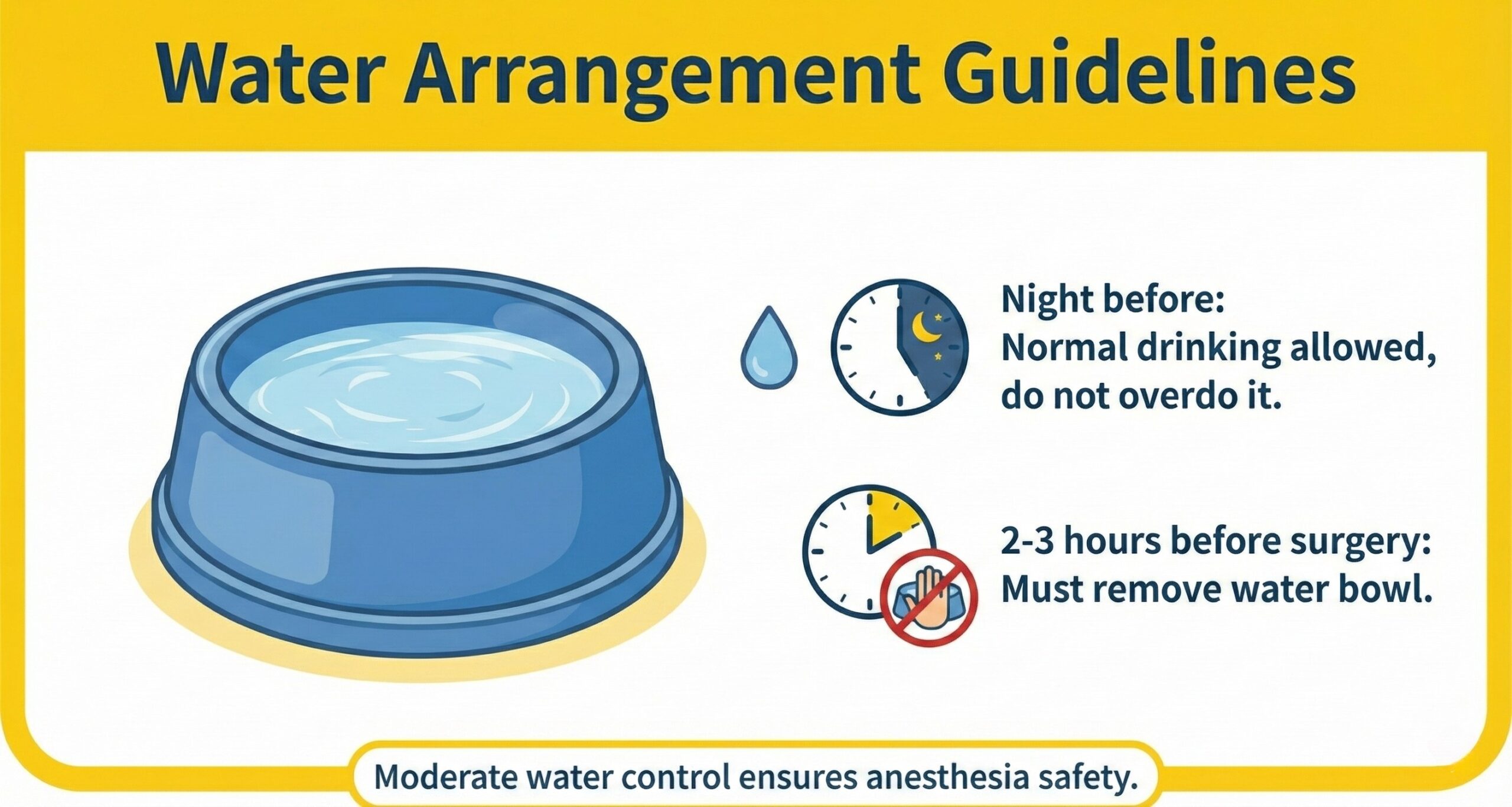
If you are unsure about the water arrangement for the day of surgery, it is recommended to confirm with the clinic when booking, and owners can also make a simple schedule in their phone notes.
What are the dangers if fasting/water restriction instructions are not followed?
When a pet still has food or a large amount of water intake before surgery, the following may occur:
- Vomiting during anesthesia or upon waking.
- Vomit blocking the airway or being inhaled into the lungs (aspiration pneumonia).
- Need for emergency treatment, extended hospital observation, or intensified treatment.
- Surgical risk increases significantly, with life-threatening danger in severe cases.
In some cases, if it is discovered upon arrival that the pet has eaten or drunk heavily during the fasting period, for safety reasons, the doctor may:
- Suggest postponing the surgery time to restart the fasting count;
- Or, due to certain emergencies, proceed under stricter monitoring and a different anesthesia protocol.
This increases stress and risk for both the owner and the pet. Therefore, accurately following fasting instructions is one of the most important preparations an owner can make for surgical safety.
How can owners remember the fasting time?
To reduce omissions and confusion, owners can refer to the following methods:
1. Write down a “Fasting Schedule” on your phone on the day of and the day before the appointment
- Example:
- Surgery Time: 9:00 AM
- Doctor’s Instructions: Fast 8–10 hours before surgery
- Your Schedule:
- Previous night 8:00 PM: Last meal (a bit earlier than usual)
- Previous night 10:00 PM: Clear food bowl, leave only fresh water
- Midnight 12:00 AM: Put away all treats and snacks
- Morning of 6:00–7:00 AM: Remove the water bowl according to clinic instructions
2. Avoid family members “secretly feeding”
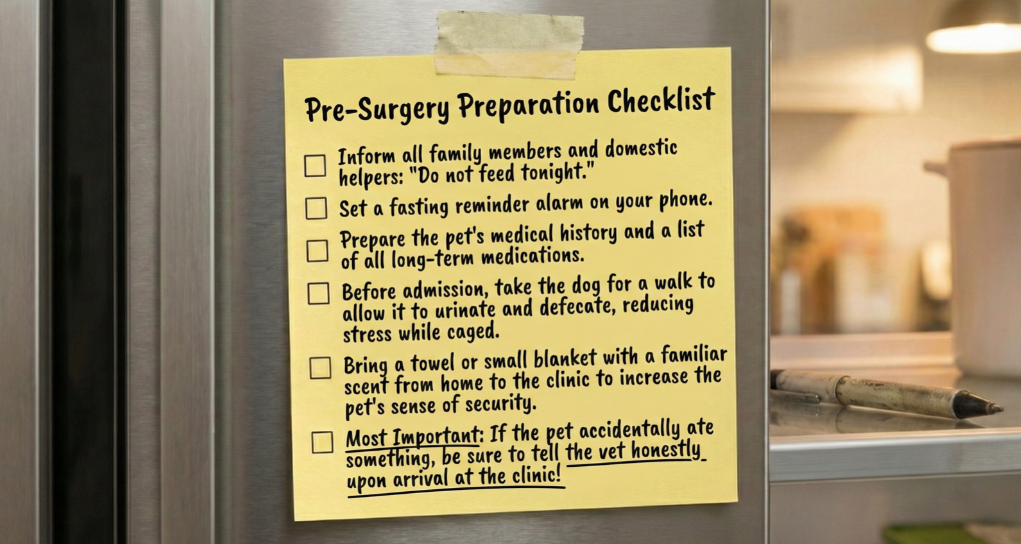
- Communicate with the whole family and domestic helpers in advance, and stick a small note: “Starting tonight, [Pet Name] needs to fast for surgery, please do not feed.”
- If there are multiple pets in the home, feed them separately to avoid accidental eating.
3. Special situations must be proactively told to the doctor If on the morning of surgery you discover:
- Accidental feeding of food or treats
- The pet stole another animal’s food
- There was a large intake of water
Please tell the medical staff honestly upon arrival; this is to be responsible for the pet’s safety.
What else needs to be prepared on the day of surgery?
In addition to fasting and water arrangements, owners can also:
- Prepare past medical records and a list of medications currently being taken.
- Take the pet for a walk (dogs) before admission to let them urinate and defecate, reducing stress inside the cage.
- Bring a towel/small blanket they usually use to the clinic to give them a greater sense of security.
After surgery, the doctor will provide detailed post-operative diet and medication instructions, including when they can start eating again and that the first meal should be small and easy to digest.
FAQ
Q1 Will the pet “starve” if fasting for 8–10 hours before surgery?
For healthy pets, a short fast is generally bearable. Conversely, if they do not fast, the risks associated with anesthesia increase significantly, which outweighs the benefits.
Q2 Why does the doctor sometimes tell me to fast for 6 hours, and other times 8–10 hours?
Fasting time varies depending on age, weight, disease state, type of surgery, and anesthesia method. The doctor will adjust according to the individual situation, so the written or verbal instructions for that specific surgery should be followed.
Q3 Can I use treats to “soothe” them before surgery?
Once the fasting period begins, no treats should be given. Even a small biscuit or piece of jerky counts as eating and will affect the emptiness of the stomach.
Q4 Must water be completely forbidden?
Usually, the water bowl is removed a few hours before surgery to avoid too much water in the stomach. The detailed time depends on clinic guidelines. Never secretly give water or soup after the water has been removed.
Q5 What if I accidentally fed food during the fasting time?
Do not hide it. You must tell the doctor upon arrival when, how much, and what was eaten, allowing the medical team to assess whether to postpone the surgery or adjust the plan.
Q6 Do puppies/kittens also have to fast for this long?
For juvenile patients or those with special diseases, the fasting time may be shorter, and the doctor may have different arrangements. You must follow the attending veterinarian’s individual instructions; please do not apply general rules yourself.
Q7 If I have a rabbit, chinchilla, or guinea pig, how long do they need to fast before surgery?
These exotic animals are very different from cats and dogs. They are extremely sensitive to fasting, and withholding food for too long can be dangerous or even fatal. If your pet requires surgery or anesthesia, please consult a vet with expertise in exotics. They will provide specific advice on food and water restrictions tailored to your pet’s breed, age, and health.
Want to book a Surgery or Consultation?
Cityvet is committed to providing outstanding comprehensive veterinary medical services, upholding the core values of “Professionalism, Care, and Trust,” providing reasonable charges, introducing advanced instruments, and explaining treatment methods in detail to owners to provide comprehensive medical care for every pet. Please call the Tsuen Wan clinic at 2623 5500 or the Yuen Long clinic at 2477 9990. Address: G/F, 186 Sha Tsui Road, Tsuen Wan / Shop 2, G/F, Fuk Shun Building, 25 Ping Wui Street, Yuen Long.
Disclaimer: This article provides general information only and cannot replace professional medical diagnosis. If in doubt, please book a veterinary examination as soon as possible, and the veterinarian’s actual instructions shall prevail.