
Why do sugar gliders need an exotic animal vet?
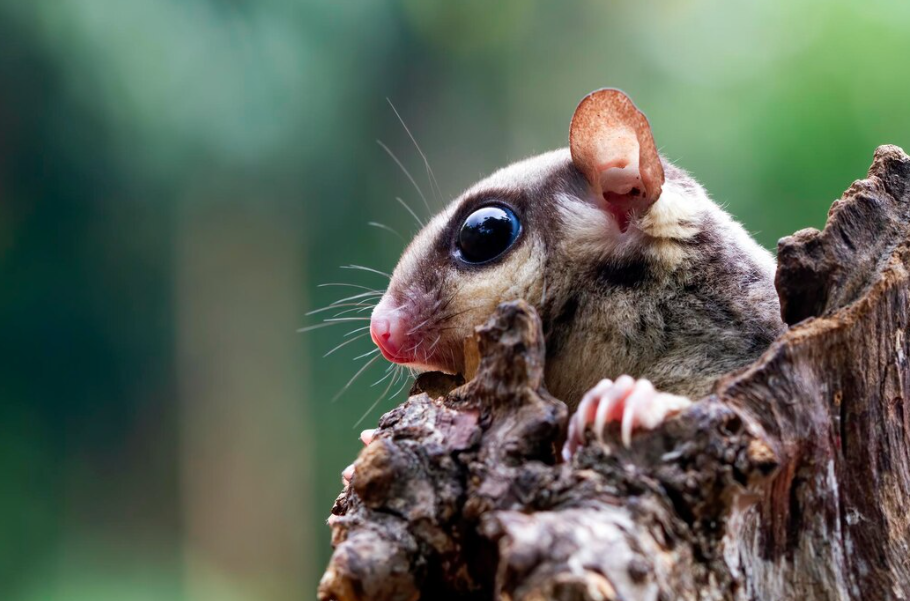
Sugar gliders are small exotic pets and are especially sensitive to temperature, keeping warm, diet ratios, stress, and environmental safety. Many problems begin only as reduced activity, poorer coat quality, fluctuating appetite, or changes in stool, but they may already involve nutritional imbalance, infection, skin disease, or gastrointestinal problems. For this reason, a sugar glider consultation should assess not only the visible symptoms, but also the husbandry conditions and dietary plan.
Common health problems in sugar gliders
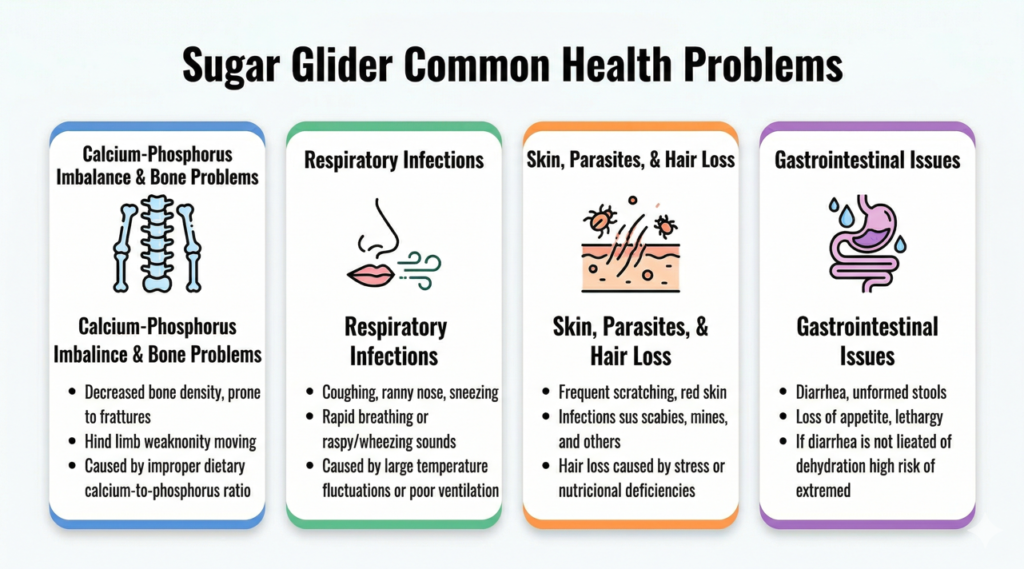
Calcium-phosphorus imbalance and skeletal problems
A long-term improper diet can lead to poor body condition, rough hair, and reduced energy. Hind limb weakness, reduced jumping ability, or skeletal deformity may also be related to imbalanced calcium, phosphorus, and vitamin intake. These problems are especially important in sugar gliders because they are so small that once the condition worsens, movement and eating can be affected very quickly.
Respiratory infections
If a sugar glider develops changes in breathing sounds, nasal discharge, open-mouth breathing, or lethargy, it should not be dismissed as a brief chill. Small exotic pets are highly sensitive to environmental stress, and abnormal breathing should be assessed promptly to avoid delay.
Skin, parasites, and hair loss
Scratching, hair loss, dandruff, or reddened skin may be related to parasites, dermatitis, or stress. Owners often first think of changing the diet or bathing the animal, but if the problem does not improve over time, it is even more important to see an exotic animal vet to assess whether infection, external parasites, or behavioural stress is involved.
Gastrointestinal problems
Diarrhoea, appetite fluctuation, or dehydration may be related to dietary change, infection, or stress. Because sugar gliders are small, even a short reduction in food intake can quickly affect strength and energy.
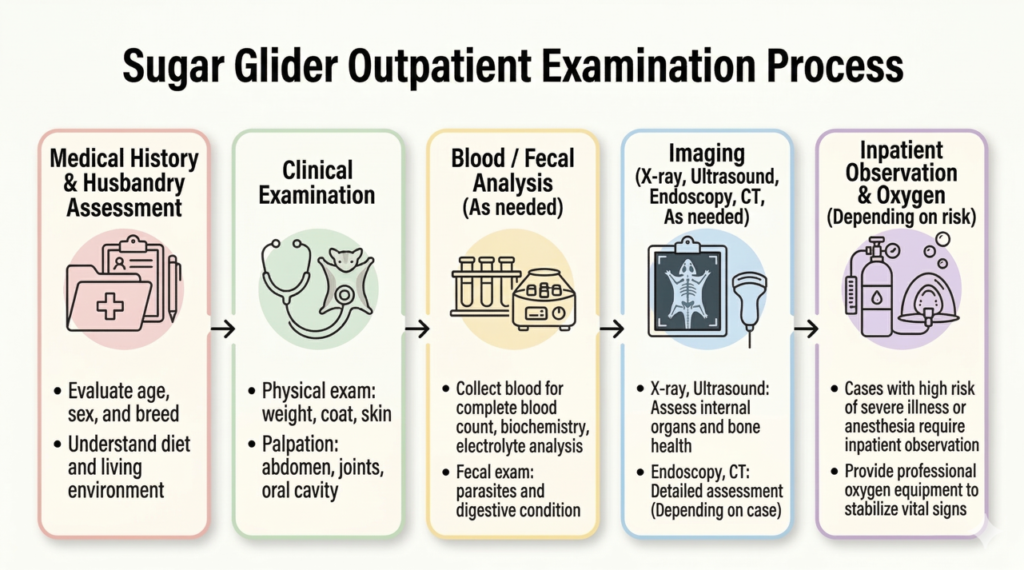
Consultation and examination process
A sugar glider consultation usually begins with the history, husbandry conditions, and clinical examination, followed as needed by blood and faecal tests as well as imaging such as digital X-ray, ultrasound, endoscopy, or CT. If the case requires closer monitoring, isolation care, oxygen support, and 24-hour inpatient observation may also be needed. These steps help determine whether the issue stems from nutrition, infection, skin disease, gastrointestinal disease, or another body system.
Home care and environmental management
Daily care for sugar gliders focuses on maintaining an appropriate temperature and warmth, reducing stress, respecting their nocturnal behaviour pattern, reviewing the diet formula and calcium-phosphorus balance, and monitoring body weight and coat and skin condition. For owners in Hong Kong, summer air-conditioning and winter temperature changes both deserve attention. When travelling to the clinic, a stable, warm, and well-ventilated carrier should also be prepared.
When should you seek veterinary care promptly?
If a sugar glider develops hind limb weakness, refuses food, has persistent diarrhoea, abnormal breathing, obvious dehydration, marked depression, or ongoing hair loss and itching, veterinary care should be sought promptly. Exotic pets often hide discomfort, so by the time the signs look obvious, the risk is often already higher.
FAQ
Q1: Where in Hong Kong can I find a sugar glider vet?
A: Clinics that offer exotic animal or unusual pet consultations can be checked first, for example CityVet.
Q2: Could hind limb weakness in a sugar glider be related to calcium deficiency?
A: Possibly. Hind limb weakness and reduced jumping ability are quite often linked to imbalances in calcium, phosphorus, and vitamins.
Q3: Is hair loss in a sugar glider always a skin disease?
A: Not necessarily. It may also be related to stress, parasites, or other skin problems.
Q4: Should I take my sugar glider to the vet immediately if it has diarrhoea?
A: If the diarrhoea persists, appetite decreases, energy is poor, or there is a risk of dehydration, veterinary attention should be sought promptly.
Q5: What tests does a sugar glider vet usually perform?
A: Common steps include history taking, husbandry assessment, blood and faecal testing, and imaging when needed.
Q6: What should I prepare before bringing a sugar glider for consultation in Hong Kong?
A: It is helpful to prepare dietary records, recent activity changes, stool information, body weight, and environmental temperature details.
CityVet Sugar Glider Clinic
CityVet is committed to providing outstanding comprehensive veterinary care, guided by the core values of professionalism, compassion, and trust. We aim to offer reasonable fees, introduce advanced equipment, and explain treatment options clearly to pet owners, so that every pet receives full medical support.
To book a sugar glider consultation, please call our Tsuen Wan branch at 2623 5500 or our Yuen Long branch at 2477 9990. Address: G/F, 186 Sha Tsui Road, Tsuen Wan / Shop 2, G/F, Fuk Shun Building, 25 Ping Wui Street, Yuen Long.
Disclaimer: This article is for general information only and does not replace professional medical diagnosis. If you have any concerns, please book a veterinary examination as soon as possible.