
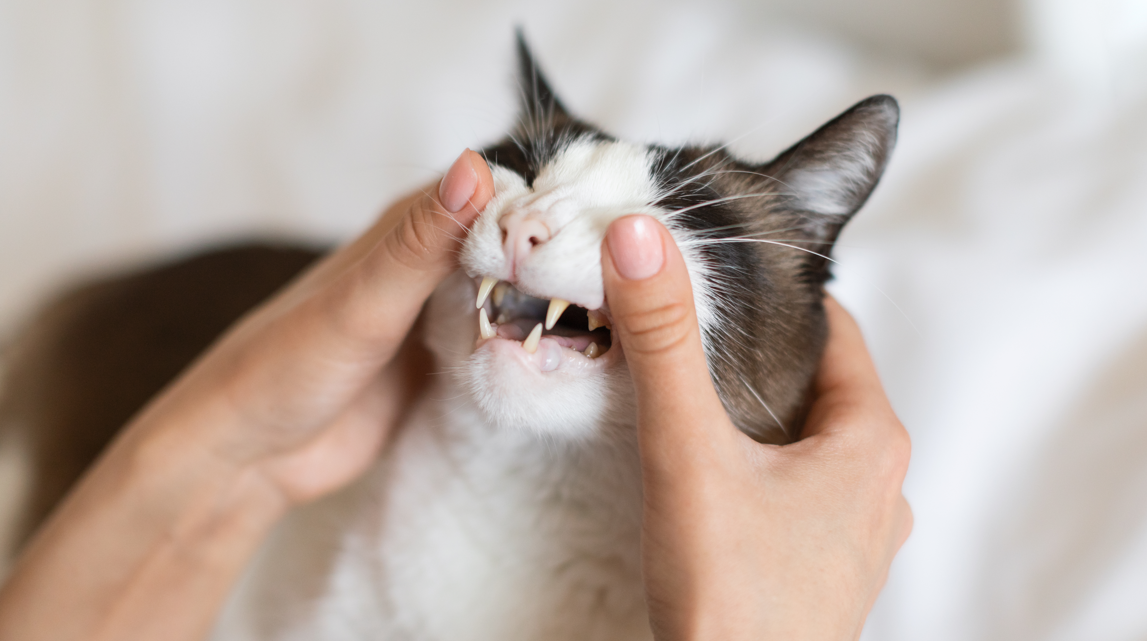
Cats are animals that are exceptionally skilled at hiding pain. More often than not, by the time an owner notices bad breath, drooling, or red and swollen gums in their cat, periodontal disease may have already developed to a certain degree. In Hong Kong pet households, feline periodontal disease is an extremely common health problem. If left ignored, periodontal disease will not only affect a cat’s eating habits, but bacteria can also travel through the bloodstream to affect organs such as the heart and kidneys. Early dental examinations and appropriate treatments are key to maintaining a cat’s longevity and health.
Why Do Cats Develop Periodontal Disease?
The primary cause of periodontal disease is the proliferation of bacteria in the oral cavity. After a cat eats, food particles and bacteria form a thin layer of “dental plaque” on the tooth surface.
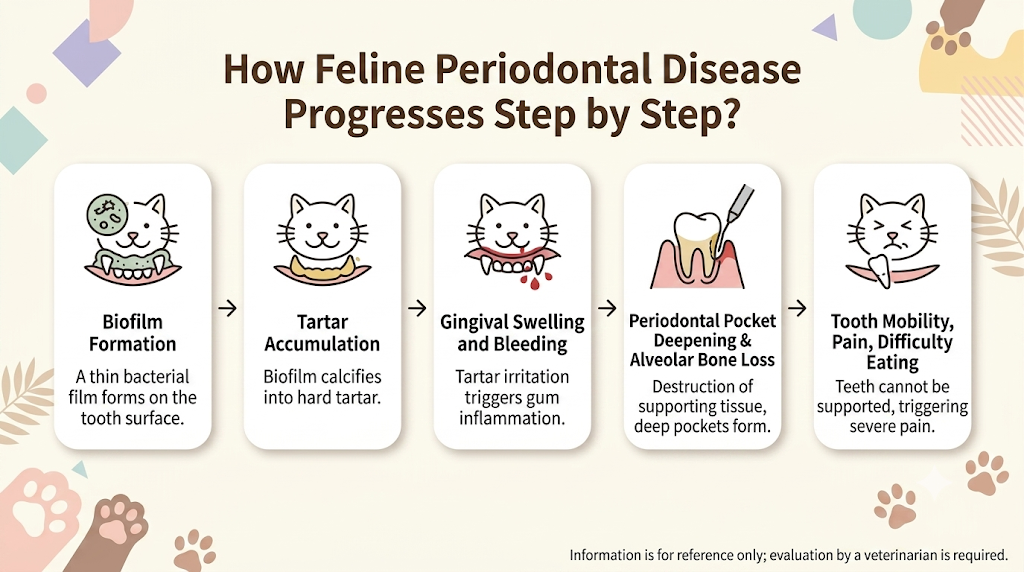
- Tartar accumulation: If dental plaque is not removed through brushing, it will combine with minerals in the saliva within 24 to 48 hours and harden into tartar (calculus).
- Gingival inflammation: The rough surface of tartar easily attracts more bacteria, irritating the gums and leading to redness, swelling, and inflammation (i.e., gingivitis).
- Tissue destruction: As the disease progresses, bacteria erode the alveolar bone and periodontal ligaments that support the teeth, causing teeth to become loose or even fall out.
Aside from hygiene habits, a cat’s immune system response, salivary composition, and even certain viral infections (such as FIV or FeLV) can aggravate the severity of gingival inflammation.
Common Symptoms of Feline Periodontal Disease: Warning Signs Owners Need to Watch For
Cats will not actively tell you they have a toothache; owners must carefully observe their daily behavior and physical changes:
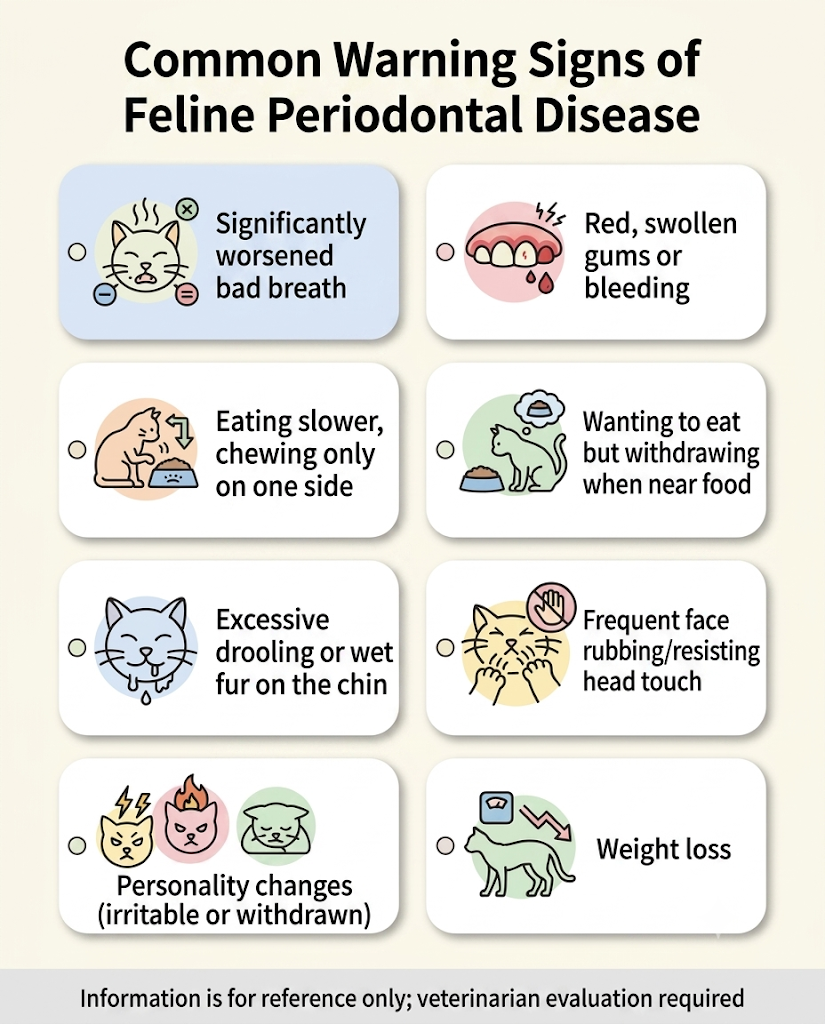
- Bad breath: This is the most obvious early signal and should not be dismissed as a “normal cat smell.”
- Red, swollen, or bleeding gums: Lifting the cat’s lips may reveal a red line at the junction of the teeth and gums, or even bleeding when biting toys or eating.
- Difficulty eating: Suddenly switching to chewing on only one side of the mouth, or showing a desire to eat but backing away after approaching food.
- Drooling: Severe oral inflammation can cause cats to drool frequently.
- Frequent pawing at the face: This can be an expression of dental or tooth root pain.
- Character changes: Becoming irritable, easily angered, or reluctant to let anyone touch their head due to pain.
Professional Dental Examination and Diagnosis
At CityVet, we emphasize evaluating oral health through scientific diagnostics rather than relying solely on visual inspection.
Detailed Evaluation Under General Anesthesia
Since cats will not willingly open their mouths to cooperate with an exam, a professional dental examination must be performed under general anesthesia. This ensures the veterinarian can thoroughly inspect the hidden areas of every tooth while minimizing the cat’s stress and fear.
Periodontal Probing
Veterinarians use professional probes to measure the depth of periodontal pockets. A healthy periodontal pocket is very shallow; if the depth increases, it indicates that the periodontal tissue has already been damaged.
Dental X-ray Examination
This is one of the most critical steps. Approximately 60% of a cat’s tooth structure lies below the gum line and cannot be seen with the naked eye. X-rays can reveal whether tooth roots are undergoing resorption, if there are periapical abscesses, or if there is alveolar bone loss, helping the veterinarian decide whether a tooth can be saved.
Treatment Options for Feline Periodontal Disease
The veterinarian will formulate an appropriate treatment plan based on the examination results:
- Professional scaling (Scaling & Polishing): Using ultrasonic instruments to remove tartar above and below the gumline. After scaling, the veterinarian will polish the tooth surfaces to make them smooth and reduce bacterial adhesion.
- Periodontal therapy: For mild periodontal disease, the veterinarian may apply localized medications after cleaning to control infection.
- Tooth extraction surgery: If teeth are severely loose, roots are exposed, or there are intensely painful “resorptive lesions,” extraction is typically the best option to relieve pain and prevent the spread of infection. Even without teeth, cats can still eat dry kibble comfortably once the wounds have healed.
- Antibiotics and anti-inflammatory medications: Used to control acute infections and alleviate post-operative pain.
How to Improve Feline Oral Hygiene and Daily Care
Prevention is always better than cure. It is recommended that owners establish the following habits from a young age:
- Daily brushing: Use pet-specific toothpaste and a soft-bristled toothbrush. This is the most effective preventive method.
- Dental prescription diets: Some dry kibbles are designed with larger kibble sizes and specific fibers that help mechanically scrub the tooth surfaces.
- Oral care sprays or dental water additives: Assist in reducing bacterial growth, but cannot replace brushing.
- Regular veterinary checkups: It is recommended to undergo a professional oral evaluation every six months to a year.
Consequences of Neglecting Dental Health
Long-term periodontal inflammation leaves cats in a state of chronic stress and pain. Bacteria can enter the blood vessels, triggering endocarditis or chronic renal failure. Early detection and management of red and swollen gums not only enhances a cat’s quality of life but also prevents more complex and expensive medical expenditures down the road.
The team at CityVet possesses professional knowledge and equipment to provide meticulous medical services for your beloved cat. If you have concerns about your cat’s oral condition, please do not hesitate; a professional examination is the starting point for safeguarding health.
Frequently Asked Questions
Is a cat’s bad breath normal? Is it absolutely necessary to see a veterinarian?
It is normal for cats to have mild breath odors, but if there is a distinct foul, putrid, or fishy smell, it typically indicates heavy bacterial proliferation or decaying teeth. Chronic bad breath is often a sign of periodontal disease or oral ulcers. It is recommended to schedule a veterinary checkup to find the underlying cause and prevent the problem from worsening.
Does dental scaling always require anesthesia? Is anesthesia dangerous for senior cats?
To thoroughly remove tartar under the gumline and perform a complete X-ray examination, general anesthesia is mandatory. Anesthesia-free “cosmetic dental cleaning” cannot clean the most critical periodontal areas and can easily cause injury due to the cat struggling. We conduct pre-operative blood tests and cardiovascular assessments for every cat (especially senior cats) and continuously monitor the anesthesia process throughout to minimize risks to the lowest level.
Can a cat still eat dry food after tooth extractions?
Yes. In fact, many cats actually eat faster after the removal of damaged, painful teeth, because the originally painful gums are no longer tormenting them. A cat’s gums become remarkably resilient after healing, and most cats can still consume dry kibble as normal, or switch to wet food to reduce the burden.
Can I scrape tartar off my cat’s teeth at home?
Absolutely not recommended. Using metal tools to scrape tartar on your own can easily lacerate a cat’s delicate gums, leading to bleeding and infection. Furthermore, home tools leave microscopic scratches on the tooth enamel, making it easier for bacteria to adhere and accelerating tartar formation. Professional dental scaling includes a polishing procedure, which cannot be accomplished through home care.
CityVet Dental Clinic
CityVet is committed to providing outstanding comprehensive veterinary care, guided by the core values of professionalism, compassion, and trust. We aim to offer reasonable fees, introduce advanced equipment, and explain treatment options clearly to pet owners, so that every pet receives full medical support. To book a dental consultation, please call our Tsuen Wan branch at 2623 5500 or our Yuen Long branch at 2477 9990. Address: G/F, 186 Sha Tsui Road, Tsuen Wan / Shop 2, G/F, Fuk Shun Building, 25 Ping Wui Street, Yuen Long.
Disclaimer
This article is for general information only and does not replace professional medical diagnosis. If you have any concerns, please book a veterinary examination as soon as possible.