

A Complete Guide to Caring for Cats and Dogs with Kidney Disease | Understanding Kidney Failure, IRIS Staging, and Daily Dietary Management
The kidneys act like the body’s filtration system. They remove waste, regulate fluids, and balance electrolytes. When a dog or cat develops chronic kidney disease (CKD, Chronic Kidney Disease), kidney function gradually declines and can affect the whole body.
With early detection, IRIS-based assessment, prescription diets, medication, and home care, many cats and dogs with kidney disease can still maintain a good quality of life. This article summarises the key points of long-term kidney care from the perspective of Hong Kong pet owners.
What is CKD or kidney failure? How is it different from acute kidney failure?
- CKD (chronic kidney disease):
Long-term, progressive damage to kidney function. It is common in senior cats and dogs, and may also be associated with genetics, infection, long-term hypertension, and other factors. - Kidney failure (commonly referred to as renal failure):
A general term meaning kidney function has declined significantly, so the body can no longer remove waste effectively. Uremic toxins build up in the blood and clinical signs begin to appear. - AKI / acute kidney injury:
A sudden kidney injury caused by poisoning, infection, reduced blood flow, or similar problems. It is managed differently from CKD and requires urgent assessment.
This article focuses on chronic kidney disease (CKD) and long-term care. Acute situations should be assessed by a veterinarian immediately.
What is IRIS staging, and why does it matter?
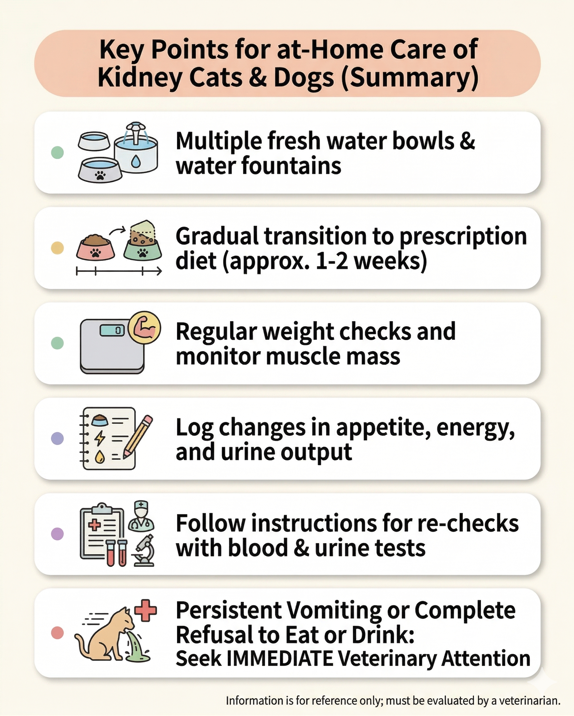
The International Renal Interest Society (IRIS) classifies CKD into different stages (Stage 1-4) based on kidney-related blood values such as creatinine and SDMA, along with urine protein levels and blood pressure. It is used to:
- Understand how severe the disease is
- Plan an appropriate treatment and nutrition strategy
- Monitor whether the condition is worsening
Key points for pet owners:
- The higher the stage, the more severe the kidney damage, but that does not automatically mean the pet is in immediate crisis. Treatment can still help slow progression.
- The best choice of prescription diet, medication, and fluid support may differ by stage, and should be determined by a veterinarian based on the IRIS stage and the individual patient.
- Regular follow-up blood and urine tests help the treatment plan stay up to date.
PKD (polycystic kidney disease) and breed risk
PKD (Polycystic Kidney Disease) refers to multiple cysts developing within the kidneys, gradually affecting normal kidney tissue. It is seen more often in certain cat breeds, including some long-haired breeds.
Important reminders:
- PKD is usually hereditary, and kidney cysts can often be detected on ultrasound.
- Some genetically affected cats may show no obvious signs when they are young, but can still progress to CKD later in life.
- If your cat’s breed is known to have a higher PKD risk, speak with your veterinarian about whether to arrange baseline screening earlier.
In dogs, chronic kidney disease can also develop for a variety of reasons, such as chronic glomerular disease, infection, or immune-mediated disease.
Common signs in cats and dogs with kidney disease: when should you suspect a kidney problem?
Early CKD is often subtle, but watch for the following changes:
- Drinking more water and producing more urine
- Gradual weight loss and muscle loss
- Poor appetite, becoming picky, or stopping after only a few bites
- Vomiting, stronger breath odour, or breath that smells like urine or metal
- A rough coat, lower energy, and spending more time sleeping
If any of the following occur, it is advisable to arrange blood and urine testing as soon as possible:
- Noticeable weight loss over a short period
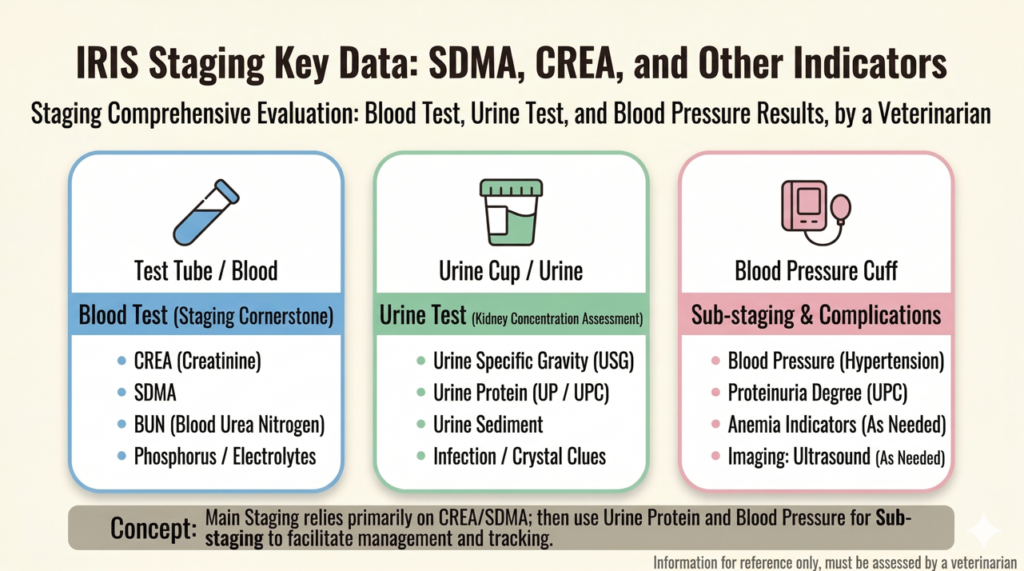
- Persistent vomiting, diarrhoea, or complete refusal to eat or drink
- Unsteady walking, severe lethargy, or seizures, which may be associated with advanced uraemia or electrolyte imbalance
Diagnosis and follow-up testing for CKD
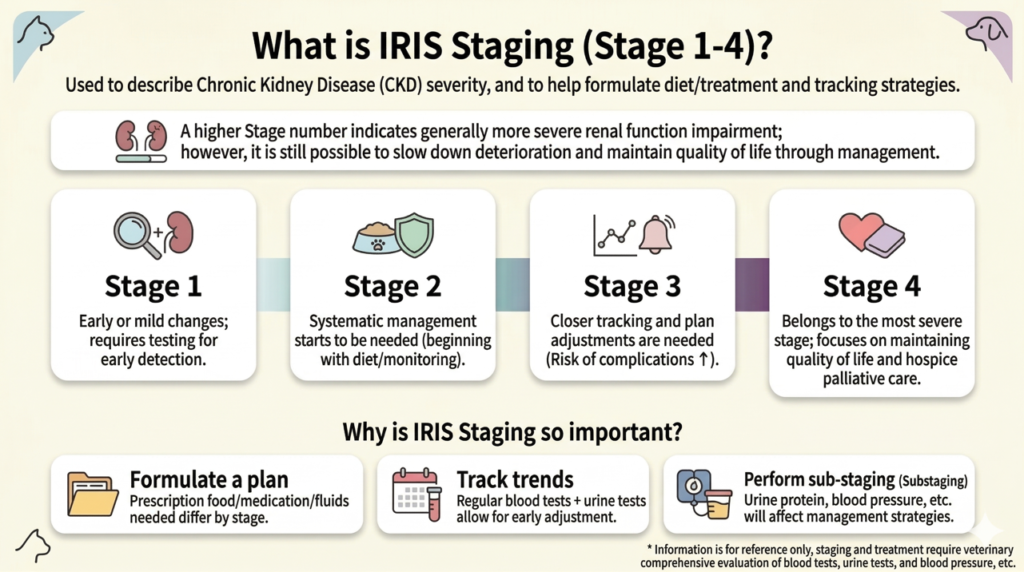
Veterinarians generally assess CKD using a combination of:
- History-taking and physical examination: body weight, dehydration level, oral ulcers, signs of anaemia, and more
- Blood tests: including creatinine, BUN, SDMA, electrolytes, phosphorus, red blood cells, and others
- Urinalysis: urine specific gravity, urine protein, urine sediment
- Blood pressure measurement: hypertension can accelerate kidney damage and must be addressed as well
- Imaging such as ultrasound: to assess kidney appearance and check for cysts (PKD), stones, and other abnormalities
These results help confirm whether CKD is present, determine the IRIS stage, and identify concurrent problems such as hypertension or proteinuria, so that treatment can be planned appropriately.
Dietary management for cats and dogs with kidney disease: the role of prescription diets
For long-term kidney disease, dietary management is often one of the most important parts of care. Veterinarians commonly recommend renal prescription diets, such as kidney-support formulas from brands like Royal Canin or Hill’s. These diets are generally designed to provide:
- Lower phosphorus levels: to reduce strain on the kidneys and help slow further deterioration
- Moderate amounts of high-quality protein: to support muscle mass while reducing waste production
- Adjusted sodium, potassium, and other electrolyte levels
- Nutrients such as omega-3 fatty acids that may support the kidneys and blood vessels, depending on the formula
In practice:
Different brands and formulas may suit different IRIS stages or complication profiles.
Whether a pet needs an even lower-phosphorus formula, or a plan combined with blood-pressure or proteinuria control, should be decided by a veterinarian based on test results.
Tips for changing diets:
- Do not switch the whole bowl all at once, as this may cause food refusal or stomach upset.
- Gradually increase the proportion of renal diet over 1-2 weeks, while monitoring appetite and body weight.
- If your cat is especially picky, your veterinarian may suggest trying different textures such as dry food or wet food, different flavours, or a mixed feeding approach.
General treatment directions and key points for home care
Specific medications and dosages must always be determined by a veterinarian based on the individual case. The following are common care principles.
- Maintaining fluid balance:
- Make sure your dog or cat can easily access clean drinking water, with multiple bowls or a fountain if needed.
- Some CKD cases may be prescribed subcutaneous fluids at home as supportive care.
- Controlling blood pressure and urine protein:
- High blood pressure can cause further damage to the kidneys and eyes, so medication may be needed.
- Managing phosphorus and anaemia:
- In addition to prescription food, some pets may need phosphate binders or treatment for anaemia.
- Reducing nausea and stomach discomfort:
- Appropriate medication can help improve appetite and prevent prolonged refusal to eat.
At home:
- Check body weight regularly and watch for continued muscle loss.
- Observe water intake, urine output, energy level, and appetite. If you see obvious changes, consider bringing the follow-up visit forward.
- Provide a quiet, comfortable resting space with a stable temperature for your cat or dog.
Is kidney disease terminal? How long can a pet live with it?
When many owners hear the words “kidney failure,” they immediately think it means the end of life is near. In reality:
- CKD is a chronic disease, and normal kidney function cannot usually be fully restored, but
- with early detection, control of blood pressure and phosphorus, prescription renal diets, and appropriate supportive care, many cats and dogs with kidney disease can remain stable for quite a long time and continue to enjoy a good quality of daily life.
The key point is:
Do not wait until there is severe uraemia, total refusal to eat or drink, or extreme weakness before seeking veterinary help.
For senior cats and dogs in particular, blood and urine testing once a year, or even every six months, is strongly recommended so kidney changes can be identified early.
FAQ
Q1 | My cat or dog has just been diagnosed with CKD. Does that mean they will pass away soon?
Not necessarily. CKD can range from mild to severe, and many pets can maintain a good quality of life for a period of time with IRIS staging, prescription diets, and appropriate treatment. The most important thing is to attend follow-up visits on schedule and follow the treatment plan.
Q2 | Does my pet have to eat a renal prescription diet? Can they stay on their current food?
Prescription renal diets are one of the key tools in kidney disease management. They are formulated specifically to reduce the burden on the kidneys. Regular maintenance food for adult cats or dogs may contain higher phosphorus and protein levels, which may not be ideal. Speak with your veterinarian about whether it is suitable and how to transition safely.
Q3 | Can cats and dogs with kidney disease still have treats?
It is best to limit treats that are high in salt, phosphorus, or protein, such as large amounts of jerky or organ meats. If treats are needed as rewards, ask your veterinarian to suggest more suitable options and include them in the total daily intake.
Q4 | Can PKD be prevented?
PKD is usually genetic and cannot be completely prevented through later care, but responsible breeding practices, ultrasound screening, and genetic testing can help. For cats already affected by PKD, the focus is on monitoring kidney function regularly and starting CKD management early.
Q5 | Do cats and dogs with kidney disease need daily injections or fluids?
Not every case needs home fluid therapy. It depends on the IRIS stage, degree of dehydration, and the veterinarian’s assessment. If fluids are needed, the veterinary team will teach the owner the correct subcutaneous fluid technique and frequency.
Q6 | Can I buy over-the-counter “kidney support” supplements from a pet shop and give them myself?
Supplement quality and ingredients vary widely, and some may interact with existing medications. Always discuss any additional supplement with your primary veterinarian before deciding whether to use it and how to use it.
CityVet Feline and Canine Kidney Disease Clinic
CityVet is committed to providing outstanding comprehensive veterinary care. Guided by the core values of professionalism, compassion, and trust, we aim to offer fair pricing, advanced equipment, and clear explanations of treatment options, so that every pet receives thorough medical support.
Would you like to book a kidney disease consultation for your cat or dog? Please call our Tsuen Wan clinic at 2623 5500 or our Yuen Long clinic at 2477 9990. Address: G/F, 186 Sha Tsui Road, Tsuen Wan / Shop 2, G/F, Fook Shun Building, 25 Ping Wui Street, Yuen Long.
Disclaimer: This article provides general information only and cannot replace professional medical diagnosis. If you have any concerns, please book a veterinary examination as soon as possible and follow the individual treatment advice given by your attending veterinarian.