


Hong Kong’s warm and humid climate is ideal for mosquitoes, fleas, and ticks, and that also makes it a high-risk environment for serious parasite-borne diseases. Among the most concerning are heartworm disease and tick-borne blood parasite infections, often referred to as tick fever. If not managed properly, they can be fatal.
With the right deworming, flea, and tick prevention products, as well as long-acting annual injections, the risk can be greatly reduced.
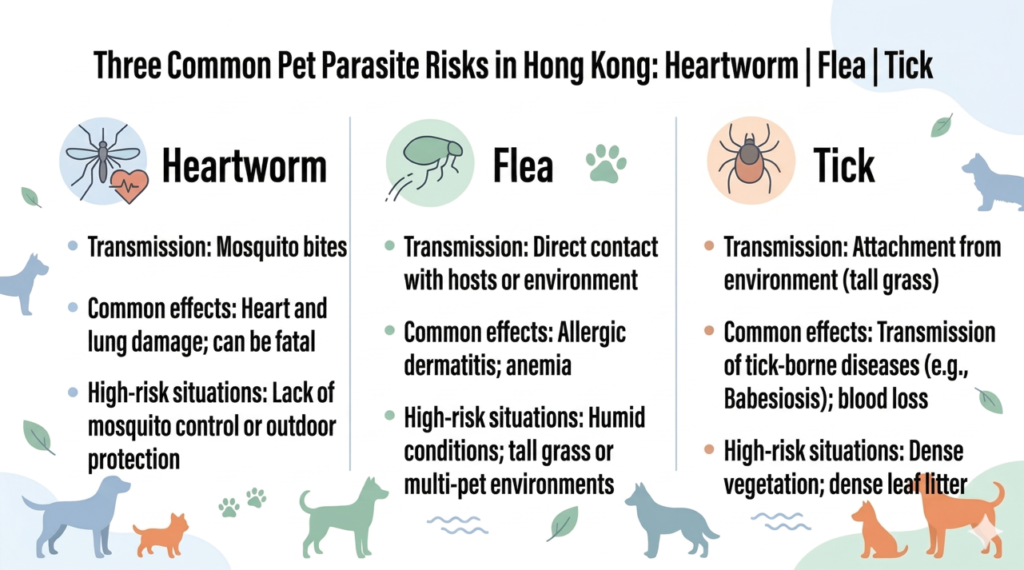
What is heartworm, and why is it so dangerous?
Heartworm is mainly spread by mosquito bites. The immature parasites enter the body through the bloodstream and eventually mature into adult worms that live in the heart and pulmonary arteries. In severe cases, this can lead to:
- Chronic coughing and reduced exercise tolerance
- Difficulty breathing, abdominal fluid accumulation, and weight loss
- Heart failure and sudden death
Because mosquitoes are common in Hong Kong’s humid climate, even indoor dogs still need heartworm prevention.
Tick fever and other tick-borne diseases
Ticks do more than cause itchiness. They can also transmit a range of blood parasite diseases, commonly referred to as tick fever, which may cause:
- High fever and poor appetite
- Anaemia and pale gums
- Jaundice and rapid weight loss
- Damage to multiple organs and even death in severe cases
Dogs that go hiking, visit dog parks, or spend time outdoors in grassy areas in Hong Kong are particularly vulnerable if they are not protected.
Common types of preventive products: oral, spot-on, and injectable options
There are many products on the market for heartworm, fleas, and ticks. Common forms include:
- Chewable oral products:
Products such as NexGard and Bravecto may help prevent fleas and ticks and provide ongoing protection during their effective period. - Monthly heartworm prevention in oral or spot-on form:
Products such as Heartgard, Revolution, and Advocate are commonly used monthly to prevent heartworm and, in some cases, other internal and external parasites. - Once-yearly long-acting injections:
ProHeart: a heartworm prevention injection that provides long-lasting protection and can be especially suitable for owners who struggle to remember monthly treatment.
Bravecto injectable: a long-acting flea and tick prevention injection.
The most suitable option should be recommended by a veterinarian according to the dog’s body weight, age, lifestyle, and health condition.
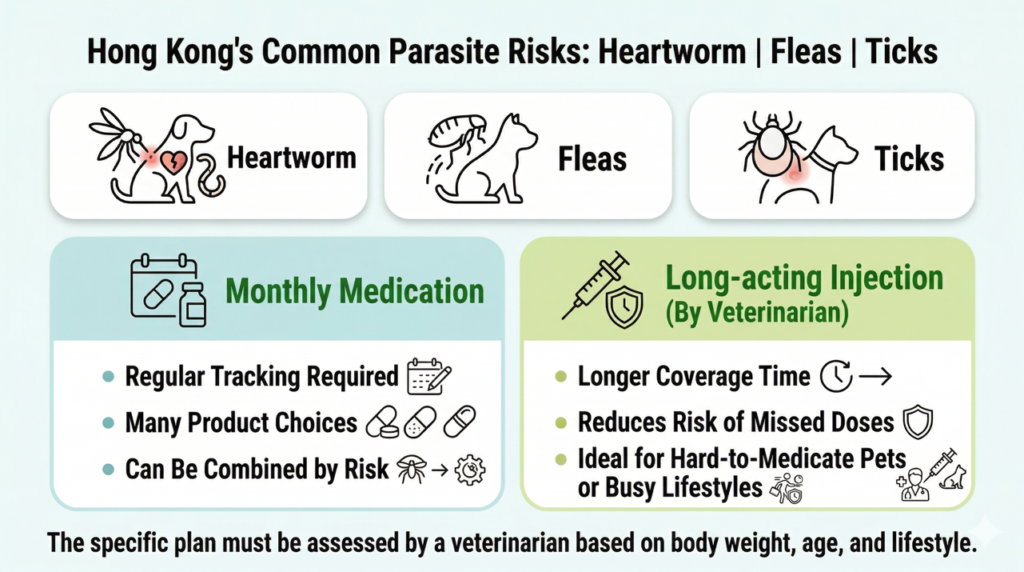
Why are once-yearly injections more convenient for many Hong Kong pet owners?
In a busy city, many owners:
- Forget to give oral medication or apply spot-ons on time every month
- Do not want opened medication stored around small children
- Have pets that are very picky or resistant to oral medication
Long-acting injections such as ProHeart and Bravecto injectable can provide relatively stable, long-duration protection after administration at the clinic. This reduces the risk of missed doses and also gives the veterinary team a chance to review the dog’s health regularly.
What must be done before starting heartworm prevention?
Before starting or changing a heartworm prevention plan, veterinarians generally recommend:
- A heartworm antigen rapid test or another appropriate heartworm test
- Confirming that the dog does not already have an active infection before starting prevention
The reason is that if a dog is already infected and the owner does not know it, starting certain preventive medications may trigger more serious reactions. Testing and prevention should therefore be treated as one complete process.
Daily parasite prevention strategy
- Indoor dogs:
Even if they have less contact with grass or soil, they are still exposed to mosquitoes and occasional outdoor environments. Prevention should still be maintained according to veterinary advice.
- Dogs that often hike or visit dog parks:
They need combined protection against heartworm, fleas, and ticks, especially in rural or high-tick areas. - Newly adopted dogs or dogs brought into Hong Kong from overseas:
They should receive a full blood and parasite screening by a veterinarian before a prevention plan is arranged.
FAQ
Q1 | Do indoor dogs still need heartworm prevention?
Yes. Heartworm is spread by mosquitoes, and mosquitoes can still enter indoor environments, so indoor dogs are still at risk.
Q2 | What is the difference between a once-yearly heartworm injection and monthly oral prevention?
Both are methods of preventing heartworm. The main difference is how they are given and how long they last. Injectable prevention is administered by a veterinarian and can provide long-term coverage, while oral products must be given monthly by the owner. The best choice depends on veterinary assessment.
Q3 | Can flea and tick products be combined?
Different products contain different ingredients and cover different parasites. Some combinations may be appropriate, while others may overlap or increase risk. A veterinarian should design the overall plan.
Q4 | Can tick fever be completely cured?
It depends on the type of parasite involved and the severity of infection. Some cases can be controlled well, while others may leave lasting effects. Prevention remains far better than waiting to treat infection after it occurs.
Q5 | Do cats also need heartworm, flea, and tick prevention?
That depends on their living environment and exposure risk, but prevention is still recommended in many cases. Cat products are different from dog products and must never be interchanged. A veterinarian should select the appropriate formula.
CityVet Deworming and Flea Prevention Clinic
CityVet is committed to providing outstanding comprehensive veterinary care. Guided by the core values of professionalism, compassion, and trust, we aim to offer fair pricing, advanced equipment, and clear explanations of treatment options, so that every pet receives thorough medical support.
Would you like to book a deworming or flea prevention consultation for your cat or dog? Please call our Tsuen Wan clinic at 2623 5500 or our Yuen Long clinic at 2477 9990. Address: G/F, 186 Sha Tsui Road, Tsuen Wan / Shop 2, G/F, Fook Shun Building, 25 Ping Wui Street, Yuen Long.
Disclaimer: This article provides general information only and cannot replace professional diagnosis or prescriptions. If you have any questions, please book a veterinary examination as soon as possible so a veterinarian can design the right prevention plan for your pet.