
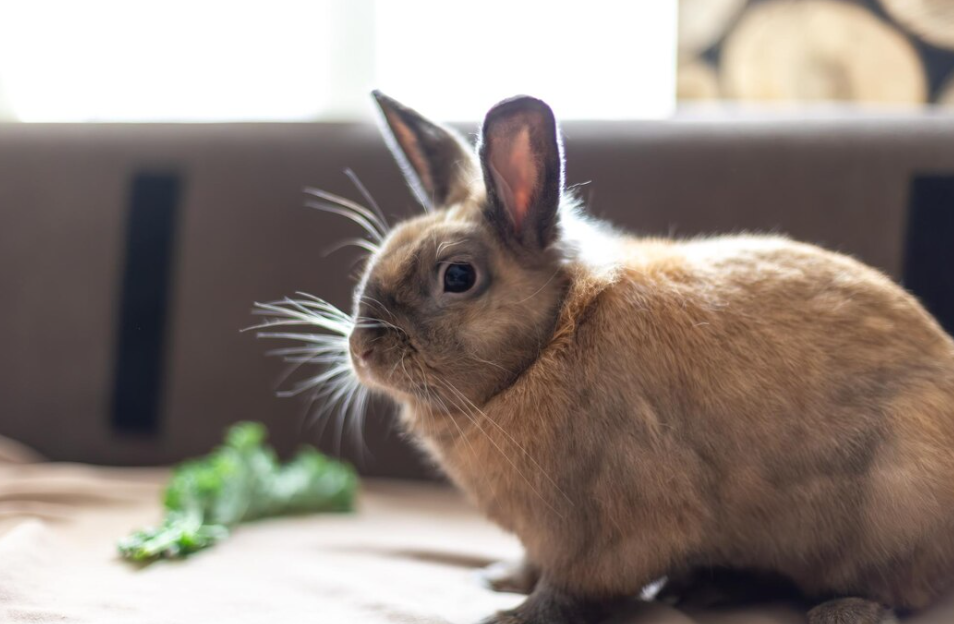
Many first-time rabbit owners assume that a rabbit skipping food for a while is not a big problem. In reality, prolonged loss of appetite in rabbits is a very serious warning sign and may be associated with gastrointestinal stasis (GI stasis) or other major disease.
A rabbit’s digestive tract is designed to have fibre moving through it almost continuously. Once a rabbit stops eating, gut motility slows down or stops, gas and intestinal contents build up, and in severe cases the condition can become fatal.
What is GI stasis in rabbits?
GI stasis can be understood simply as:
- The intestinal tract slowing down markedly or stopping
- Food, hair, and gas accumulating in the gut
- The normal balance of intestinal bacteria being disrupted, leading to more gas and toxins
Rabbits cannot vomit. Severe gastrointestinal gas build-up is extremely painful and may also lead to low blood pressure and inadequate organ perfusion, making it a true emergency.
Common causes of GI stasis
Gut stasis is usually caused by several factors together, including:
- Poor diet: too little hay, too much pellet food or treats, and insufficient fibre intake
- Dental disease: overgrown teeth, malocclusion, or oral ulcers causing painful eating
- Stress: sudden environmental change, moving house, contact with other animals, loud noise, and similar triggers
- Pain or other disease: such as urinary problems, liver or gallbladder disease, infection, and more
- Dehydration and insufficient activity
For this reason, GI stasis is often not just a “gut problem” on its own, but a sign that something is wrong with the rabbit’s overall health.
Warning signs of rabbit GI stasis: even a few hours without eating should raise concern
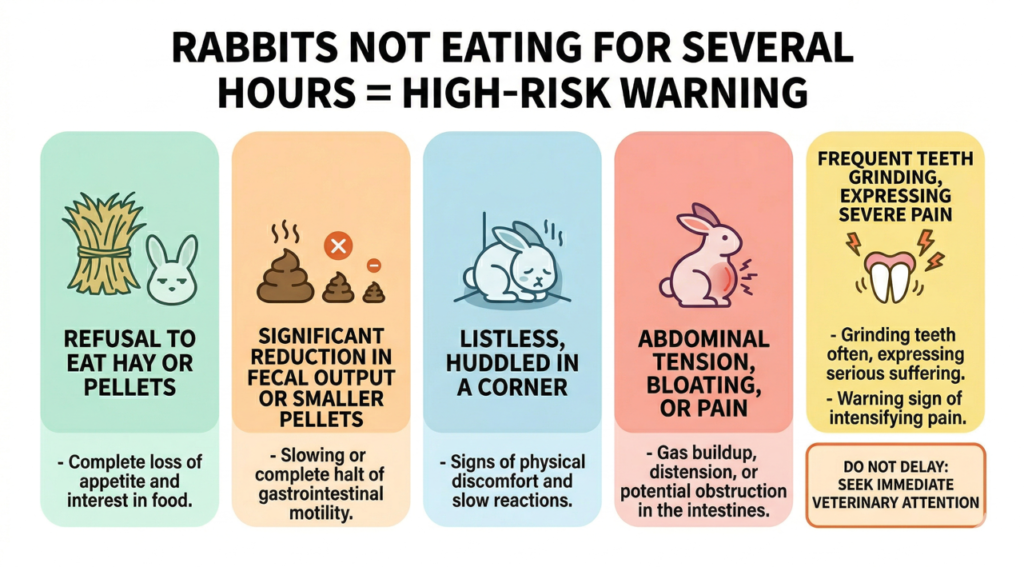
The following signs should be taken seriously:
- A rabbit that normally likes hay suddenly refuses hay, pellets, and favourite treats
- No fresh droppings for several hours, or faeces that become much smaller and fewer in number
- Sitting quietly in a corner and not wanting to move
- A tense or bloated abdomen; some rabbits grind their teeth because of pain
- Drooling, rapid breathing, or other unusual behaviour
Compared with dogs or cats, where owners may observe for longer, a rabbit that has completely stopped eating for a few hours should already be considered for prompt veterinary attention. Do not wait and “see how it is tomorrow morning.”
How dental health is linked to GI stasis
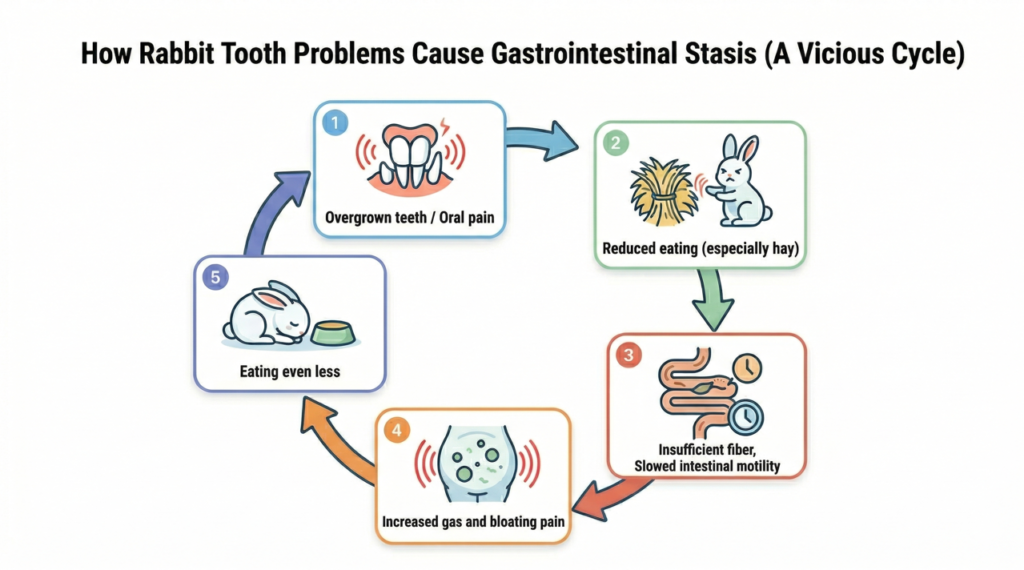
Rabbit teeth grow continuously and need constant wear through chewing large amounts of fibre. If the diet is not appropriate:
- The teeth may become overgrown or develop sharp points
- The bite may become abnormal and eating becomes painful
- Food intake drops, gut motility slows, and a vicious cycle develops
Common signs of dental disease include:
- Drooling, with wet fur under the chin or on the neck
- Dropping food, taking a long time to chew
- Choosing softer foods while refusing hay
- Gradual weight loss
Dental disease and GI stasis often occur together, so both need to be considered during the consultation.
Dietary advice for rabbits: hay first, treats second
The basic principles of a healthy rabbit diet are:
- High-fibre hay as the main food source, such as Timothy hay or orchard grass, and it should make up most of the diet
- A moderate amount of rabbit pellets, choosing a high-fibre, low-sugar formula with simple ingredients, and controlling the portion according to body weight and activity level
- A small amount of fresh vegetables, depending on individual tolerance
- As few treats as possible. Biscuits, dried fruit, seeds, nuts, and other high-sugar or high-fat foods should be heavily restricted
Long-term dependence on high-starch or high-sugar treats not only increases the risk of gut imbalance, but also interferes with the natural wearing down of the teeth.
When must a rabbit be taken to the veterinarian immediately?
Prompt veterinary attention is recommended in the following situations:
- No eating at all for several hours, or drinking only very small amounts
- No new droppings, or a marked decrease in faecal output
- The abdomen looks obviously enlarged or feels very tight
- The rabbit keeps hiding, is unwilling to move, or grinds its teeth
- Obvious drooling, nasal discharge, rapid breathing, or other concerning symptoms
At the clinic, the veterinarian may:
- Perform a physical examination and listen to gut sounds
- Take X-rays to assess gas distribution and intestinal contents
- Evaluate the teeth, including under sedation if needed
- Provide fluids, pain relief, pro-motility medication, and dental treatment where required
Do not give human gastrointestinal medication on your own, and do not force large amounts of food or water into the rabbit before assessment, as this may worsen the condition or create an aspiration risk.
Daily prevention: create a stable, low-stress living environment
- Provide fresh hay and clean water continuously
- Avoid dramatic changes in temperature and humidity
- Reduce sudden loud noises and major fright triggers
- Check body weight regularly and watch for weight loss or gain
- Keep a basic record of food intake and droppings so abnormalities can be recognised early
FAQ
Q1 | How long can a rabbit go without eating before it needs to see a vet?
In general, if a rabbit has completely stopped eating or producing droppings for several hours, this already deserves serious attention. If the rabbit normally has a good appetite, prompt examination is recommended.
Q2 | Can I syringe-feed a rabbit that is not eating?
If the gastrointestinal condition has not first been assessed by a veterinarian, force-feeding may worsen discomfort or increase the risk of aspiration. In some cases, such as severe gas build-up or intestinal twisting, even more caution is needed. Veterinary guidance should be sought first.
Q3 | Do rabbit teeth need to be trimmed regularly?
That depends on the rabbit’s dental condition. A healthy diet rich in hay helps natural tooth wear, but if there are overgrown teeth, sharp points, or malocclusion, professional dental correction under anaesthesia may be needed.
Q4 | Why are treat biscuits bad for rabbits?
High-sugar and high-starch treats disrupt the intestinal bacterial balance, increase the risk of gut stasis and obesity, and do not provide the fibre needed for proper tooth wear. They should be given only in tiny amounts or avoided entirely.
Q5 | Should owners monitor rabbit food intake and droppings every day?
You do not necessarily need to measure everything precisely, but you should know the rabbit’s normal pattern, such as roughly how much hay is eaten and how many droppings are usually produced. Then you can notice early if output suddenly drops or stops.
CityVet Rabbit Clinic
CityVet is committed to providing outstanding comprehensive veterinary care. Guided by the core values of professionalism, compassion, and trust, we aim to offer fair pricing, advanced equipment, and clear explanations of treatment options, so that every pet receives thorough medical support.
Would you like to book a rabbit consultation? Please call our Tsuen Wan clinic at 2623 5500 or our Yuen Long clinic at 2477 9990. Address: G/F, 186 Sha Tsui Road, Tsuen Wan / Shop 2, G/F, Fook Shun Building, 25 Ping Wui Street, Yuen Long.
Disclaimer: This article provides general information only and cannot replace professional medical diagnosis. If your rabbit stops eating, produces fewer droppings, or becomes less responsive, please book a veterinary examination as soon as possible.