

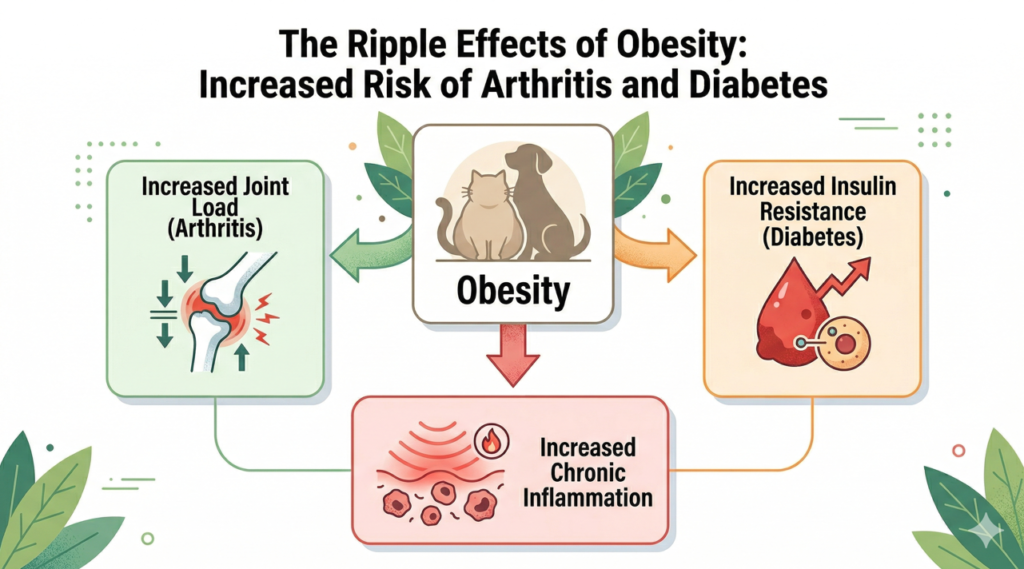
In Hong Kong, many pets live a life of constant meals and endless treats, and before owners realise it, they have a “little chubby dog” or a “round cat.” But obesity is not only a cosmetic issue. It significantly increases the risk of arthritis, diabetes, heart disease, and other chronic conditions.
How can I tell whether my pet is overweight?
Veterinarians often use the Body Condition Score (BCS). In simple terms:
- From above, there should be a visible waist rather than a completely oval outline
- From the side, the abdomen should tuck up slightly rather than hanging low
- You should be able to feel the ribs with light pressure, but they should not be overly prominent
Many owners become used to a “cute and chunky” appearance, but from a medical point of view this can mean the pet is clearly overweight or obese. Every extra kilogram adds strain to the joints and metabolic system.
Obesity and arthritis: the consequences of long-term overload on the joints
Arthritis is very common in middle-aged and senior dogs, and cats can be affected too. Obesity can:
- Increase the amount of weight the joints have to bear
- Accelerate cartilage wear
- Promote chronic inflammatory processes within the body
Common signs include:
- Stiffness when getting up, only moving more comfortably after a few steps
- Reluctance to climb stairs or jump onto sofas or beds
- Falling behind on walks and moving more slowly
- Sometimes showing a mild limp
Many pets do not cry out loudly when they are in pain. Instead, they move less and become less active, which owners may mistakenly assume is simply part of getting older.
New long-acting joint pain injections: Librela for dogs and Solensia for cats
Traditional arthritis management has relied on oral pain relief, joint supplements, and similar measures. In recent years, targeted long-acting joint pain injections have become available, such as Librela for dogs and Solensia for cats, administered by veterinarians in the clinic.
At a high level, these products:
- Target substances involved in pain signalling to help reduce joint pain perception
- Are generally long-acting injections, commonly given once monthly, although actual use depends on the product information and veterinary judgement
- May be especially helpful for pets that are difficult to medicate orally or have a higher risk of side effects from long-term oral pain relief
It is important to emphasise that long-acting injections are not a replacement for every other part of treatment. They are one part of an overall arthritis management plan, which still includes weight control, appropriate exercise, and other veterinary recommendations.
Whether they are suitable must always be assessed by the attending veterinarian based on the pet’s medical history, examination findings, and any other disease risks.
The link between obesity and diabetes: more than just drinking and urinating more
Obesity increases the risk of insulin resistance, meaning the body responds less effectively to insulin. This is one of the major risk factors for diabetes in dogs, and especially in cats.
Diabetes exists in different forms, somewhat similar to type 1 or type 2 patterns, although the exact classification differs between dogs and cats and is determined by an internal medicine veterinarian. For owners, the key point is to watch for the following signs:
- A clear increase in drinking and urination
- Weight loss despite a normal or even increased appetite
- Lower activity levels and easy fatigue
- Poorer coat quality and slower wound healing
If diabetes is suspected, the veterinarian may recommend:
- Blood glucose testing
- Urine glucose and ketone testing
- Checking for other diseases that can affect blood sugar, such as hormonal disorders
- Insulin-related tests when needed, to help determine the type and treatment approach
Basic concepts of diabetes care
Diabetes is a long-term disease. Management in dogs and cats has similarities to human medicine, but also important differences. Common management approaches include:
- Insulin injections given according to veterinary instructions
- A diabetes prescription diet or an appropriate nutritional plan
- Monitoring changes in blood sugar and body weight
- Keeping feeding times and exercise routines regular to reduce large fluctuations in blood sugar
Before treatment begins, a more complete evaluation is usually recommended, including blood work, urinalysis, possible insulin-related testing, and screening for other major diseases. This helps the veterinarian determine the specific situation and set realistic treatment goals.
Weight control matters in both arthritis and diabetes
Whether the problem is arthritis or diabetes, weight management remains a foundation of care:
- Set an ideal target weight together with your veterinarian
- Use a prescription weight-loss diet or another calorie-controlled diet
- Limit treats, especially those that are high in fat or sugar
- Return regularly for weight checks and body condition assessment
Healthy weight loss should be gradual and steady. Extreme fasting or nutritionally unbalanced dieting should be avoided.
FAQ
Q1 | How can I quickly tell whether my dog or cat is too fat?
You can use body condition scoring as a guide: from above there should be a visible waist, and when you feel the ribs you should not have to press deeply to find them. If you are unsure, ask your veterinarian to assess your pet during the next examination.
Q2 | Isn’t arthritis just a normal part of old age and not something that needs treatment?
No. Arthritis can have a major long-term impact on comfort and mobility, and in severe cases pets may even become unwilling to walk. Early weight control, pain management, and other treatment can greatly improve quality of life.
Q3 | Are Librela or Solensia suitable for every dog or cat with joint pain?
Not necessarily. Suitability must be assessed by a veterinarian according to age, other diseases, medication history, and the severity of joint disease.
Q4 | Does diabetes always mean insulin injections are necessary?
It depends on the individual case. Many diabetic dogs do require insulin injections. The situation in cats is more complex, and some cats may achieve remission after proper dietary control and treatment. The exact plan must be determined by a veterinarian.
Q5 | If my pet loses weight, will the arthritis or diabetes definitely go away?
Weight improvement helps reduce joint strain and improves blood sugar stability, but arthritis and diabetes are usually chronic diseases that still require ongoing monitoring and treatment. Weight loss alone cannot fully replace medical care.
CityVet Pet Weight Management, Arthritis, and Diabetes Assessment
CityVet is committed to providing outstanding comprehensive veterinary care. Guided by the core values of professionalism, compassion, and trust, we aim to offer fair pricing, advanced equipment, and clear explanations of treatment options, so that every pet receives thorough medical support.
Would you like to book a weight management, arthritis, or diabetes assessment for your pet? Please call our Tsuen Wan clinic at 2623 5500 or our Yuen Long clinic at 2477 9990. Address: G/F, 186 Sha Tsui Road, Tsuen Wan / Shop 2, G/F, Fook Shun Building, 25 Ping Wui Street, Yuen Long.
Disclaimer: This article provides general information only and cannot replace professional medical diagnosis or individual prescriptions. If you have any concerns, please book a veterinary examination as soon as possible so your attending veterinarian can design an appropriate treatment and weight management plan for your pet.