

Many owners assume a dog that coughs simply has a chill or throat irritation, but in some dogs coughing is actually a distress signal from the heart. This is especially true in middle-aged and senior small-breed dogs such as Pomeranians, Yorkshire Terriers, and Chihuahuas, which commonly develop degenerative valve disease. Without timely diagnosis and control, this can progress to heart failure. This article explains the link between coughing and heart problems in dogs, and the role of echocardiography, ECG, and X-rays in diagnosis.
Common causes of coughing in dogs: not just respiratory disease
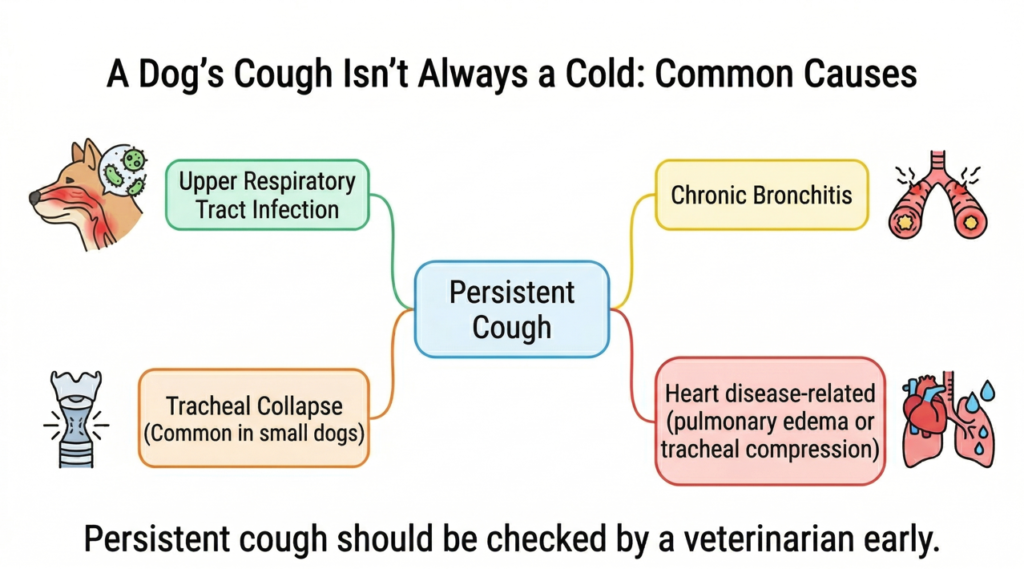
Dogs may cough for many reasons, including:
- Upper respiratory infection
- Tracheal collapse, which is common in small breeds
- Chronic bronchitis
- Heart disease causing pulmonary oedema or pressure on the trachea
From the sound of the cough alone, it is often difficult to tell which cause is responsible. Persistent coughing, especially in older dogs, should therefore be assessed by a veterinarian as early as possible.
Common heart disease in dogs: small breeds vs large breeds
Small breeds: valvular heart disease
In middle-aged and senior small dogs, the most common condition is degenerative mitral valve disease. The heart valve no longer closes tightly, allowing blood to leak backward:
- The heart has to work harder and gradually enlarges
- This may lead to pulmonary oedema and breathing difficulty
- Early on, there may be only a heart murmur and no obvious symptoms
Large breeds: cardiomyopathy and related disease
Some large breeds are more prone to cardiomyopathy, for example:
- The heart muscle contracts weakly
- The heartbeat becomes weaker or more irregular
- Exercise intolerance, fainting, or even sudden death may occur
Regardless of breed size, finding heart disease early is far better than waiting until the dog is clearly struggling to breathe.
When should you suspect a heart problem rather than a simple cough?
If any of the following are present, a veterinary examination is recommended as soon as possible:
- Coughing that is worse at night or early in the morning
- Coughing or breathlessness after mild exercise or climbing stairs
- Faster breathing than usual at rest, with obvious abdominal effort
- Tongue or gums appearing pale or bluish
- Tiring easily or being noticeably less active
When the heart is not functioning well, circulation is affected and fluid may build up in the lungs, causing coughing and laboured breathing.
What do echocardiography, ECG, and X-rays show?
Evaluating a dog’s heart usually requires a combination of tests rather than a single examination.
Echocardiography
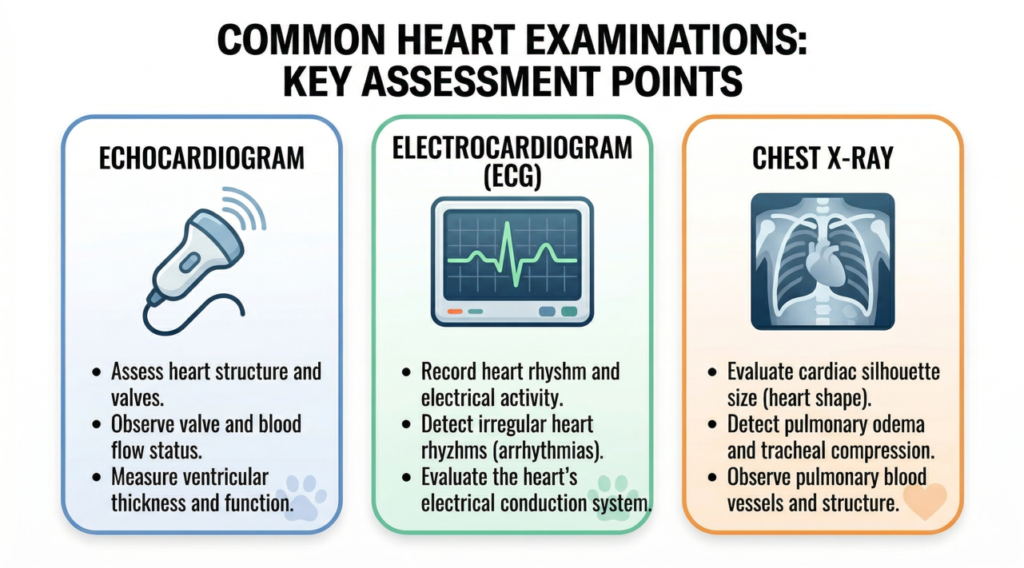
This provides a real-time moving image of the heart, allowing the veterinarian to see structures, valves, and the direction of blood flow. It helps assess:
- Whether the atria or ventricles are enlarged
- Whether the valves are degenerated and how severe the backward flow is
- How strong the heart muscle contraction is
It is extremely important for diagnosing valve disease, cardiomyopathy, and similar conditions
Electrocardiography (ECG)
This measures the electrical activity of the heart and can help detect:
- Arrhythmias, including rhythms that are too fast, too slow, or irregular
- Certain abnormalities involving the atria or ventricles
- Some rhythm disorders may require long-term medication
Chest X-rays
- These show the size and shape of the heart
- They help identify fluid in the lungs, inflammation, or other lung changes
- They can also show whether an enlarged heart is pressing on the trachea
Not every dog needs every test. The veterinarian will choose the most appropriate combination based on the physical examination, symptoms, and risk profile.
Treatment direction and long-term management for heart disease
Specific medication and dosing must always be decided by a veterinarian. In general, treatment may include:
- Medication to improve cardiac contraction
- Diuretics to remove excess fluid and reduce pulmonary oedema and cardiac burden
- Vasodilators to reduce the resistance the heart has to pump against
- Medication to control arrhythmias when specific rhythm problems are present
At the same time, the veterinarian may recommend:
- Keeping body weight under control so obesity does not add extra cardiac strain
- Avoiding strenuous exercise, while still allowing appropriate gentle activity
- Regular follow-up echocardiography, chest X-rays, blood pressure checks, and related monitoring
Although heart disease often cannot be cured completely, medication and lifestyle management can greatly extend the period of comfortable living.
Home care: practical things owners can do
- Monitor the resting respiratory rate. If the breathing rate stays higher than the range advised by your veterinarian, contact the clinic early.
- Pay attention to night-time coughing or changes in sleeping posture, such as preferring to sleep sitting up or with the neck extended
- Give medication on time and never reduce or stop it on your own
- Arrange regular health checks rather than waiting until severe breathlessness develops
FAQ
Q1 | My dog coughs only once in a while. Does that definitely mean heart disease?
Not necessarily. Dogs can cough for many reasons, including throat irritation, tracheal problems, or allergy. However, if the cough is frequent, persistent, or occurs in an older dog, veterinary assessment is recommended.
Q2 | Does echocardiography require anaesthesia?
In most cases, no. Echocardiography is usually performed with gentle restraint and reassurance only. If a patient is especially anxious, the veterinarian will decide whether mild sedation is needed.
Q3 | Can a dog with heart disease still go for walks?
In many cases, yes. Gentle walks are usually still encouraged, while prolonged or intense exercise should be avoided. The exact activity level should be adjusted according to your veterinarian’s advice.
Q4 | Once my dog’s heart disease is stable, can I stop the medication?
Heart disease is usually a long-term condition. Stopping medication may allow the condition to worsen again. Any dose reduction or change should only be made by a veterinarian after follow-up assessment.
Q5 | Can cough medicine be used long term?
If cough suppressants are only masking symptoms while the real problem, such as heart disease or tracheal collapse, remains untreated, that is not ideal. The underlying cause should be identified first.
CityVet Canine Cardiac Examinations
CityVet is committed to providing outstanding comprehensive veterinary care. Guided by the core values of professionalism, compassion, and trust, we aim to offer fair pricing, advanced equipment, and clear explanations of treatment options, so that every pet receives thorough medical support.
Would you like to book a cardiac assessment for your dog? Please call our Tsuen Wan clinic at 2623 5500 or our Yuen Long clinic at 2477 9990. Address: G/F, 186 Sha Tsui Road, Tsuen Wan / Shop 2, G/F, Fook Shun Building, 25 Ping Wui Street, Yuen Long.
Disclaimer: This article provides general information only and cannot replace professional medical diagnosis. If your dog has severe coughing or breathing difficulty, please book a veterinary examination or seek emergency support as soon as possible.