
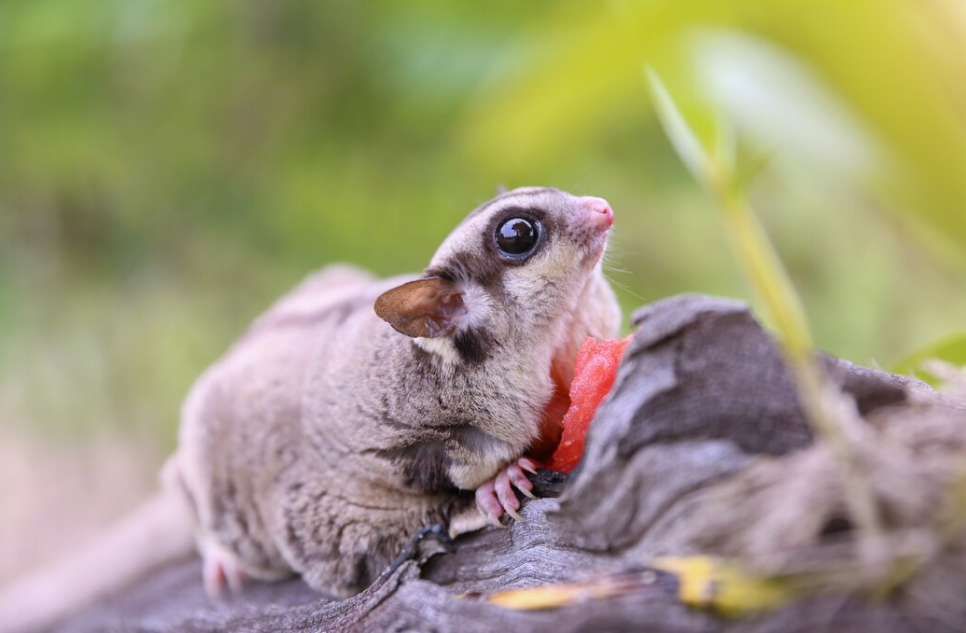
Sugar gliders are highly popular among exotic pet owners in Hong Kong because of their charming appearance and unique gliding ability. As highly social marsupials with delicate physiology, they have demanding environmental and nutritional needs. However, many sugar glider health crises begin with incorrect husbandry assumptions in the early stages of ownership.
The Unique Physiology of Sugar Gliders and the Challenges of Keeping Them in Hong Kong
Native to forest regions in Australia, Indonesia, and surrounding areas, sugar gliders are nocturnal, social marsupials. In Hong Kong’s compact living environment, owners often face space limitations, excessive artificial indoor lighting, and difficulty maintaining an ideal diet. If these factors are not managed properly, the impact is often seen directly in the animal’s immune health.
Metabolic Bone Disease (MBD): One of the Most Common Challenges for Hong Kong Owners
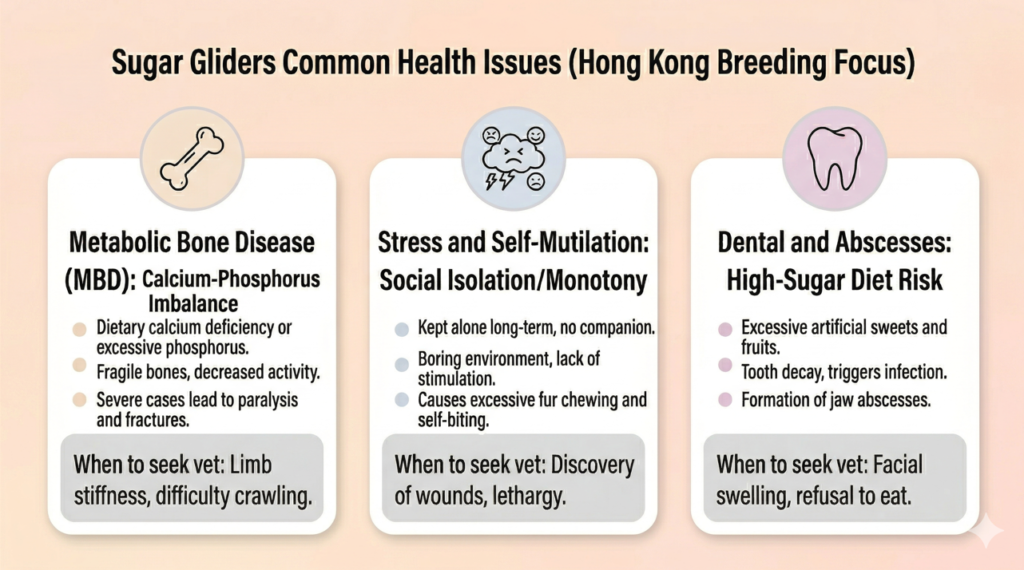
Metabolic bone disease is one of the most common emergencies we see in sugar gliders. It is mainly caused by an imbalance in the calcium-to-phosphorus ratio in the diet, with the ideal ratio being 2:1. In Hong Kong, many owners feed mainly fruit or a single grain-based diet, leading to severe calcium deficiency.

- Physiological mechanism: When blood calcium levels fall, the body begins drawing calcium from the bones, leading to bone loss and deformity.
- Clinical signs: Early signs may include reduced climbing ability and hind limb tremors. In later stages, seizures, fractures, and even breathing difficulty from chest deformity may occur.
- Treatment approach: Based on bone density findings on X-rays, the veterinarian may prescribe high-dose liquid calcium supplementation, advise on lighting, and redesign the diet to meet nutritional standards.
Stress and Self-Mutilation: The Role of Behavioral Medicine
Sugar gliders are extremely dependent on social interaction. In Hong Kong’s busy lifestyle, prolonged isolation can easily lead to anxiety and stress.
- Self-mutilation: An anxious sugar glider may overgroom and even bite its own tail, limbs, or genital area.
- Key treatment considerations: In addition to wound care and bandaging, environmental enrichment is essential. Veterinarians may advise increasing vertical climbing space, using foraging toys, and assessing whether medication is needed to help regulate serotonin levels.
Dental Care: Preventing Serious Infection Through Small Daily Details
Sugar gliders’ preference for sugary foods makes them prone to periodontal disease. When food debris accumulates between the teeth, bacteria can invade the jawbone and form abscesses. These abscesses often appear externally as facial swelling, and if left untreated, bacteria may spread throughout the body.
What to Expect During a Sugar Glider Consultation
During the physical examination, the veterinarian will assess the sugar glider’s alertness, coat quality, and hydration status.
- Weight monitoring: A high-precision scale is used, because in an animal that weighs only around 100 grams, a loss of 5 to 10 grams may already be an early warning sign of serious disease.
- Skilled palpation: The abdomen is checked for abnormal masses, and in females the pouch is also examined for cleanliness and overall health.
- Fecal screening: Tests may be performed for common protozoa such as Giardia, which can cause soft stool and weight loss.
Home Care and Environmental Recommendations
Hong Kong is humid, and room temperature should generally be maintained at 24 – 27 C. When temperatures drop below 15 C, sugar gliders may enter torpor, which is often mistaken for death but is actually a life-threatening physiological state. We recommend providing a stable small heating source and ensuring that the enclosure contains enough warm sleeping pouches.
Recognizing Emergency Signs: When Should You Seek Veterinary Care?
If your sugar glider shows any of the following signs, treat the situation as urgent and seek veterinary care promptly:
- Sunken eyes (severe dehydration)
- Hind limb weakness or dragging (possible MBD or neurological injury)
- Persistent diarrhea or bloody stool
- Unexplained wounds on the body (possible self-mutilation)
Conclusion: The Importance of Long-Term Preventive Medicine
With proper care, sugar gliders can live 10 to 15 years. We recommend routine checkups every six months. Regular fecal screening and nutritional consultations can help prevent many chronic conditions that might otherwise become life-threatening.
FAQ
- Should sugar gliders always be kept in pairs?
Yes. They are highly social animals, and keeping one alone greatly increases the risk of anxiety and self-mutilation. - Can I feed cat food to a sugar glider?
Absolutely not. The protein and fat ratios in cat food are not appropriate for sugar gliders and may contribute to liver and kidney disease. - Do sugar gliders need sunlight?
Although they are nocturnal, weak indirect natural light may help support vitamin D3 synthesis. - What should I do if my sugar glider suddenly stops eating?
This is an emergency. Their metabolism is very fast, and going without food for more than 12 hours may lead to shock.
CityVet Sugar Glider Consultation
CityVet is committed to providing outstanding, comprehensive veterinary care. Guided by our core values of professionalism, compassion, and trust, we aim to offer reasonably priced services, advanced equipment, and clear explanations of all treatment options, so every pet receives complete medical support.
To book a sugar glider consultation, please call our Tsuen Wan branch at 2623 5500 or our Yuen Long branch at 2477 9990. Address: G/F, 186 Sha Tsui Road, Tsuen Wan / Shop 2, G/F, Fuk Shun Building, 25 Ping Wui Street, Yuen Long.
Disclaimer: This article is for general information only and does not replace professional medical diagnosis. If you have concerns, please arrange a veterinary examination as soon as possible.