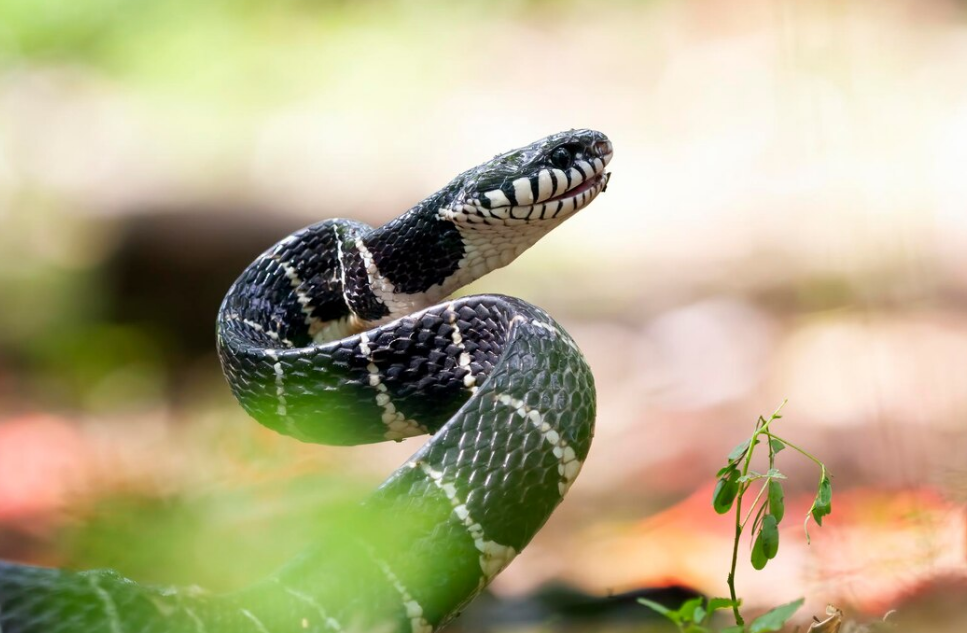
As reptiles, snakes rely on regularly shedding their old skin (ecdysis) as they grow. For popular pet snakes in Hong Kong such as ball pythons, corn snakes, and hognose snakes, a complete, smooth shed is not only a sign of growth, but also a reflection of overall health. However, when a snake cannot fully shed on its own and old skin remains attached to the body, the condition is medically known as dysecdysis. This is not merely a cosmetic issue. If left untreated, retained shed can develop into a serious health problem.
Understanding the Normal Shedding Process in Snakes
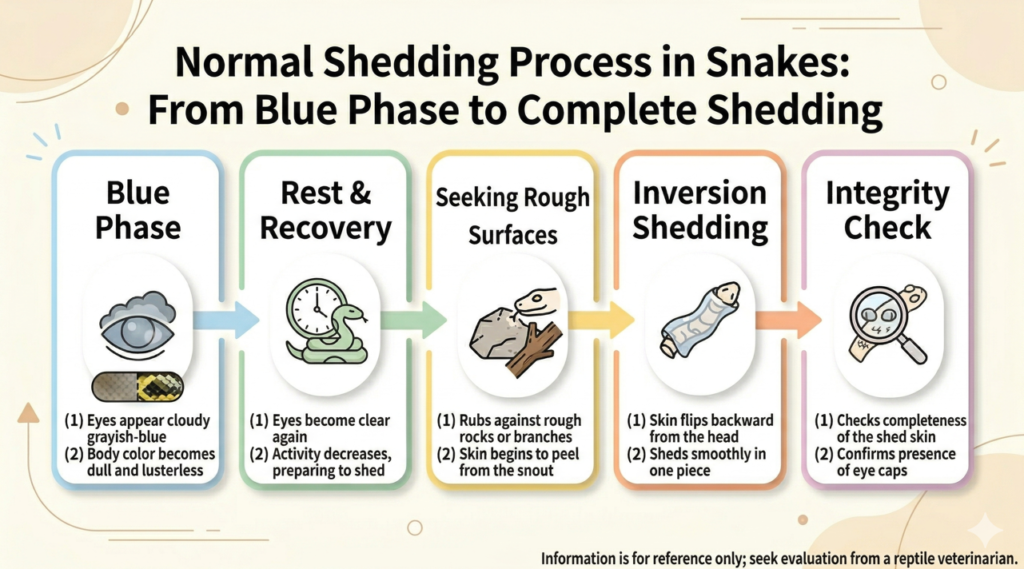
Before discussing abnormal shedding, it is important to understand the normal shedding cycle. Before a shed, snakes enter the “in the blue” phase, during which the skin becomes dull and the eyes turn cloudy gray-blue because of fluid buildup beneath the spectacle. The eyes then clear again, and a few days later the snake will rub its snout against rough surfaces, turn the skin inside out, and shed it in one piece. Ideally, the shed skin should come off intact, with clear scale patterns, including the eye caps.
Potential Risks of Dysecdysis: More Than a Cosmetic Issue
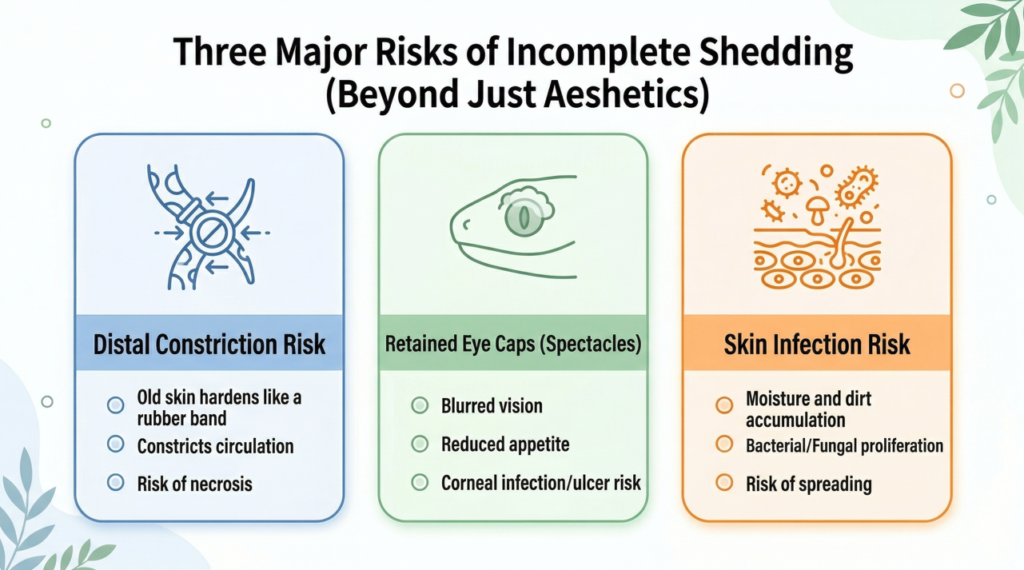
The dangers of dysecdysis are often underestimated and generally fall into the following three categories:
- Risk of tissue necrosis and amputation: If retained skin encircles the tail tip or body, the dried old skin can tighten like a rubber band as moisture is lost. This can cut off circulation to the extremities and lead to tissue death from lack of oxygen. In clinical cases, some snakes with severe constriction from retained shed have required tail amputation.
- Retained eye caps and blindness: A snake’s eyes are protected by a specialized transparent scale called the spectacle. If this scale does not come off with the old skin, it can cause blurred vision and reduced appetite. When multiple layers of eye caps accumulate, corneal infection, ulceration, or even permanent blindness may result.
- Bacterial infection and septicemia: The space between retained old skin and new skin easily traps moisture and debris, creating an ideal environment for bacteria and fungi. If ignored for too long, this may lead to widespread skin infection such as scale rot, and bacteria may even enter the bloodstream through damaged skin, causing life-threatening septicemia.
Core Factors That Cause Dysecdysis in Snakes
In Hong Kong, enclosure setup is often the main reason shedding problems occur:
- Inappropriate humidity control: In Hong Kong, air conditioning is commonly used indoors during summer, which can greatly reduce environmental humidity. For tropical species that require 60% – 80% humidity, such as ball pythons, overly dry air can cause the old skin to dry out and harden too early, making it stick tightly to the new skin.
- Lack of rubbing surfaces: Snakes need to rub their snout and body against surfaces to tear open the old skin. If the enclosure is too smooth, such as a plain plastic box with no furnishings, the snake may struggle to find enough traction.
- Underlying health concerns: External parasites such as snake mites can damage scale structure and interfere with shedding. In addition, vitamin A deficiency or severe dehydration can reduce skin elasticity and make shedding more difficult.
How to Safely Handle Retained Shed
If you notice small patches of retained skin on your snake, stay calm and use the following gentle methods:
- Warm water soak: Prepare a lidded container with ventilation holes and add warm water to about half the snake’s body depth (around 28 – 30 C, never too hot). Let the snake soak for 20 – 30 minutes so the moisture can soften the retained skin.
- Create a humidity box: Place a small enclosed box filled with damp sphagnum moss or a damp towel inside the enclosure, allowing the snake to choose a microenvironment with very high humidity. This can be very effective for stubborn localized retained shed.
What Not to Do: Why You Must Never Pull Off Dry Skin
Many owners feel tempted to help when they see skin tearing. However, you should never forcibly peel away retained skin while it is still dry. The new scales underneath may not yet be fully mature, and pulling the skin off can tear away new scales or even dermal tissue, causing severe open wounds, pain, and infection.
Clinical Assessment: How Can a Veterinarian Help With Complex Shedding Problems?
You should seek help from an experienced reptile veterinarian immediately if any of the following occur:
- Multiple layers of retained shed.
- The eye caps do not come off on their own.
- Redness, discharge, or a foul smell develops beneath the retained skin.
- The snake appears lethargic or refuses food.
A veterinarian can use medical lubricants and fine instruments to remove retained shed safely without damaging the new skin. For eye cap problems, a veterinarian has the anatomical knowledge required to remove stacked caps precisely while avoiding corneal injury.
Prevention: How to Create the Ideal Shedding Environment
Prevention is always better than treatment. Owners should make sure to:
- Monitor humidity accurately: Install a reliable hygrometer and adjust misting frequency according to the needs of the species.
- Provide environmental enrichment: Offer driftwood, rocks, or rough hides.
- Special care during the blue phase: When the snake’s eyes turn blue, raise humidity appropriately and minimize disturbance.
FAQ:
Q1: How can I tell whether my snake’s eye caps have shed properly?
A: Check the shed skin. There should be two clear, intact circular scales in the head region. If there are holes where the eye caps should be, and the snake’s eyes still look cloudy or uneven after shedding, retained eye caps may be present.
Q2: How often should a snake shed?
A: Shedding frequency depends on age, feeding frequency, and growth rate. Juvenile snakes may shed every 4 to 6 weeks, while adults may shed only once every 3 to 6 months.
Q3: Can I feed my snake during the blue phase?
A: It is not recommended. At this stage, the snake’s vision is impaired, stress levels are higher, and its body is focusing energy on preparing to shed. Feeding may lead to refusal or regurgitation.
Q4: After soaking, can I use a towel to help remove the skin?
A: After a proper soak, you may let the snake pass gently through a warm, damp towel so the towel fibers can help lift loose skin, but never use force.
Q5: Why does my snake’s color look lighter after shedding?
A: A snake’s colors are usually at their brightest right after a shed. If the skin looks unusually pale, check whether a thin transparent layer of retained skin is still present.
CityVet Snake Consultation
CityVet is committed to providing outstanding, comprehensive veterinary care. Guided by our core values of professionalism, compassion, and trust, we aim to offer reasonably priced services, advanced equipment, and clear explanations of all treatment options, so every pet receives complete medical support.
To book a snake consultation, please call our Tsuen Wan branch at 2623 5500 or our Yuen Long branch at 2477 9990. Address: G/F, 186 Sha Tsui Road, Tsuen Wan / Shop 2, G/F, Fuk Shun Building, 25 Ping Wui Street, Yuen Long.
Disclaimer: This article is for general information only and does not replace professional medical diagnosis. If you have concerns, please arrange a veterinary examination as soon as possible.