
Why are early signs of illness in sheep so easy to miss?
Sheep are ruminants, and in the early stages of illness they often only seem quieter than usual, eat less, or ruminate less often. These changes may not be obvious. If owners do not routinely observe eating, elimination, and activity levels, they often only notice a problem once the condition becomes more obvious. For sheep, the earlier daily changes are recorded, the easier it is to detect problems early. Appetite, rumination, elimination, body condition, and activity are all important clues when assessing health.
Common Warning Signs That a Sheep Needs Veterinary Attention
Reduced appetite and less rumination
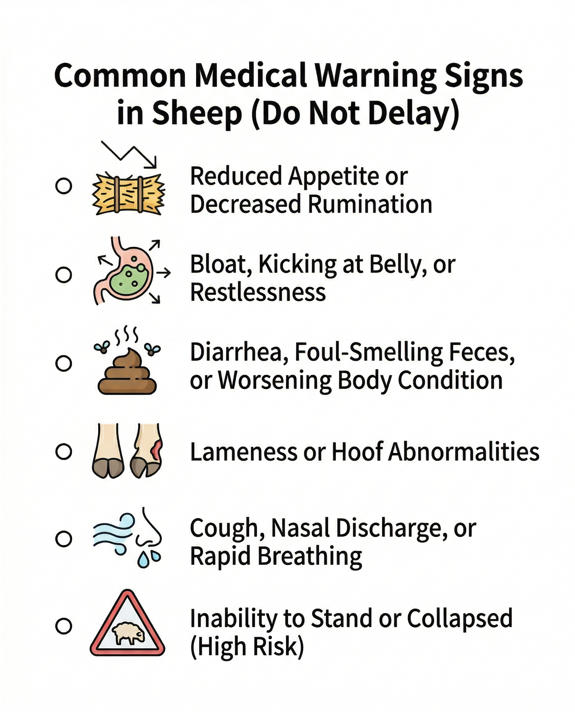
If a sheep suddenly refuses to eat, ruminates much less, or only picks at food without feeding normally, the cause may be gastrointestinal discomfort, pain, infection, or even fermentation imbalance after a feed change. This should not be dismissed as simply having a poor appetite, because delay can affect body condition and hydration balance.
Bloating, diarrhoea, and declining body condition
If a sheep develops abdominal distension, kicks at its belly, appears restless, has foul-smelling faeces, diarrhoea, long-term weight loss, or poor coat quality, digestive problems, parasite burden, or nutritional imbalance are important possibilities.
Lameness, hoof problems, and respiratory signs
Hoof injury, infection, or joint discomfort can make it difficult for a sheep to stand and reduce activity, which in turn affects feeding. If coughing, nasal discharge, or rapid breathing are also present, respiratory problems, poor ventilation, and temperature-related stress should also be considered. If these signs persist, veterinary assessment should be arranged promptly.
What checks are usually done during a sheep consultation?
History taking and husbandry assessment
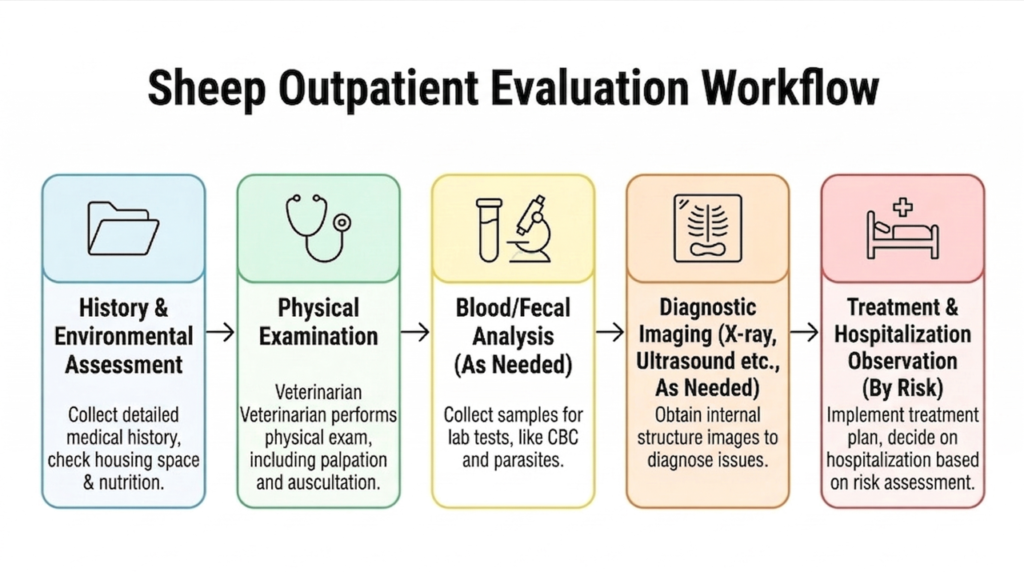
A sheep consultation usually looks at more than the symptoms alone. It also reviews feed changes, group housing, environmental hygiene, ventilation, hoof care, and recent changes in body condition. This step is important because many ruminant problems are linked to husbandry conditions, nutritional management, and parasite control.
Laboratory tests, imaging, and inpatient observation
Depending on the case, the clinic may arrange blood or faecal tests, and imaging tools such as digital X-ray, ultrasound, endoscopy, or CT can also be used to assist assessment. These steps help identify the location of the problem more clearly and guide treatment direction.
Common treatment directions and home care
Treatment for sheep usually does not rely on a single course of medication. It often involves addressing the underlying cause, adjusting the diet, managing parasites, improving the environment, and monitoring progress afterwards. When hoof, digestive, or respiratory problems are involved, appetite, water intake, rumination, faeces, standing, and activity usually still need close observation after treatment. Because Hong Kong is humid, owners should pay special attention to keeping the ground dry, maintaining air flow, and minimising transport stress.
When should you seek veterinary attention quickly?
If a sheep cannot stand, is recumbent, appears to be in obvious pain, becomes unusually weak after giving birth, develops worsening bloat, or has difficulty breathing, the situation is higher risk and a veterinarian should be contacted as soon as possible. In ruminants, waiting too long often means missing the stage when intervention is easier.
How Hong Kong owners can prepare before bringing a sheep in
It is helpful to bring records of dietary changes over the last 7 days, faecal condition, weight changes, whether the sheep is housed with others, deworming history, and photos of the environment. If the sheep is difficult to transport over a long distance, owners can first call the clinic to explain the situation so the medical team can help decide the next step.
FAQ
Q1: Are there sheep veterinary consultations in Hong Kong?
A: If a clinic provides ruminant or exotic animal services, you can first contact the clinic, describe the situation, and then arrange a consultation based on the advice given.
Q2: How long can a sheep have a reduced appetite before it should see a vet?
A: If it continues not eating, ruminates much less, or is also bloated, has diarrhoea, or seems unwell, it should not be delayed any further and veterinary care should be arranged promptly.
Q3: Is bloating in sheep always very urgent?
A: Bloating can be caused by several digestive problems. If it is accompanied by belly-kicking, restlessness, stopped rumination, or affected breathing, veterinary attention should be sought quickly.
Q4: Is lameness in sheep simply due to overgrown hooves?
A: Not necessarily. Hoof infection, injury, and joint problems can all cause lameness and require veterinary assessment.
Q5: What tests will a sheep vet perform?
A: Common steps include history taking, a clinical examination, faecal or blood tests, and imaging such as X-rays or ultrasound when needed.
CityVet Sheep Clinic
CityVet is committed to providing outstanding comprehensive veterinary care, guided by the core values of professionalism, compassion, and trust. We aim to offer reasonable fees, introduce advanced equipment, and explain treatment options clearly to pet owners, so that every pet receives full medical support.
To book a sheep consultation, please call our Tsuen Wan branch at 2623 5500 or our Yuen Long branch at 2477 9990. Address: G/F, 186 Sha Tsui Road, Tsuen Wan / Shop 2, G/F, Fuk Shun Building, 25 Ping Wui Street, Yuen Long.
Disclaimer: This article is for general information only and does not replace professional medical diagnosis. If you have any concerns, please book a veterinary examination as soon as possible.