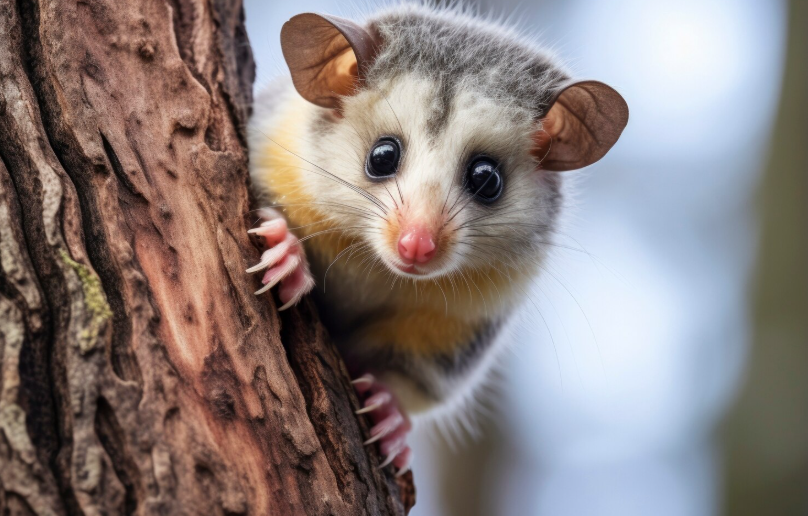
Although sugar gliders are small, their medical needs are quite complex. Many diseases initially show only subtle behavioural changes, such as grooming more often or losing interest in favourite treats.
Hair Loss and Skin Abnormalities: How to Read the Signs
Skin problems in sugar gliders are often a reflection of underlying internal issues.
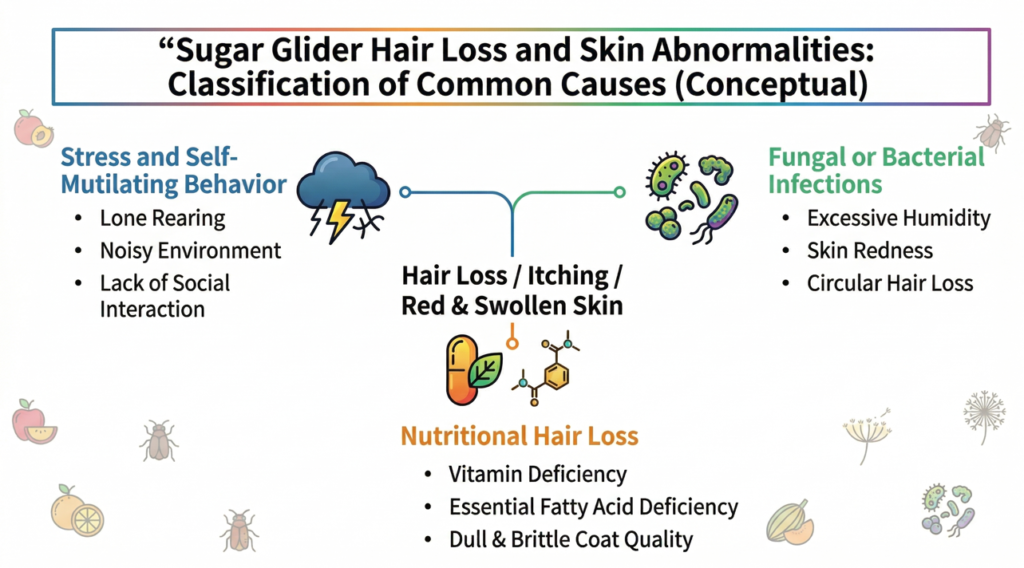
- Stress-induced self-mutilation: This is the most common problem in Hong Kong. Solitary housing or a noisy environment can cause sugar gliders to over-groom, and they may even bite open the abdomen, tail, or genitals.
- Fungal and bacterial infections: When humidity is too high, sugar gliders are more prone to fungal skin disease, which may appear as round areas of hair loss with reddened skin.
- Nutritional hair loss: Deficiencies in vitamins or essential fatty acids can make the coat dull and brittle.
Dental Health: Facial Swelling That Should Not Be Ignored
Many owners notice a swelling below the eye and assume it is an eye problem, but in many cases it is actually a tooth root abscess. This is often related to feeding too many soft, sugary foods. Gum infection can spread rapidly into the skull and may require professional tooth extraction and antibiotic treatment.
Nutritional Management: Preventing Metabolic Disease (MBD)
As mentioned above, an improper calcium-to-phosphorus ratio, such as feeding only insects or fruit, can lead to bone demineralisation. Affected sugar gliders may show hind limb tremors during movement. Without timely calcium support and dietary correction, fractures and nerve damage can become irreversible.
At-Home Monitoring Checklist for Hong Kong Owners
- Weight: Weigh once a week. A drop of more than 10% is a serious warning sign.
- Coat quality: Is the fur neat and glossy?
- Behaviour: Is normal crabbing, the defensive crab-like vocalisation, and willingness to interact still present?
FAQ
- Q: My sugar glider has a bald spot on top of its head. Is it a skin disease?
- A: In adult males, bald patches on the head and chest are usually scent glands and are normal physiological features rather than skin disease.
- Q: How can I reduce self-mutilation behaviour in a sugar glider?
- A: In addition to seeking treatment and pain relief, increase environmental enrichment, such as food-hiding toys, spend more time with the animal, or arrange a companion.
- Q: Can sugar gliders have their teeth clipped?
- A: Absolutely not. Sugar glider teeth do not regrow, and clipping them can cause severe pain, serious infection, and difficulty eating.
- Q: Why is my sugar glider’s stool so soft?
- A: It may be due to protozoal infection such as Giardia or an overly limited diet. Bringing a fresh faecal sample to the veterinary clinic is recommended.
CityVet Sugar Glider Dermatology or General Practice Clinic
CityVet is committed to providing outstanding comprehensive veterinary care, guided by the core values of professionalism, compassion, and trust. We aim to offer reasonable fees, introduce advanced equipment, and explain treatment options clearly to pet owners. To book a sugar glider dermatology or general consultation, please call our Tsuen Wan branch at 2623 5500 or our Yuen Long branch at 2477 9990. Address: G/F, 186 Sha Tsui Road, Tsuen Wan / Shop 2, G/F, Fuk Shun Building, 25 Ping Wui Street, Yuen Long.
Disclaimer: This article is for general information only and does not replace professional medical diagnosis. If you have any concerns, please book a veterinary examination as soon as possible.