
Early signs in cattle that are easiest to overlook
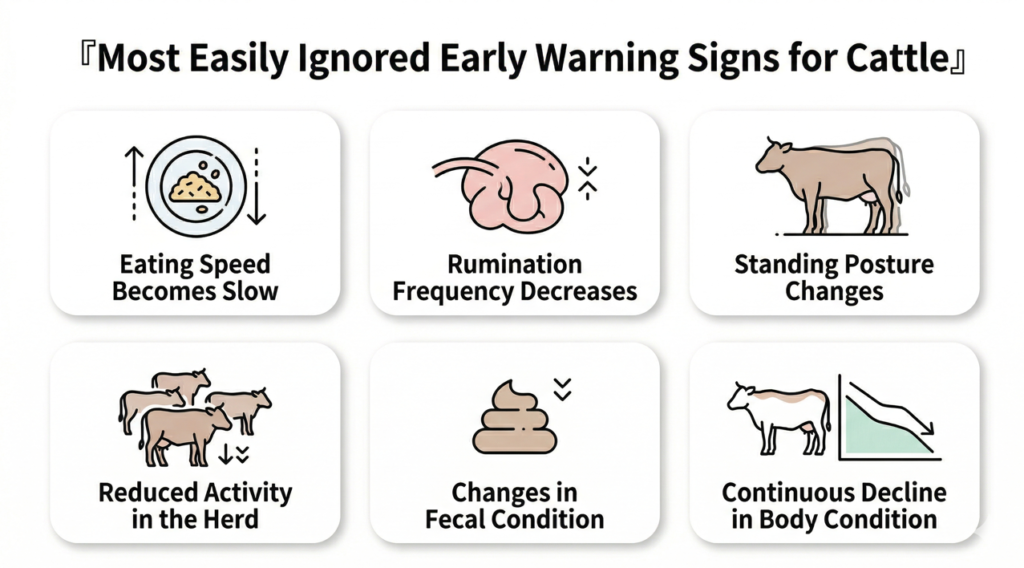
Cattle often do not show dramatic signs at the very beginning. More common early changes include eating more slowly, reduced rumination, altered standing posture, reduced activity within the group, or elimination patterns that differ from normal. If owners only notice whether the animal is still eating at all, these early changes can easily be missed. For cattle, early observation is often especially important.
Common health problems in cattle
Digestive tract problems and bloat
One common problem in ruminants is digestive upset, fermentation imbalance, or bloat following dietary change. If a cow develops abdominal enlargement, restlessness, belly-kicking, reduced appetite, or less rumination, concern should be raised. These problems may not be manageable through observation at home alone, because once bloat starts affecting eating and breathing, the risk increases significantly.
Parasites and chronic weight loss
If a cow has long-term weight loss, poorer coat quality, abnormal faeces, or a steady decline in overall body condition, parasites and nutritional management are common areas to consider.
Hoof disease and respiratory problems
Once a cow becomes lame, it often affects more than walking. Feeding, resting, and overall stress levels may also be affected. If the environment is damp or the flooring is poor, hoof problems are even more likely to recur. Another group of symptoms that should not be ignored includes coughing, nasal discharge, and rapid breathing, which may be related to infection, poor ventilation, or temperature stress.
How will a cow vet assess the case?
A cattle consultation usually begins with the history, feed, herd situation, water intake, elimination, and environmental conditions, followed by a physical examination, blood or faecal testing, and, where needed, X-ray, ultrasound, endoscopy, or other imaging tools. The goal is not only to identify a single symptom, but also to understand whether the issue is linked to husbandry, infection, parasites, hooves, or other systemic factors.
How should daily monitoring be done after treatment?
After treatment, owners should record food intake, rumination, drinking, faeces, body condition, standing, and gait. If hoof problems are involved, keeping the ground dry is especially important. If the issue is digestive or parasite-related, feed management, deworming plans, and herd management should be reviewed with the veterinarian. This kind of follow-up helps improve recovery.
When should you seek veterinary attention quickly?
If a cow is unable to stand, has worsening bloat, difficulty breathing, persistent refusal to eat, abnormal post-partum recovery, or rapidly increasing weakness, a veterinarian should be contacted as soon as possible. In ruminants, waiting too long often means missing the stage when intervention is easier.
FAQ
Q1: If a cow has a reduced appetite, does it always need to see a cow vet?
A: If it is only a brief fluctuation in appetite, close observation may be reasonable at first. But if it is accompanied by less rumination, bloat, diarrhoea, low energy, or declining body condition, veterinary assessment should be arranged promptly.
Q2: Is bloat common in cattle in Hong Kong housing environments?
A: Bloat itself can arise from several dietary and digestive factors. The important point is not to wait and hope the animal recovers on its own once it appears.
Q3: Is lameness in cattle always related to the hooves?
A: Hooves are a common cause, but injury, infection, and joint problems can also lead to lameness.
Q4: Will a cow vet perform a faecal test?
A: Faecal testing may be arranged when needed, especially in cases of chronic weight loss, diarrhoea, or suspected parasitic infection.
CityVet Cattle Clinic
CityVet is committed to providing outstanding comprehensive veterinary care, guided by the core values of professionalism, compassion, and trust. We aim to offer reasonable fees, introduce advanced equipment, and explain treatment options clearly to pet owners, so that every pet receives full medical support.
To book a cattle consultation, please call our Tsuen Wan branch at 2623 5500 or our Yuen Long branch at 2477 9990. Address: G/F, 186 Sha Tsui Road, Tsuen Wan / Shop 2, G/F, Fuk Shun Building, 25 Ping Wui Street, Yuen Long.
Disclaimer: This article is for general information only and does not replace professional medical diagnosis. If you have any concerns, please book a veterinary examination as soon as possible.