
Rabbit Grooming is Not Just an Aesthetic Issue
Many owners believe that grooming a rabbit is merely to keep their coat neat, reduce shedding, or make them look cleaner. In reality, grooming holds a far more critical significance for a rabbit’s health, particularly regarding its close correlation with gastrointestinal wellness.
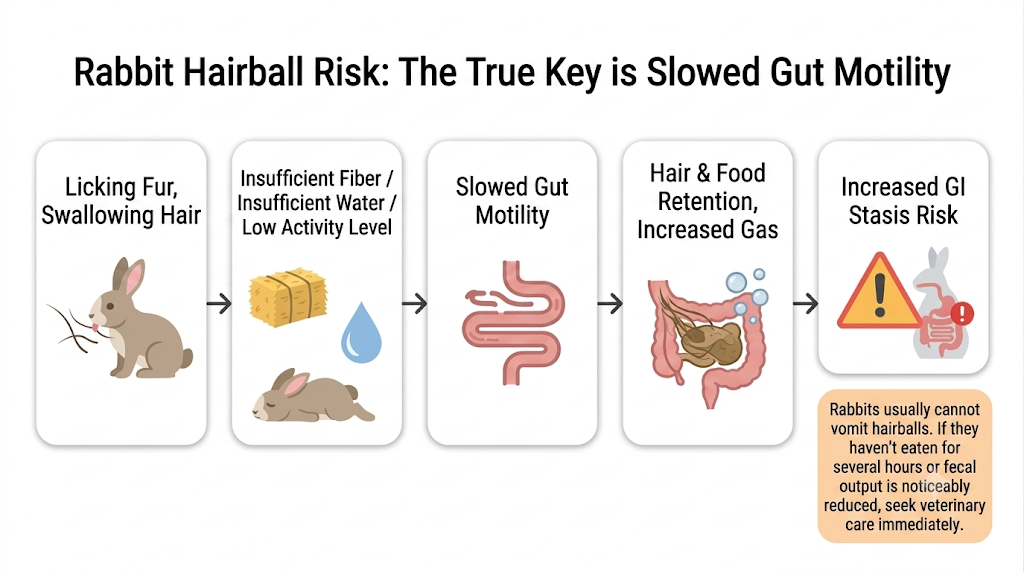
Rabbits naturally groom themselves and inevitably ingest hair during the process. Unlike cats, rabbits generally cannot vomit hairballs; instead, ingested hair must be expelled through intestinal peristalsis. If a rabbit suffers from insufficient dietary fiber, inadequate water intake, low activity levels, high stress, or underlying pain and illness, gastrointestinal motility may slow down. This causes hair to accumulate more easily within the digestive tract, increasing the risk of gastrointestinal issues.
“Hairball Disease” is Not Necessarily Just About Too Much Hair
When hearing the term “hairball disease,” many owners assume the issue stems solely from an excessive amount of hair. In rabbits, however, hairball complications are frequently linked to diminished gastrointestinal motility. In other words, hair accumulation may be a secondary consequence rather than the primary cause.
Rabbit gastrointestinal (GI) stasis is a common clinical issue that can be attributed to improper diet, lack of fiber, dental issues, pain, stress, infection, or other illnesses. When intestinal activity slows, food, gas, and hair can become stagnant, causing severe discomfort. Veterinary literature also notes that true hairball obstructions constitute a medical emergency, which may require diagnostic imaging to differentiate.
Which Signs in Rabbits Require Alertness?
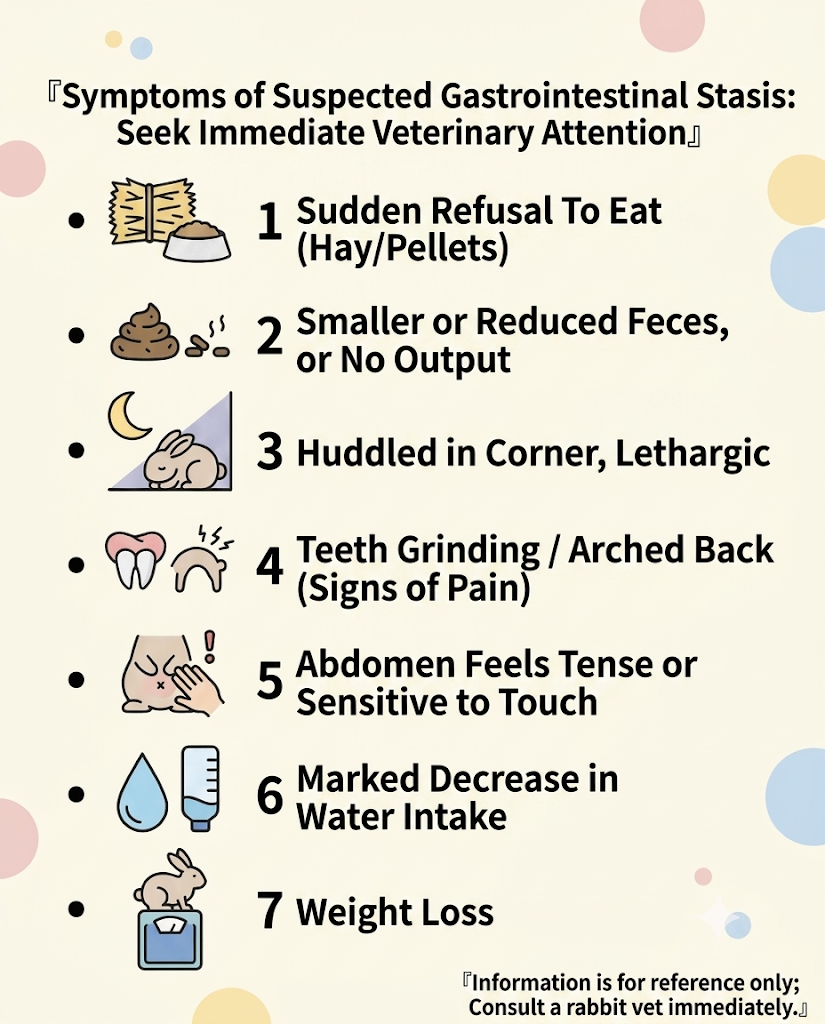
Owners should monitor their rabbit’s appetite, feces, and mental state daily. The following situations should not be dismissed as a “simple hairball”:
The rabbit suddenly refuses to eat hay or pellets, or even declines their favorite treats; feces become smaller, fewer, irregular in shape, or bowel movements stop entirely; lethargy, hiding, or reluctance to move; grinding teeth, hunching the back, an abdomen that feels tense, or resisting touch around the belly; a notable drop in water consumption or weight loss.
A rabbit’s gastrointestinal issues can deteriorate within a brief timeframe. If a rabbit does not eat or exhibits a significant drop in fecal output for several hours, it is advised to contact a veterinarian immediately, rather than attempting self-medication, force-feeding, or waiting for natural improvement. Improper intervention can delay critical medical treatment.
How Does Grooming Help Reduce Risks?
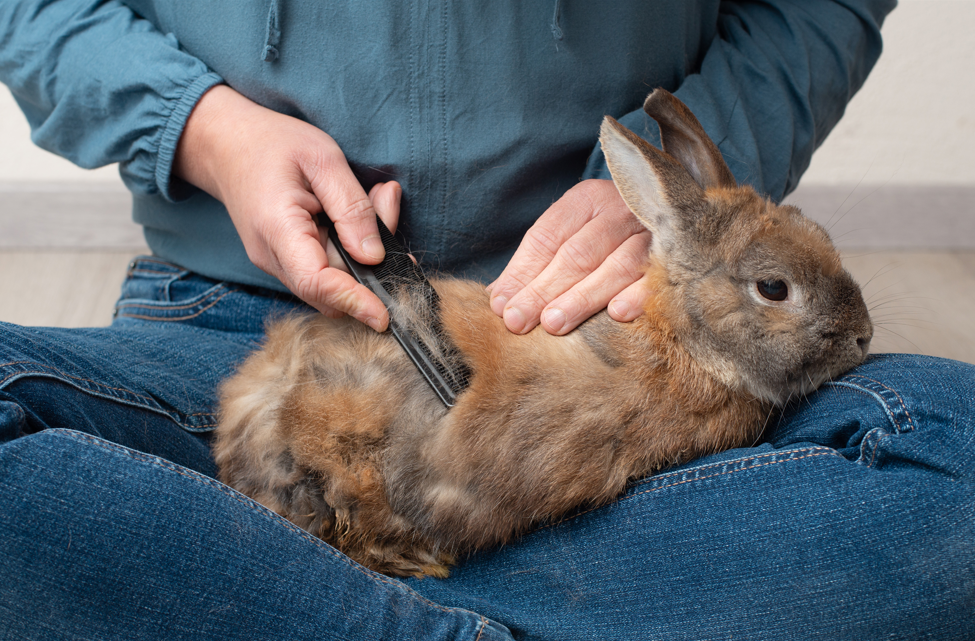
Regular grooming reduces the amount of loose hair a rabbit licks into its system, which is especially vital during shedding seasons, or for long-haired, senior, or obese rabbits who require extra assistance. Long-haired breeds, such as Angora and Lionhead rabbits, are prone to matting. If left ungroomed for extended periods, this not only increases hair ingestion but can also lead to heat retention against the skin, painful tugging, and dermatitis.
Short-haired rabbits are not exempt from grooming. Rabbits kept indoors in Hong Kong are frequently influenced by air conditioning, seasonal variations, and their living environments, meaning their shedding patterns may not strictly align with natural seasons. Owners can adjust grooming frequency based on the rabbit’s coat condition—typically a few times a week under normal conditions, and potentially daily during shedding periods.
When grooming, tools suitable for rabbits should be utilized with gentle motions to avoid pulling the skin. A rabbit’s skin is incredibly thin; if severe matting occurs, owners are strongly advised against using scissors to cut mats out themselves to prevent accidental lacerations. In severe cases, assistance should be sought from a veterinarian or an experienced exotic pet groomer.
Dietary Fiber is the Core of Gastrointestinal Health
Preventing hairball complications cannot rely solely on grooming. A rabbit’s daily diet should primarily consist of high-quality hay to provide sufficient crude fiber, which facilitates normal intestinal peristalsis. The quality, variety, and freshness of the hay are all paramount. If a rabbit dislikes eating hay, owners must investigate the root cause, such as poor hay quality, dental pain, overfeeding of treats, or excessive consumption of high-calorie pellets.
Fresh, clean water is also crucial. Inadequate hydration affects fecal moisture and the movement of intestinal contents. Some rabbits prefer water bowls over water bottles; owners can observe their pet’s drinking habits and provide the most suitable hydration method.
Self-Administering “Hairball Remedies” Instead of Seeking Medical Attention is Not Recommended
While numerous products on the market claim to aid in hair elimination, the causes of gastrointestinal issues in rabbits are complex, and these remedies are not appropriate for all scenarios. If a rabbit has already stopped eating, presents with abdominal distension, shows lethargy, or has ceased defecating, relying solely on hairball remedies will not resolve the root issue and may instead delay vital medical care.
Veterinarians generally evaluate the clinical history, perform physical and dental examinations, and conduct abdominal palpation—supported by X-rays, ultrasounds, or other diagnostics when necessary—to determine whether the condition is GI stasis, an obstruction, dental disease, pain, or another underlying pathology. The treatment approach may involve pain management, fluid therapy, prokinetic medications, nutritional support, or further medical interventions.
Grooming is Daily Care and a Health Assessment
While grooming a rabbit, owners can simultaneously inspect the skin, weight, hocks (soles of the feet), perineal cleanliness, and look for parasites or wounds. Many rabbit illnesses exhibit subtle signs in their early stages; daily tactile interaction helps owners detect abnormalities early on.
Grooming is not merely to make a rabbit look “beautiful,” but is an essential care routine for reducing hair ingestion, monitoring health, and maintaining skin and gastrointestinal stability. If your rabbit is currently experiencing heavy shedding, a decreased appetite, or reduced fecal output, or if you are uncertain whether your grooming routine and diet are appropriate, it is advisable to consult a veterinarian familiar with rabbits as soon as possible.
CityVet Rabbit Health Checks
CityVet is committed to providing outstanding comprehensive veterinary care, guided by the core values of professionalism, compassion, and trust. We aim to offer reasonable fees, introduce advanced equipment, and explain treatment options clearly to pet owners, so that every pet receives full medical support.
To book a rabbit health check consultation, please call our Tsuen Wan branch at 2623 5500 or our Yuen Long branch at 2477 9990. Address: G/F, 186 Sha Tsui Road, Tsuen Wan / Shop 2, G/F, Fuk Shun Building, 25 Ping Wui Street, Yuen Long.
Disclaimer
This article is for general information only and does not replace professional medical diagnosis. If you have any concerns, please book a veterinary examination as soon as possible.