


Hamsters are small, delicate, and their fluffy appearance makes them incredibly lovable. However, because of their tiny body size and exceptionally fast metabolism, their fur and skin are often the first areas to display warning signs when something is wrong inside the body. In Hong Kong’s dense living conditions and humid climate, hamster skin disease is one of the most common reasons for seeking medical care at exotic pet clinics.
When discovering localized hair loss, skin redness, or non-stop scratching with the hind legs, many owners often wonder if this is just a normal molting phenomenon. In reality, a healthy hamster’s coat should be dense and lustrous. Once you see the skin exposed with redness, swelling, dander, or bald patches, it typically means the skin barrier has already been damaged, necessitating timely medical intervention and environmental adjustments.
Common Symptoms of Hamster Skin Diseases
Hamsters cannot speak, but their body language and changes in appearance do the talking. Owners should be highly alert if they notice the following signs during daily interactions:
- Localized or Extensive Hair Loss: Fur falling out in patches, exposing pinkish skin; commonly seen on the back, abdomen, or hind legs.
- Skin Redness, Swelling, and Scabbing: Abnormal erythema (red patches) or small papules (bumps) appearing on the skin surface, sometimes scratched open until bleeding and forming scabs due to excessive scratching.
- Dander and Scales: Parting the fur reveals white or yellow flakes resembling human dandruff on the skin surface.
- Frequent Scratching and Chewing: The hamster spends a massive amount of time scratching its body with its claws or chewing on the fur of specific areas with its teeth.
- Lethargy and Decreased Appetite: The intense itching and pain brought on by skin diseases can trigger mental stress, causing the hamster to become reluctant to move and eat.
Four Major Causes of Hair Loss and Redness in Hamsters
To effectively handle a hamster’s coat and skin issues, the underlying culprit must be identified first. Clinically, common causes include:
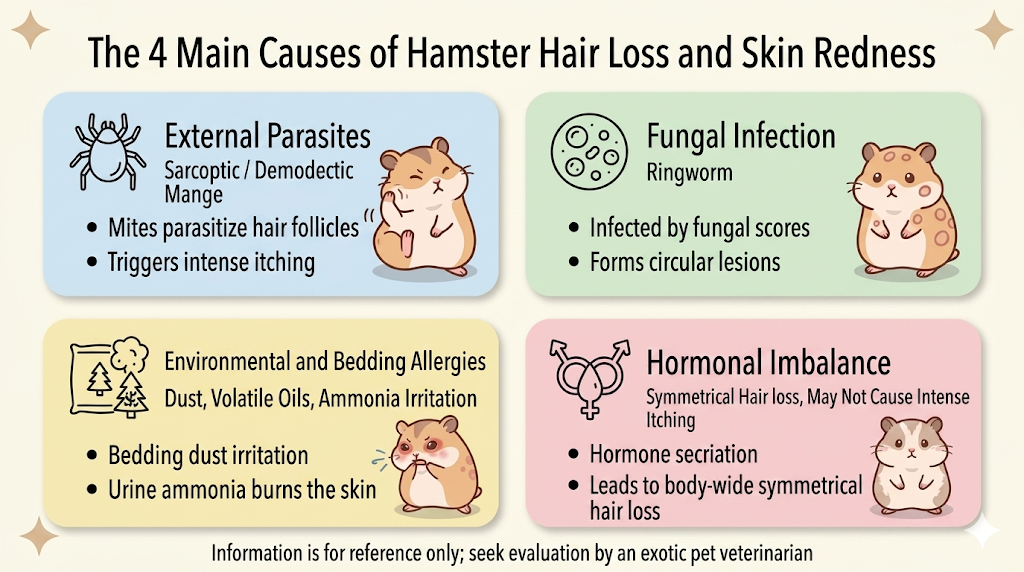
- Ectoparasite Infestations (e.g., Sarcoptic Mites, Demodex Mites)
Sarcoptic mites (Sarcoptes) and Demodex mites (Demodex) are extremely common parasites in hamsters. Demodex mites normally exist in small numbers on the skin of healthy hamsters, but when a hamster grows old, suffers from malnutrition, or experiences lowered immunity, the parasites can proliferate rapidly, leading to severe hair loss and dander problems.
- Fungal Infections (Ringworm)
The spring and summer seasons in Hong Kong are exceptionally humid, providing a perfect breeding environment for fungi (such as Microsporum). Fungal infections are typically characterized by circular bald patches with red, swollen edges covered in dander, and they are highly contagious.
- Environmental and Bedding Allergies
Some low-quality wood shavings contain high concentrations of dust or natural volatile oils (such as pine or cedar), which can easily irritate a hamster’s minute skin and respiratory tract, triggering contact dermatitis. Furthermore, failing to replace bedding over long periods allows accumulated urine to release ammonia gas, causing the abdominal skin to become red and swollen due to chemical irritation.
- Hormonal Imbalances
As hamsters age (typically over 1.5 years old), endocrine systems such as the adrenal or thyroid glands may experience abnormalities. This leads to symmetrical hair loss, though the skin is usually not accompanied by intense itching or redness.
How Professional Veterinarians Examine and Diagnose
When a hamster exhibits suspected skin disease symptoms, never blindly purchase commercially available “all-purpose skin miracle water” or apply human ointments without authorization. Hamsters have tiny bodies and an extremely low tolerance for medications; incorrect drug use can easily induce transdermal absorption poisoning.
A professional veterinary examination typically includes a skin scraping test. The veterinarian will gently scrape skin flakes and hair follicles from the lesion site to observe under a microscope for mobile parasite eggs or fungal hyphae. For cases highly suspected of fungal infections, screening will be matched with an ultraviolet lamp of a specific wavelength (Wood’s lamp). The veterinarian will formulate a suitable plan based on the examination results to ensure precise medication usage.
Methods for Daily Care and Skin Disease Prevention
Creating a dry, hygienic living environment is the core element to disrupt the recurrent flare-ups of hamster skin diseases:
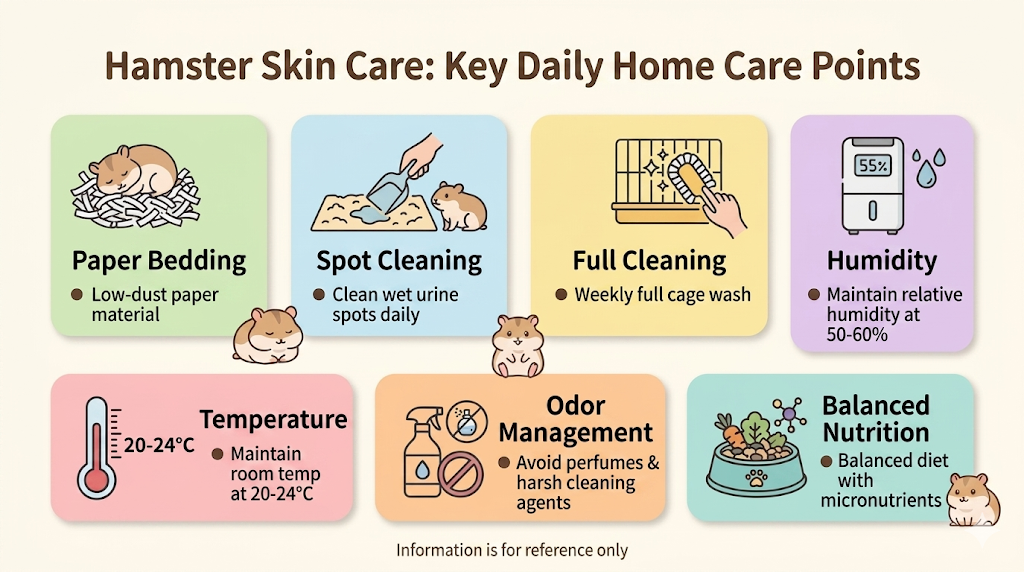
- Strict Selection of Low-Dust Bedding: Discontinue using substandard wood shavings and switch to high-quality paper bedding (such as paper pellets or laboratory paper beds) that has undergone multiple screening processes and claims to be low-dust, reducing allergens.
- Maintain a Regular Cleaning Frequency: Thoroughly clean the cage enclosure at least once a week using a disinfectant safe for small animals. Bedding soaked with urine should be spot-cleaned daily.
- Temperature and Humidity Control: During Hong Kong’s rainy seasons, a dehumidifier should be turned on in the hamster’s room to control the relative humidity between 50%–60% and maintain the room temperature at 20–24°C, which can effectively suppress fungal growth.
- Balanced Nutritional Supplementation: Aside from the staple diet, supplement with appropriate amounts of foods rich in vitamins and trace elements to enhance the hamster’s own skin immunity.
When Do You Need to Schedule a Veterinary Examination?
If a hamster only scratches itself briefly and its skin has no redness or dander, it can be observed first. However, if you find that the scope of hair loss continues to expand, the skin becomes scratched open and bleeds, there is unusual odorous discharge, or the hamster cannot sleep peacefully and experiences a massive drop in appetite due to unbearable itching, it indicates that the condition is already critical. You should contact a clinic experienced in small animal medicine to arrange a checkup as early as possible.
Frequently Asked Questions
Can a hamster’s skin disease be transmitted to humans or other pets at home?
This depends on the type of pathogen. If it is a fungal infection (such as ringworm) or certain specific types of sarcoptic mites, it possesses zoonotic contagiousness. When owners have lower immunity or wounds on their hands, their skin may develop circular red rashes and itching after contacting an infected hamster. Therefore, wearing disposable gloves when caring for a sick hamster and thoroughly disinfecting hands and the surrounding environment is recommended.
My hamster has a skin disease. Can I give it a water bath to wash it every day?
Absolutely not. Hamsters do not need and should not be given water baths. Once their dense fur is soaked in water, it is exceptionally difficult to dry completely, and the residual moisture will instead accelerate the proliferation of fungi and bacteria, causing the skin disease to further worsen. Furthermore, water bathing inflicts massive psychological stress on hamsters and can even induce fatal hypothermia or shock. If clearing dirt is necessary, consult a veterinarian on whether a specialized dry cleaning powder or medicated sand can be used.
There is a wet, bald spot in the middle of my hamster’s belly or flank. Is it a skin disease?
Not necessarily. This might be the hamster’s “scent gland” (Scent Glands). Male hamsters during estrus or when marking territory will secrete a yellow, viscous fluid with an odor from the scent gland, causing the fur in that area to look wet or somewhat sparse; this is a normal physiological structure. However, if redness, purulent discharge, hard scabbing, or a foul odor manifests around the scent gland, it may be an inflammation or obstruction of the scent gland, requiring a veterinarian to clear it.
Can switching to paper bedding really improve a hamster’s hair loss problem?
If the hamster’s hair loss is caused by an allergy to natural phenolic substances or resins in wood shavings, or contact dermatitis triggered by wood shaving dust, then switching to a fragrance-free, low-dust, high-quality paper bedding typically brings significant improvements. However, if the hair loss is caused by sarcoptic mites, fungal infections, or hormonal imbalances, simply changing the bedding cannot root out the problem, and targeted medical treatment prescribed by a veterinarian must be matched.
CityVet Small Animal Dermatology Clinic & Daily Care
CityVet is committed to providing outstanding comprehensive veterinary care, guided by the core values of professionalism, compassion, and trust. We aim to offer reasonable fees, introduce advanced equipment, and explain treatment options clearly to pet owners, so that every pet receives full medical support. To book a hamster skin health screening or microscopic dander analysis, please call our Tsuen Wan branch at 2623 5500 or our Yuen Long branch at 2477 9990. Address: G/F, 186 Sha Tsui Road, Tsuen Wan / Shop 2, G/F, Fuk Shun Building, 25 Ping Wui Street, Yuen Long.
Disclaimer: This article is for general information only and does not replace professional medical diagnosis. If you have any concerns, please book a veterinary examination as soon as possible.