

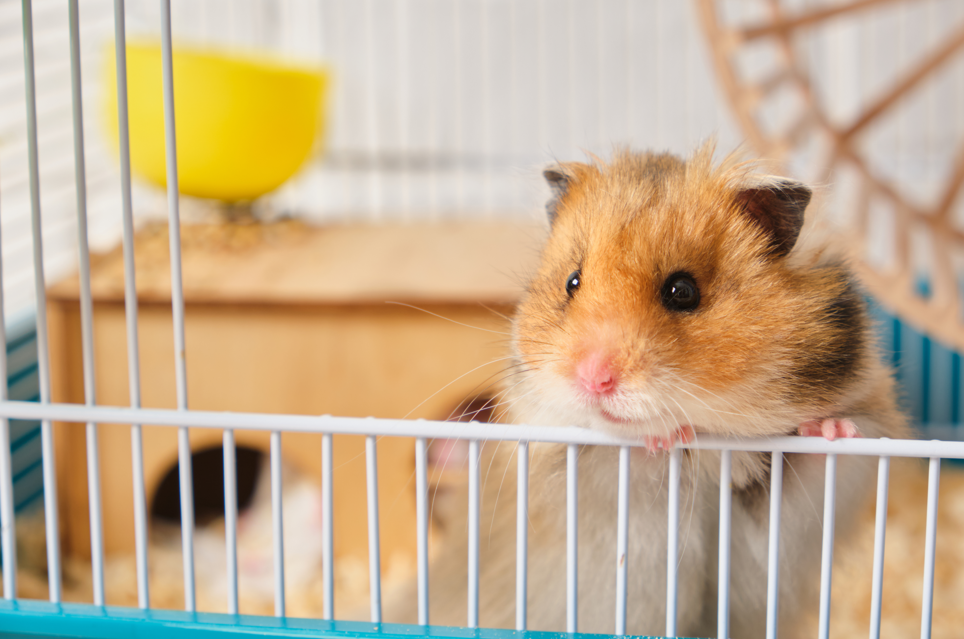
Hamsters are small and delicate, and their round, black eyes are their most iconic and charming feature. However, because a hamster’s eyeballs are relatively prominent, and they spend most of their time burrowing and foraging in bedding closely pressed against the ground, their eyes are highly susceptible to external environmental irritation and pathogen invasion.
In Hong Kong’s indoor husbandry environments, “swollen hamster eyes,” “watery eyes,” or “eyes stuck shut by discharge” are very common reasons for seeking medical care at exotic pet clinics. A hamster’s eye problems are often not simply limited to diseases of the eyes themselves; sometimes, they conceal major crises involving environmental hygiene or even dental health.
Common Causes of Swollen and Watery Eyes in Hamsters
When discovering that a hamster is frequently grooming its face or scratching its eyes with its forepaws, or that the fur around the eyes has become wet and sticky, it is usually caused by the following major factors:
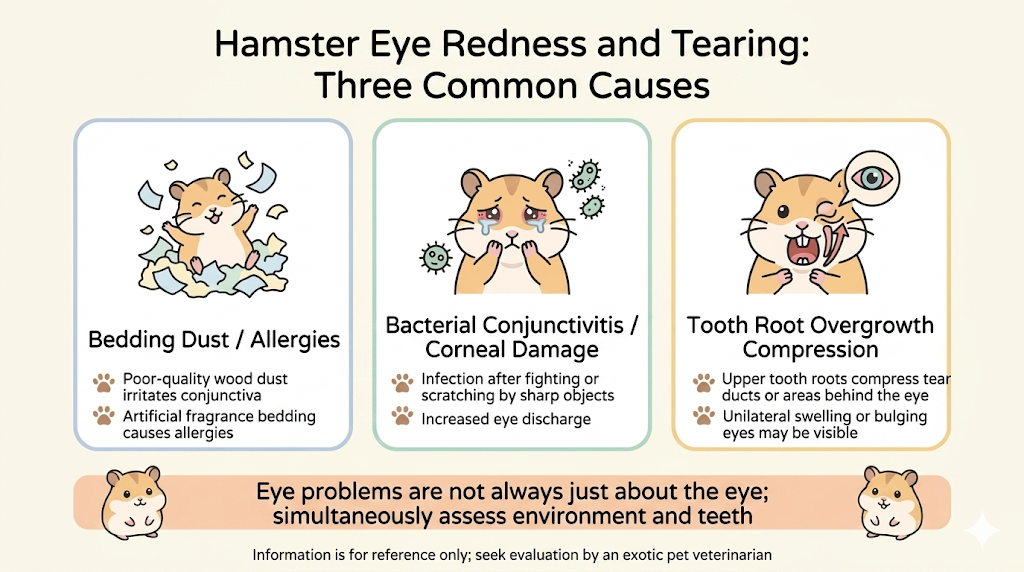
- Excessive Dust in Bedding and Allergies
Many households in Hong Kong choose wood shavings or paper pellets as hamster substrates. Some low-quality wood shavings contain large amounts of fine dust invisible to the naked eye. When hamsters burrow, this dust can directly irritate the conjunctiva. Furthermore, certain bedding materials carrying strong artificial fragrances can also trigger respiratory and ocular allergic reactions in hamsters.
- Bacterial Conjunctivitis and Corneal Ulcers
If wounds sustained after fighting (in group housing) or being pierced by sharp objects in the cage (such as edges of wooden toys or iron wires) come into contact with unclean feces or urine, bacteria will rapidly proliferate in the eye, triggering severe conjunctivitis. If the ocular surface is damaged, it can evolve into a corneal ulcer, causing extreme distress to the hamster.
- Overgrowth and Compression of Tooth Roots
This is an “invisible killer” that many owners do not expect. A hamster’s incisors grow throughout its lifespan. If tooth grinding is insufficient, the roots of the upper incisors may grow reversely upward. Because the distance between a hamster’s orbit and the upper incisor roots is extremely close, overgrown tooth roots can directly compress the tear ducts or the back of the eyeball, leading to an inability to drain tears (watery eyes) or even bulging and swollen eyes.
Common Symptoms of Hamster Eye Diseases
Owners can look out for the following abnormal warning signs through daily close observation:
- Swollen Eyelids:
The edges of the eyelids become red and swollen, looking like they are squinting into a single line.
- Increased Discharge:
Appearance of yellow, green, or white purulent discharge. Upon waking up in the morning, secretions often dry up and tightly glue the upper and lower eyelids together.
- Ocular Cloudiness:
A layer of whitish, bluish-gray film appears on the surface of the originally clear eyeball (potentially corneal edema or cataracts).
- Exophthalmos (Bulging Eyes):
One eyeball protrudes noticeably further forward than the other, which typically implies compression from an abscess or tumor behind the eyeball.
Professional Veterinary Eye Examination and Treatment Options
Some owners, upon seeing their hamster’s eyes inflamed, blindly administer human eye drops (such as cooling eye drops that remove red blood streaks) for their pet. This is extremely dangerous for tiny hamsters and can result in chemical burns or systemic drug poisoning.
Veterinarian employs very meticulous examination methods when diagnosing and treating hamster eye conditions:
- Fluorescein Staining (Fluorescein Staining): Dropping a special, harmless staining agent onto the hamster’s ocular surface and observing under blue light can precisely reveal corneal abrasions or ulcers invisible to the naked eye.
- Oral and Dental Examination: Evaluating whether the eye condition is triggered by tooth root problems.
In terms of treatment direction, the veterinarian will formulate a suitable plan based on the examination results. Bacterial infections will be prescribed small animal-specific antibiotic eye drops or eye ointments; if it is tooth root compression, the dental issue must be treated as a priority. During the treatment process, the veterinarian will guide the owner on how to safely restrain the hamster and perform the correct eye drop administration procedure.
Daily Environmental Management and Care Points
To protect a hamster’s fragile eyes, owners should implement the following points in their daily care:
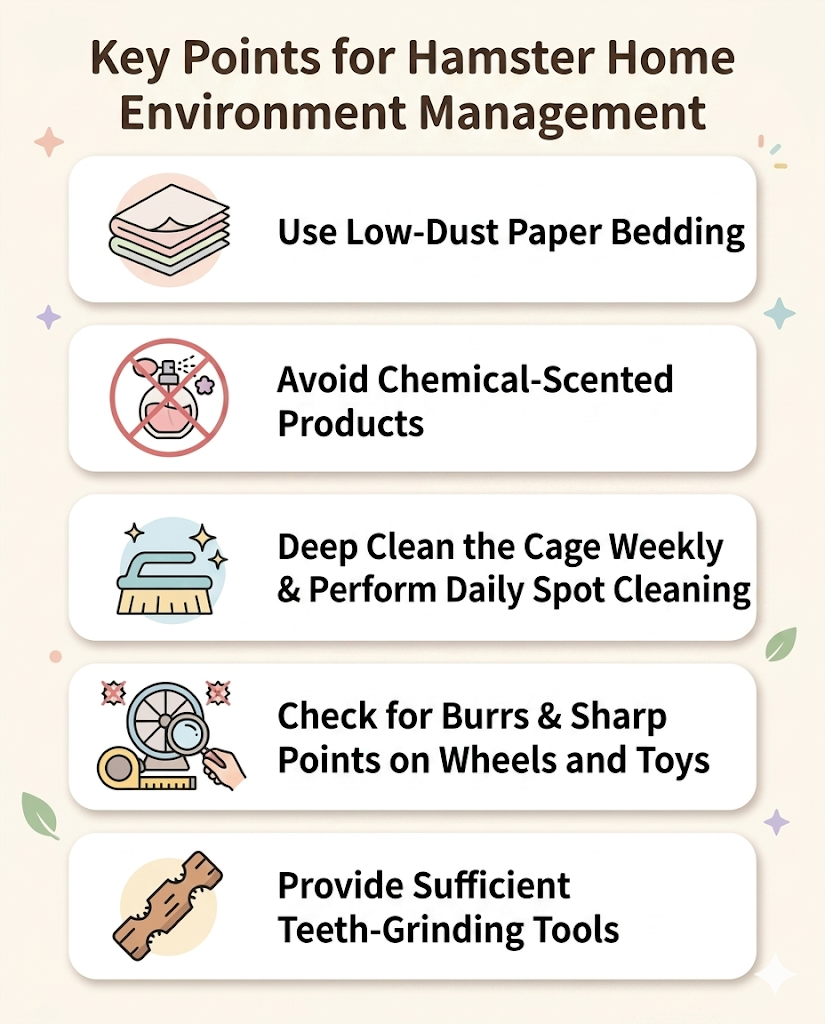
- Comprehensive Selection of Low-Dust Bedding:
It is recommended to choose high-quality paper bedding or natural laboratory paper bedding that has undergone multiple screening processes and claims to be low-dust. Avoid using products with chemical fragrances.
- Maintain Enclosure Hygiene:
Thoroughly clean the cage at least once a week, and spot-clean bedding soiled with urine daily to reduce chemical irritation from ammonia gas (urine odor) on the ocular and nasal mucosa.
- Provide Safely Toys:
Carefully inspect the running wheels and hideouts inside the cage for plastic burrs or sharp wooden splinters, and replace them immediately upon discovering damage.
- Provide Ample Tooth-Grinding Tools:
Ensure that the hamster consumes sufficient hard feed or natural chewing wood daily to prevent tooth root issues from jeopardizing the eyes.
Frequently Asked Questions
Can human eye drops or dog/cat eye drops be shared with hamsters?
Absolutely not. Human eye drops typically contain steroids, vasoconstrictors, or preservative concentrations unsuitable for small animals; the dosages and components of dog/cat eye drops may also be too potent for a hamster with an average body weight of only dozens of grams. Improper use will delay the illness and may even lead to blindness or poisoning if the hamster ingests the eye drops (entering the throat via the tear ducts).
Is a hamster’s swollen eye related to its teeth?
Yes, it is possible. Overgrown hamster teeth, tooth root problems, or facial abscesses can all affect the surrounding ocular tissues, causing eye swelling or watery eyes.
Can I use saline to wash my hamster’s eyes?
It is not recommended to flush the eyes or force the eyelids open on your own. If the eye has a wound, infection, or corneal problem, incorrect handling can worsen the irritation. A veterinary examination should be performed first.
Are hamster eye diseases contagious to other hamsters?
It depends on the underlying cause. If it is related to infections or environmental hygiene, other hamsters may also be affected. When multiple hamsters live together, check closely for fighting, shared contaminated bedding, or similar symptoms.
CityVet Small Animal Ophthalmology & Hamster Clinic
CityVet is committed to providing outstanding comprehensive veterinary care, guided by the core values of professionalism, compassion, and trust. We aim to offer reasonable fees, introduce advanced equipment, and explain treatment options clearly to pet owners, so that every pet receives full medical support. To book a small animal or hamster eye examination consultation, please call our Tsuen Wan branch at 2623 5500 or our Yuen Long branch at 2477 9990. Address: G/F, 186 Sha Tsui Road, Tsuen Wan / Shop 2, G/F, Fuk Shun Building, 25 Ping Wui Street, Yuen Long.
Disclaimer
This article is for general information only and does not replace professional medical diagnosis. If you have any concerns, please book a veterinary examination as soon as possible.