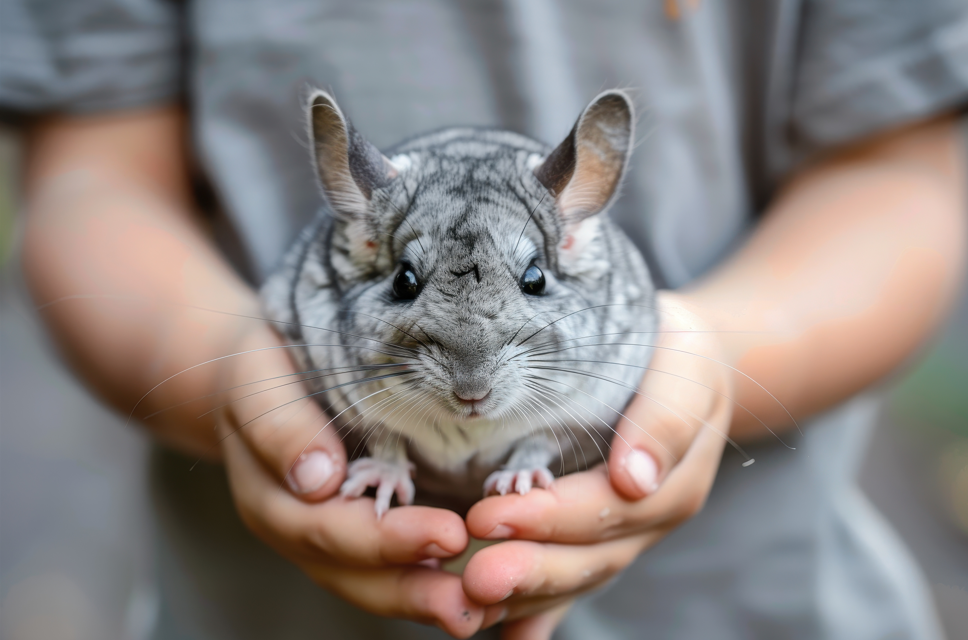
A chinchilla’s dense and soft fur is one of their most distinct features, but precisely due to their abundant coat, skin problems are sometimes difficult to detect in their early stages. When a chinchilla exhibits matted fur, localized hair loss, skin redness, scratching, increased dander, or a greasy coat texture, it may be related to high humidity, improper sand baths, skin infections, ectoparasites, stress, or the husbandry environment. Hong Kong’s climate is humid, making chinchilla skin and fur care particularly vital.
What is Unique About Chinchilla Skin and Fur?
A chinchilla can grow 50 to 80 fine hairs from a single hair follicle, creating an extremely dense coat. This fur structure helps them stay warm, but it also means the skin has lower breathability. If environmental humidity is too high, fur fails to dry completely after getting wet, or the enclosure lacks sufficient ventilation, it can easily cause skin irritation, matted fur, or a risk of infection.
Chinchillas are not suited for water baths, as their dense fur is extremely difficult to dry thoroughly, and a damp coat can increase skin problems. Under normal conditions, chinchillas need to maintain a dry coat through appropriate sand baths.
Common Chinchilla Skin Problems and Symptoms
When a chinchilla encounters skin or fur abnormalities, they typically present with the following symptoms, which owners should pay close attention to during daily grooming:
- Matted Fur (Matting): Frequently occurs on the hindquarters, the base of the tail, or the abdomen. Fur that absorbs moisture or is soiled with urine will tangle into hard clumps, blocking skin respiration.
- Localized Hair Loss (Alopecia): Especially around the nose, surrounding the eyes, the edges of the ears, or on the limbs. The hairless areas often present as circular patches, commonly referred to as “ringworm.”
- Skin Redness and Dander: Parting the fur reveals the underlying skin appearing pink or bright red, accompanied by a large amount of white or yellow dander.
- Frequent Scratching and Chewing: Because fungal infections bring an intense sensation of pruritus (itching), chinchillas will constantly scratch their bodies with their hind feet or even chew on the affected areas with their teeth, leading to secondary bacterial infections or bleeding.
Why Do Chinchillas Experience Matted Fur or Skin Redness?
Aside from climatic factors, improper daily care is often the trigger for skin diseases:
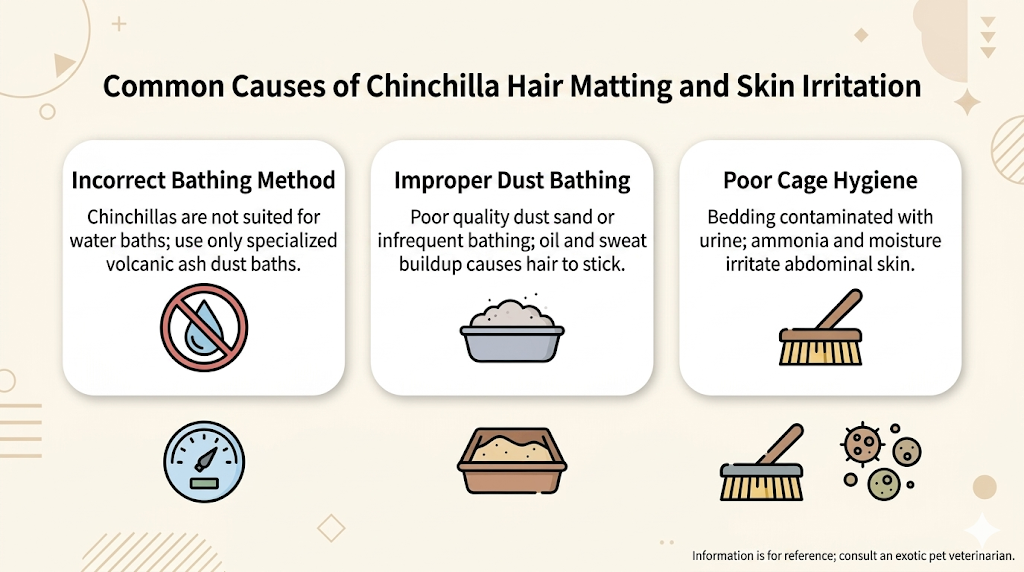
- Incorrect Bathing Methods (Water Baths Are Absolutely Forbidden)
Because a chinchilla’s fur is too dense, once it is soaked in water, it is exceptionally difficult to dry thoroughly. Residual moisture becomes locked against the skin surface, which will 100% trigger severe fungal infections. Chinchillas can only undergo dry cleaning using specialized volcanic ash (Chinchilla Dust).
- Improper Sand Bath Frequency or Substandard Sand Quality
Some owners utilize ordinary cat litter or hamster sand with overly coarse granules, which cannot penetrate deep into the chinchilla’s delicate coat to absorb oils. Conversely, if the frequency of bathing is too low during humid weather, accumulated sebum and sweat will cause the fur to stick together and mat.
- Suboptimal Living Environment Hygiene
If substrates like wood shavings are not replaced in a timely manner, they will release ammonia gas and moisture after absorbing urine, directly irritating the abdominal skin of chinchillas that stays close to the ground.
Professional Veterinary Examination and Skin Treatment Directions
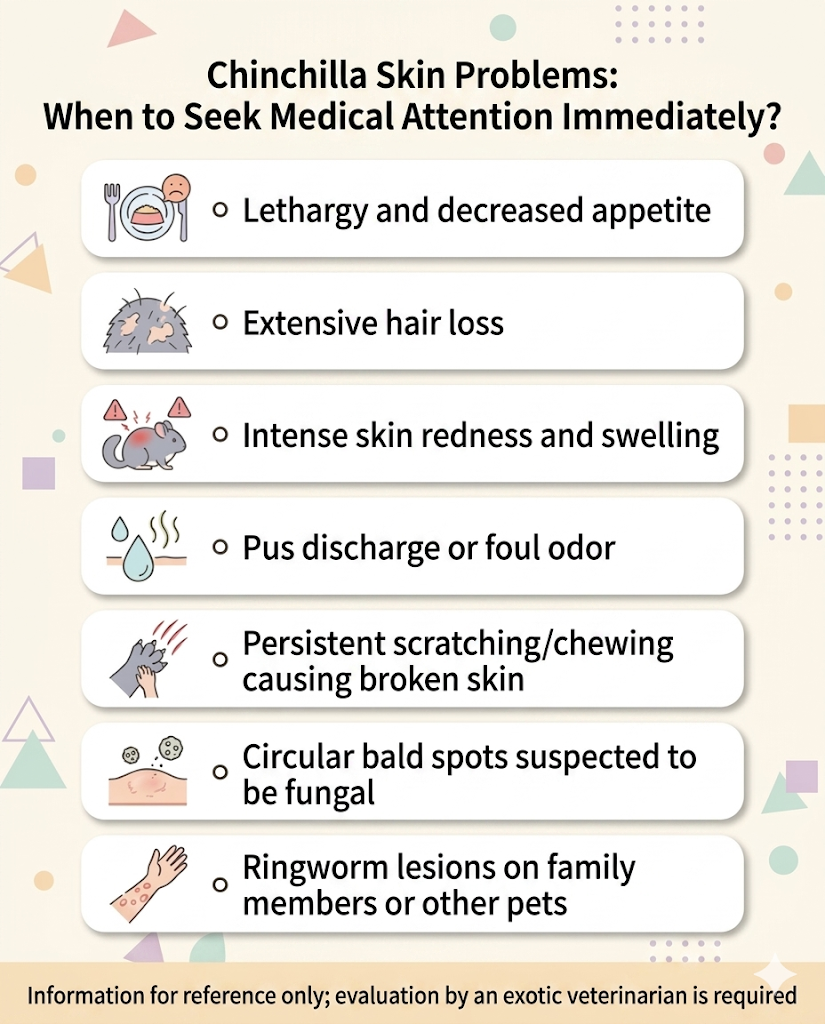
If you find that your chinchilla’s skin already exhibits redness, purulent discharge, or large areas of hair loss, relying solely on increasing bathing frequency cannot resolve the issue. When managing chinchillas with skin diseases, CityVet conducts the following professional diagnostics:
- Wood’s Lamp Examination: Utilizing a specific wavelength of ultraviolet light to illuminate the lesion sites; certain specific fungi will display a fluorescent green reaction.
- Skin Scraping and Microscopic Examination: Collecting dander samples to observe under a microscope for fungal spores, hyphae, or ectoparasites (such as mites).
In terms of treatment, the veterinarian will formulate a suitable plan based on the examination results. For mild fungal infections, a specialized antifungal powder may be prescribed to be mixed into the dust bath, or localized topical ointments may be used; if the infection is widespread and severe, systemic oral antifungal medications will be required. Please note that some commercially available small animal medications possess hepatotoxicity (liver toxicity) to chinchillas, so veterinary prescriptions must be strictly adhered to.
Home Care: How to Correctly Arrange Volcanic Dust Baths for Chinchillas
Preventing chinchilla skin diseases centers around correct dry cleaning care:
- Choose High-Quality Volcanic Ash: You must purchase chinchilla-specific “Dust” (powder form) rather than “Sand” (granular form). The delicate volcanic dust can coat and absorb excess oils on every single hair strand.
- Control Bathing Frequency: During Hong Kong’s dry winter season, 2-3 times a week is sufficient; however, during humid seasons (spring and summer), it should be increased to 4-5 times a week or even daily, for about 10-15 minutes each time.
- Strict Temperature and Humidity Control: The chinchilla’s room should have air conditioning or a dehumidifier running long-term, keeping the temperature between 18–22°C and the relative humidity below 50%–60%.
Frequently Asked Questions
My chinchilla’s fur is matted. Can I use household scissors to snip it off directly?
Extremely dangerous. A chinchilla’s skin is remarkably thin and lacks elasticity, and their fur mats are typically located very close to the base of the skin. If a chinchilla struggles or panics, utilizing ordinary scissors can easily puncture or cut their delicate skin directly. If matting is severe, the pet should be brought to the clinic for medical staff to perform localized shaving using professional small animal clippers.
Can a chinchilla’s fungal infection (ringworm) be transmitted to humans or other pets?
Yes. Certain dermatophytes (such as Microsporum) causing chinchilla skin diseases are highly contagious via contact. If owners have lower immunity, red, circular, itchy ringworm lesions may also appear on their arms or bodies after contacting an infected chinchilla. Wearing gloves when caring for an infected chinchilla and thoroughly disinfecting the environment is recommended.
To keep them dry, can I leave the dust bath bowl inside the cage every day?
Not recommended. If the dust bath bowl is left inside the cage long-term, chinchillas may use it as a toilet to urinate or defecate, causing the dust to become damp and contaminated. Furthermore, excessively frequent and prolonged dust baths can strip away essential protective oils on the skin surface, causing the skin to become overly dry, crack, or even trigger ocular conjunctivitis. The dust bath bowl should be removed after each bath.
My chinchilla is shedding fur during its molting period. What is the difference between this and a skin disease?
Chinchillas experience a minor molt roughly every three months. Normal shedding occurs evenly, and new fur immediately grows beneath the shed layer, leaving the skin healthy, clean, and a pinkish-white color. Conversely, hair loss caused by skin diseases is usually “patchy” or “locally exposed.” The exposed skin will be accompanied by redness, flaking, scabbing, or unusual odors, and the chinchilla will present with frequent scratching.
CityVet Rodent Skin Examination & Chinchilla Clinic
CityVet is committed to providing outstanding comprehensive veterinary care, guided by the core values of professionalism, compassion, and trust. We aim to offer reasonable fees, introduce advanced equipment, and explain treatment options clearly to pet owners, so that every pet receives full medical support. To book a rodent skin examination or chinchilla consultation, please call our Tsuen Wan branch at 2623 5500 or our Yuen Long branch at 2477 9990. Address: G/F, 186 Sha Tsui Road, Tsuen Wan / Shop 2, G/F, Fuk Shun Building, 25 Ping Wui Street, Yuen Long.
Disclaimer: This article is for general information only and does not replace professional medical diagnosis. If you have any concerns, please book a veterinary examination as soon as possible.