
In Hong Kong, an increasing number of owners choose to hand-feed parrots from the chick stage (baby birds), enjoying the joy and deep bond of raising their beloved birds by hand. However, hand-feeding chicks is an undertaking that requires immense patience and precise technique. In exotic pet clinics, the most common acute, fatal illness encountered by chicks is undoubtedly parrot crop inflammation (Sour Crop / Crop Stasis). When owners discover a chick with a heavily distended chest, frequently vomiting formula, or even emitting a sour, foul odor, it typically signifies that the digestive system has come to a complete halt.
The crop is a digestive organ unique to birds, located in the lower-middle portion of the esophagus, with the primary function of temporarily storing and softening food. A chick’s crop wall is extremely fragile and neuro-sensitive. Whether it is the temperature or consistency of the parrot formula during hand-feeding, or even the ambient environmental temperature, if any single link goes wrong, it can easily trigger severe indigestion and infection.
The “Temperature Crisis” of Hand-Feeding Chicks: Overheating vs. Under-heating
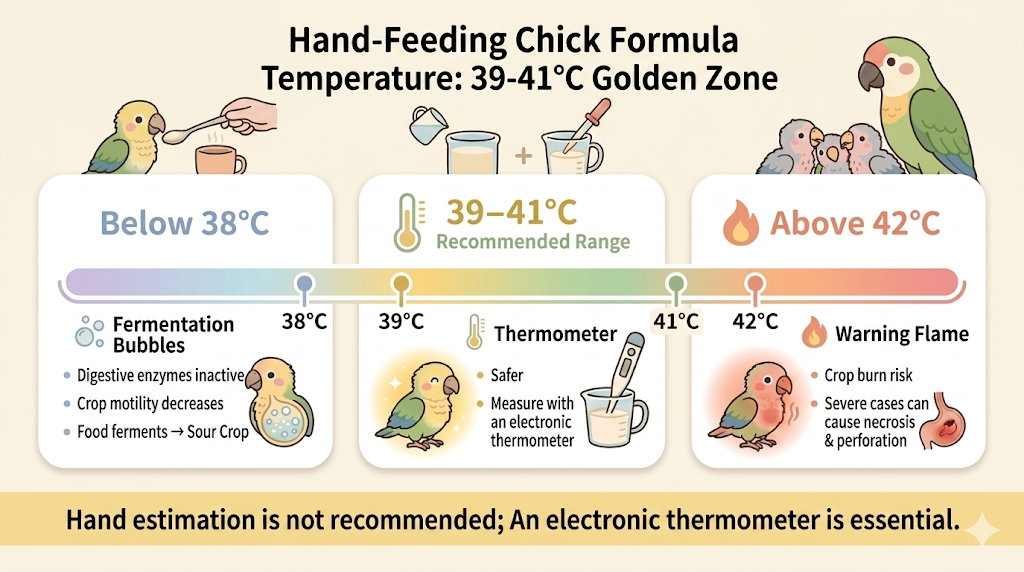
When hand-feeding chicks, the temperature of the formula is the core factor. Many novice owners rely solely on visual checks or testing the temperature on the back of their hand, which is often where tragedy begins.
1. Formula Overheating: Severe Crop Burns
The body temperature of birds is higher than that of humans, leading many people to mistakenly believe that hand-feeding formula needs to be quite hot to match the mother bird’s body temperature. If formula exceeding 42°C is fed, it can easily cause thermal burns to the inner lining of the chick’s crop. Mild burns cause the mucosa to become red, swollen, inflamed, and lose motile capacity; severe burns can even lead to necrosis and perforation of the crop wall, allowing formula to leak directly into the subcutaneous tissues, triggering fatal septicemia.
2. Formula Under-heating: Food Fermentation Leading to “Sour Crop”
Conversely, if the formula drops below 38°C, the chick’s digestive enzymes cannot be activated, and the crop will stop contracting. When food remains stagnant for long periods inside a warm, humid crop, it turns into a natural breeding ground for fungi (such as Candida) and bacteria. The food begins to turn sour, ferment, and generate gas—this is commonly known as “sour crop,” which is a frequent source behind causes of parrot vomiting.
Common Symptoms of Parrot Crop Inflammation
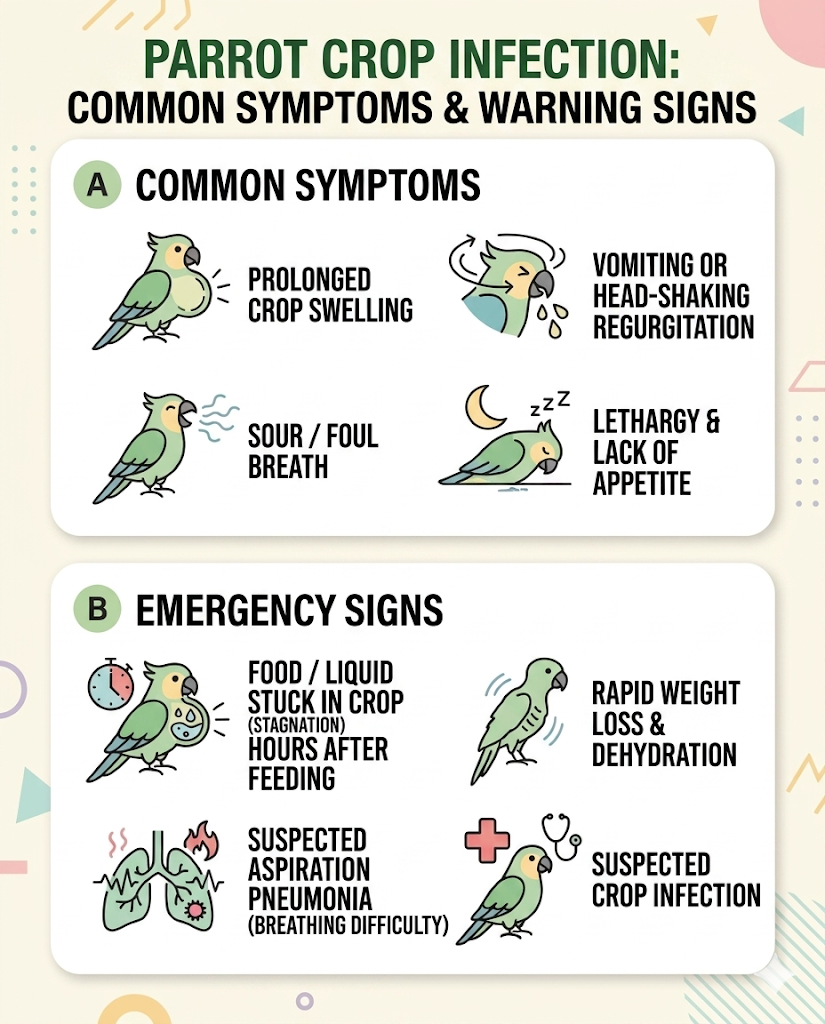
Whether dealing with an adult parrot or a chick, crop inflammation presents with very obvious changes in appearance and behavior:
- Persistent crop distension without clearing: Under normal circumstances, a chick’s crop should gradually shrink within a few hours after eating. If the chest remains heavily distended by the time for the next feeding, feeling filled with liquid or gas, it indicates crop stasis and fluid accumulation.
- Vomiting and head shaking: Parrots will frequently execute head-shaking motions, spewing undigested formula or mucus all over their heads and faces, or even flinging it onto the cage walls.
- Sour, foul odor from the oral cavity: Leaning close to the parrot’s mouth, one can smell bouts of a pungent, sour odor resembling decaying or fermenting food.
- Lethargy and refusal to eat: Chicks will lose their natural instinct to beg for food, sitting idly with fluffed-up feathers and closed eyes, rapidly losing weight and becoming dehydrated.
Other Causes Leading to Crop Inflammation
Aside from the most central error regarding feeding temperature, the following factors can also induce this condition:
- Overly thick formula concentration: Mixing the formula too thickly in an attempt to provide more nutrition to the chick exceeds the digestive threshold of the chick’s gastrointestinal tract.
- Inadequate brooding environment temperature: When air conditioning is running indoors in Hong Kong, if the brooder temperature drops below 28-32°C (depending on the chick’s age in days), the chick’s own metabolism slows down, which can also trigger crop stasis.
- Failure to clear between meals: Rushing to feed the next meal before the food from the previous meal has been completely digested causes an accumulation of old and new food, which highly easily triggers spoilage.
Professional Veterinary Examination Methods and Treatment Directions
If you suspect your parrot is suffering from crop inflammation, never blindly squeeze the crop with your hands at home in an attempt to “force the food out.” This can cause food to flow backward into the trachea, triggering acute suffocation or aspiration pneumonia.
At CityVet, veterinarians inspect birds using highly professional and precise methods:
- Crop Smear and Cytological Examination: Utilizing a sterile catheter to extract a small sample of crop fluid to observe under a microscope whether there is an overgrowth of Candida (fungi) or an infection caused by pathogenic bacteria.
- Localized Debridement and Crop Lavage: If the food has severely spoiled or clumped together, the veterinarian will perform a crop flush for the parrot using warm normal saline under safe monitoring to evacuate the decayed substances.
- Medication and Supportive Care: The veterinarian will formulate a suitable plan based on the examination results, administering oral antifungals or antibiotics, matched with subcutaneous fluid therapy to correct the chick’s severe dehydration and electrolyte imbalances.
Home Daily Care and Precise Feeding Recommendations
To stay completely clear of the temperature crisis and crop inflammation, the hand-feeding process must integrate scientific management into the daily routine:
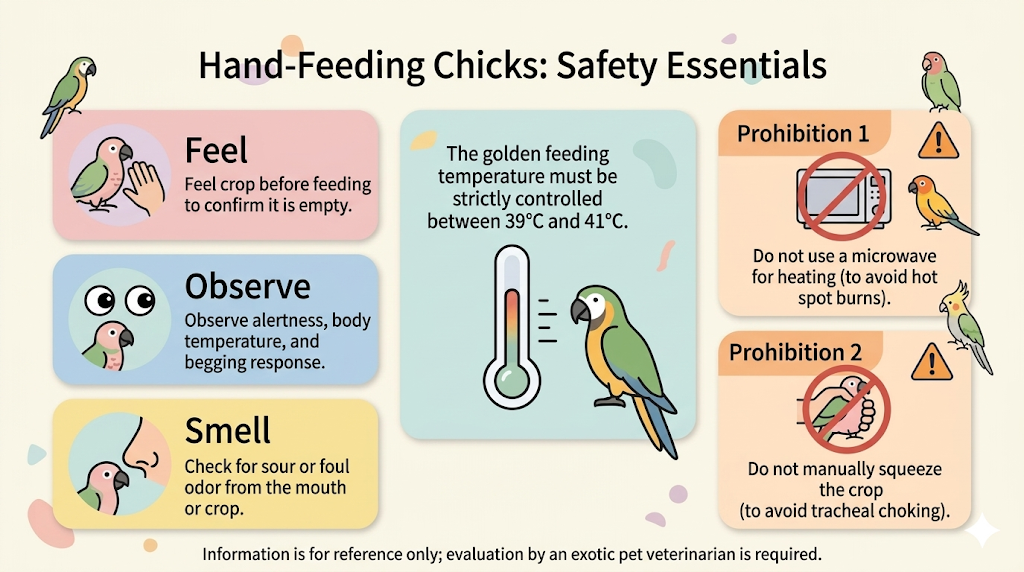
- Essential Precision Digital Thermometer: When mixing formula, a probe-style digital thermometer must be utilized. The golden feeding temperature must be strictly controlled between 39°C and 41°C.
- Follow the “Touch, Look, Smell” Rule: Before every feeding, one must gently feel the chick’s chest to confirm that the food from the previous meal has been completely evacuated.
- Small, Frequent Meals and Routine Sanitation: Formula must be prepared fresh for immediate consumption; formula left overnight or sitting out for more than half an hour must absolutely never be fed. Feeding utensils must be thoroughly sanitized after each use.
Frequently Asked Questions
What is the golden temperature for parrot formula? Can I use a microwave to heat it?
The golden temperature for hand-feeding parrot formula must be strictly maintained between 39°C and 41°C. Dropping below 38°C easily triggers indigestion and sour crop; exceeding 42°C will induce severe thermal crop burns. Utilizing a microwave to heat formula is absolutely not recommended because microwaves create “hot spots” (areas of extremely high localized temperature). Even if the surface feels warm, the inner hot spots can instantly burn the chick. The safest method is using a warm water bath to heat the formula while continuously stirring and measuring with a thermometer.
Can parrot crop inflammation resolve on its own?
Parrot crop inflammation constitutes an acute avian internal medicine emergency and will absolutely never heal on its own. Because avian metabolism is incredibly fast, once a chick experiences a digestive halt exceeding 24 hours, it will rapidly succumb to dehydration and organ failure. At the first sign of symptoms, a consultation with a veterinarian experienced in avian medicine should be sought immediately.
How can I determine if a chick’s crop is completely empty?
In healthy chicks, the distended crop on the chest will gradually flatten within 4 to 6 hours post-feeding. When you gently touch the chest area in front of both shoulder blades with your fingers, if the skin feels loose, no fluid or hard lumps of food particles can be felt, and the outline of the chest bone can be faintly seen, it signifies that the crop is completely empty. Only then is it a safe time for the next feeding.
If a parrot vomits undigested food, is it definitely crop inflammation?
Not necessarily. There are many causes behind parrot vomiting. Aside from acute crop inflammation, adult parrots during estrus will instinctively “regurgitate” and throw up food toward mirrors, toys, or their favorite owners to show affection, and their energy levels are typically excellent at these times. However, if vomiting is accompanied by head-shaking, fluffed-up feathers, a sour odor emitting from the crop, or loose stools, it strongly indicates a pathological crop infection or another internal medicine disease, requiring a veterinarian to perform diagnostic tests to differentiate.
CityVet Avian Internal Medicine Consultation & Care
CityVet is committed to providing outstanding comprehensive veterinary care, guided by the core values of professionalism, compassion, and trust. We aim to offer reasonable fees, introduce advanced equipment, and explain treatment options clearly to pet owners, so that every pet receives full medical support. To book a parrot health examination or avian internal medicine consultation, please call our Tsuen Wan branch at 2623 5500 or our Yuen Long branch at 2477 9990. Address: G/F, 186 Sha Tsui Road, Tsuen Wan / Shop 2, G/F, Fuk Shun Building, 25 Ping Wui Street, Yuen Long.
Disclaimer
This article is for general information only and does not replace professional medical diagnosis. If you have any concerns, please book a veterinary examination as soon as possible.