

Is Hedgehog Quill Loss Always Caused by Mites? Common Hedgehog Skin Problems Revealed Hedgehogs have become popular exotic pets in recent years, but many owners mistakenly believe that quill loss is always related to a mite infestation. In fact, there are several possible causes for quill loss, including natural shedding, fungal infections, allergic reactions, nutritional imbalances, or high environmental humidity. This article will break down the common causes, symptom identification, diagnosis methods, and treatment recommendations to help Hong Kong owners address their hedgehog’s skin problems early.
Causes of Quill Loss and Common Skin Diseases
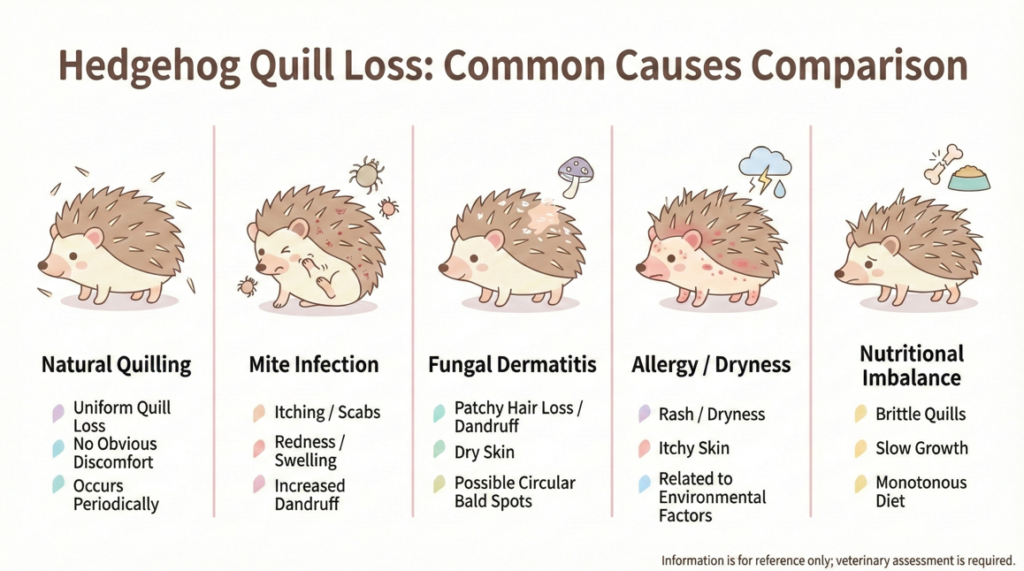
- Natural Quilling: Young hedgehogs shed quills as they grow. If the quill loss is even and new quills grow back quickly, this is a normal physiological process.
- Mite Infestation: External parasites are common in hedgehogs. An infestation can lead to severe itching, significant quill loss, thickened ear edges, and skin scabs. If not treated promptly, it can be complicated by bacterial infections.
- Fungal Dermatitis: Fungal infections can cause localized hair loss, redness, and flaking skin. Some hedgehogs may also have a foul odor.
- Allergies and Dryness: Using aromatic wood shavings or leaving cleaning agent residue can easily cause skin allergies. Insufficient humidity can also make the skin dry and prone to quill loss.
- Nutritional Imbalances: A lack of essential fatty acids or vitamins can make the skin fragile, indirectly leading to quill loss.
Symptom Identification and When to Seek Medical Attention When you notice your hedgehog is losing quills, first observe the extent of the quill loss and the symptoms:
- Is it accompanied by severe scratching, a rash, or thickened skin?
- Are its weight, appetite, and activity level affected?
- Are there scabs, flaking, or a foul odor?
If any of these abnormalities are present, you should take your hedgehog to an exotic pet veterinarian as soon as possible to determine whether it is a mite infestation or another skin disease.
Diagnosis and Treatment A veterinarian will conduct a consultation, a physical examination, and a skin scraping. They may also perform a fungal culture or blood test if needed. Mite infestations are usually treated with safe oral or topical deworming medication. During treatment, the cage must be thoroughly cleaned and the bedding replaced to prevent re-infestation. Fungal infections are treated with antifungal medication and by reducing humidity. Allergic dermatitis requires finding the allergen, such as switching to unscented paper bedding or adjusting cleaning products. Nutritional imbalances can be addressed by adjusting the diet, adding high-quality hedgehog food, and an appropriate amount of insects to supplement protein and fat.
Home Care and Prevention
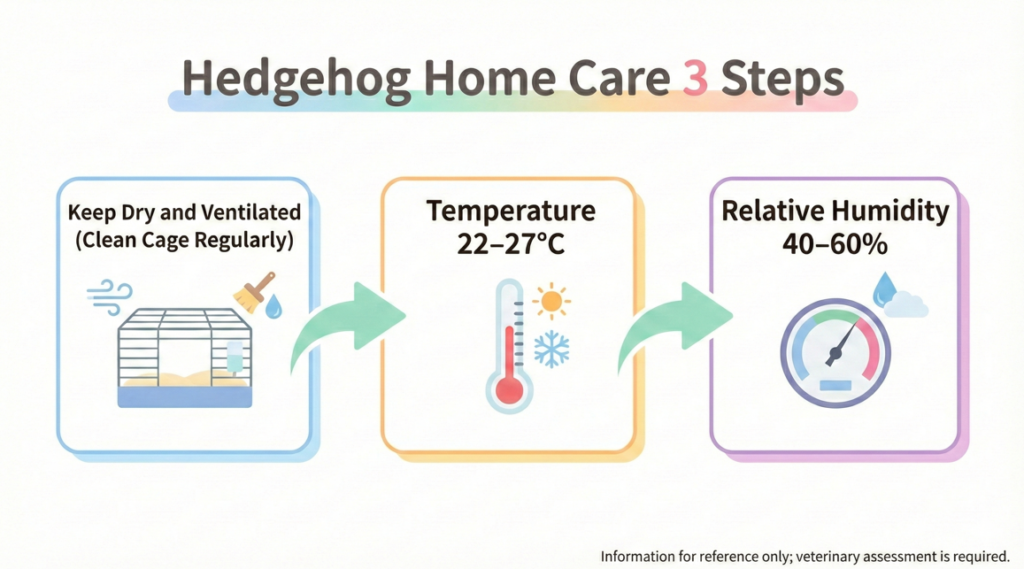
- Environmental Hygiene: Regularly clean the cage and toys, use unscented paper bedding or towels, and keep the environment dry and well-ventilated.
- Temperature and Humidity Control: Maintain a room temperature of about 22–27°C and a relative humidity of 40–60%, avoiding excessive dampness or dryness.
- Balanced Nutrition: Provide a diet of specialized hedgehog food and insects, such as mealworms or crickets. Fruits and vegetables can be added occasionally , but avoid high-fat and processed foods.
- Regular Check-ups: Have a check-up at the vet every six months to a year to detect skin problems early.
Frequently Asked Questions (FAQ)
- 1. Is hedgehog quill loss always caused by mites?
Not necessarily. Natural shedding, fungal infections, allergies, or nutritional deficiencies can all cause quill loss. - 2. Can I use medication for dogs and cats on my hedgehog?
No. Hedgehogs are sensitive to medication, and a veterinarian must prescribe a medication suitable for them. - 3. Can a fungal infection be transmitted to humans?
Some fungi can be transmitted. You should wash your hands and clean the environment after handling a sick hedgehog. - 4. What is the effect of high environmental humidity?
High humidity can promote the growth of fungi and bacteria, which can easily cause skin problems. Low humidity can cause the skin to become too dry. - 5. How often should a hedgehog have a health check?
It is generally recommended to have a check-up at least once a year. If there are problems, the check-ups should be more frequent.
Cityvet Hedgehog Clinic Cityvet is committed to providing outstanding comprehensive veterinary medical services, upholding the core values of “professionalism, care, and trust”. We aim to offer reasonably priced services, utilize advanced equipment, and provide detailed explanations of various treatment methods to owners, ensuring comprehensive medical care for every pet. To book a hedgehog clinic appointment, please call the Tsuen Wan clinic at 2623 5500 or the Yuen Long clinic at 2477 9990. Our addresses are: G/F, 186 Sha Tsui Road, Tsuen Wan / G/F, Fuk Shun Building, 25 Ping Wai Street, Yuen Long.
Disclaimer: This article provides general information only and is not a substitute for professional medical diagnosis. If you have any concerns, please schedule a veterinary appointment as soon as possible.