
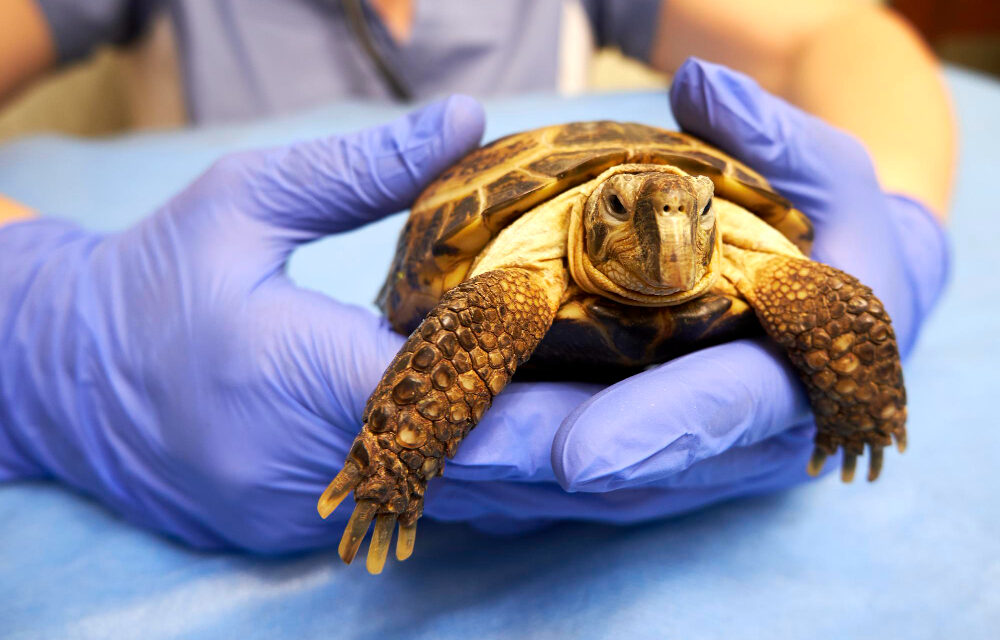
Many turtle owners are surprised when a veterinarian recommends a blood test for their pet: ‘A turtle has such a hard shell – can it really have a blood test?’ The answer is absolutely yes, and it is very important. Turtles are experts at hiding illness. By the time visible signs appear, the disease is often already quite advanced. Turtle blood testing is one of the most accurate and important diagnostic tools used by exotic pet veterinarians to assess internal organ health, inflammation, infection and metabolic status.
How Is Blood Collected from a Turtle?
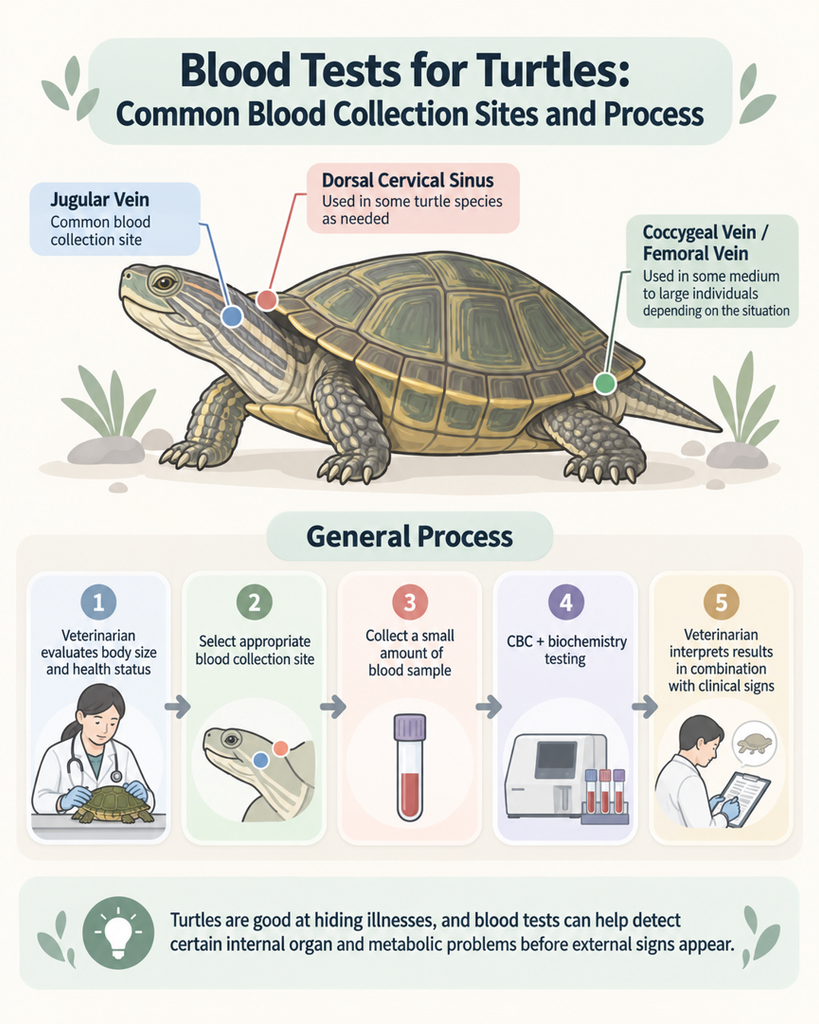
Similar to blood collection in cats and dogs, an exotic pet veterinarian chooses the safest and least stressful site for a small blood sample based on the turtle’s species, size and temperament:
- Jugular vein: This is the most commonly used blood collection site. The veterinarian gently extends the head and neck and collects blood from the lateral neck vein. This site usually provides a quick draw and the best sample quality.
- Dorsal cervical sinus: This is commonly used in sea turtles or tortoise species whose head and neck are difficult to extend.
- Tail vein or femoral vein: These may be used for medium to large tortoises or aquatic turtles with thicker tails.
A professional exotic pet veterinary team uses micro-needles and specialized anticoagulant tubes. The sampling process is quick and safe, with minimal impact on the turtle.
What Key Items Are Included in Turtle Blood Tests?
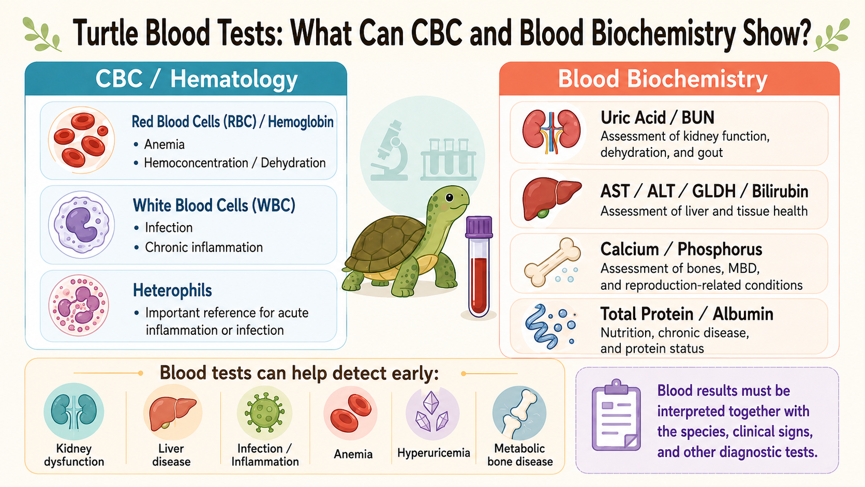
Turtle blood testing mainly includes two core components:
1. Complete blood count (CBC / hematology)
- Red blood cells (RBC) and hemoglobin: These assess whether the turtle has anemia, commonly seen with parasite infection, chronic blood loss or malnutrition, or hemoconcentration due to dehydration.
- White blood cell (WBC) count and differential: These assess whether bacterial infection, fungal infection, viral infection or chronic inflammation is present.
- Heterophils: These are comparable to neutrophils in mammals. A marked increase indicates severe acute infection.
2. Blood biochemistry
- Kidney indicators (uric acid / BUN): One of the most important indicators, used to assess turtle renal failure, dehydration or gout.
- Liver indicators (AST, ALT, GLDH, bilirubin): These assess liver damage, fatty liver or poisoning.
- Calcium and phosphorus ratio: This assesses bone health, metabolic bone disease (MBD) and the physiological status of egg-laying females.
- Total protein and albumin: These assess nutritional status, chronic wasting disease or protein loss through the liver or kidneys.
What Hidden Health Problems Can Blood Tests Detect?
Many turtle diseases have no outward signs in the early stages. Blood testing can help identify the following conditions earlier:
- Early renal failure and hyperuricemia: Blood uric acid may already be markedly elevated before limb swelling appears.
- Fatty liver and liver dysfunction: Liver disease is common in obese turtles and after hibernation.
- Severe internal infection and septicemia: Abnormally high white blood cell counts alert the veterinarian that antibiotic treatment may be needed.
- Metabolic bone disease (MBD) and hypocalcemia: An inverted calcium-phosphorus ratio warns that bones are softening or that a female turtle may be at risk of egg binding.
When Should Blood Testing Be Considered for Turtles?
- Annual health check-ups: Especially for adult turtles over 5 years old or senior turtles, annual blood testing is recommended to establish a health baseline.
- Reduced appetite or persistent food refusal for more than 1-2 weeks: Blood testing helps search for hidden chronic abdominal disease.
- Limb swelling, eye swelling or lethargy: These signs warrant screening for kidney and liver disease.
- Pre-anesthetic assessment before surgery, such as egg removal surgery or stone surgery: This ensures liver and kidney function can handle anesthetic drugs and reduces surgical risk.
Frequently Asked Questions (FAQ)
Q: Turtles are so small. Will blood collection cause too much blood loss?
A: A safe blood draw is usually limited to 0.5% to 1% of the turtle’s body weight. For example, in a 500 g turtle, 0.5 to 1 mL of blood is enough for a complete blood test and remains within the safe range.
Q: Does a turtle need to fast before a blood test?
A: Fasting for 12 to 24 hours before blood testing is generally recommended, while maintaining normal drinking and soaking, to avoid high blood lipid levels after eating affecting the accuracy of biochemistry results.
Q: Can blood test results be available on the same day?
A: If the clinic is equipped with advanced in-house blood analyzers suitable for exotic pets, detailed biochemistry and blood cell reports can usually be obtained within 30 minutes after sampling.
Q: Will blood collection hurt the turtle?
A: Very fine micro-needles are used, and the sensation is similar to an injection. The process only takes a few dozen seconds, and most turtles tolerate it well.
Q: Why does the veterinarian recommend blood tests when my turtle looks healthy?
A: Turtles are experts at hiding illness. Many chronic kidney or liver diseases show no obvious signs until more than 70% of organ function is damaged. Routine blood testing is the only way to detect and prevent problems early.
CityVet Turtle Consultation and Health Check
CityVet is committed to delivering excellent, comprehensive veterinary medical services. Guided by the core values of professionalism, care and trust, we provide reasonable fees, introduce advanced equipment, and explain treatment options clearly to pet owners, offering comprehensive medical care for every pet. Want to book a turtle consultation and health check? Please call our Tsuen Wan clinic at 2623 5500 or our Yuen Long clinic at 2477 9990. Address: G/F, 186 Sha Tsui Road, Tsuen Wan / Shop 2, G/F, Fook Shun House, 25 Ping Wui Street, Yuen Long.
Disclaimer: This article provides general information only and cannot replace professional medical diagnosis. If you have any concerns, please book a veterinary consultation as soon as possible.