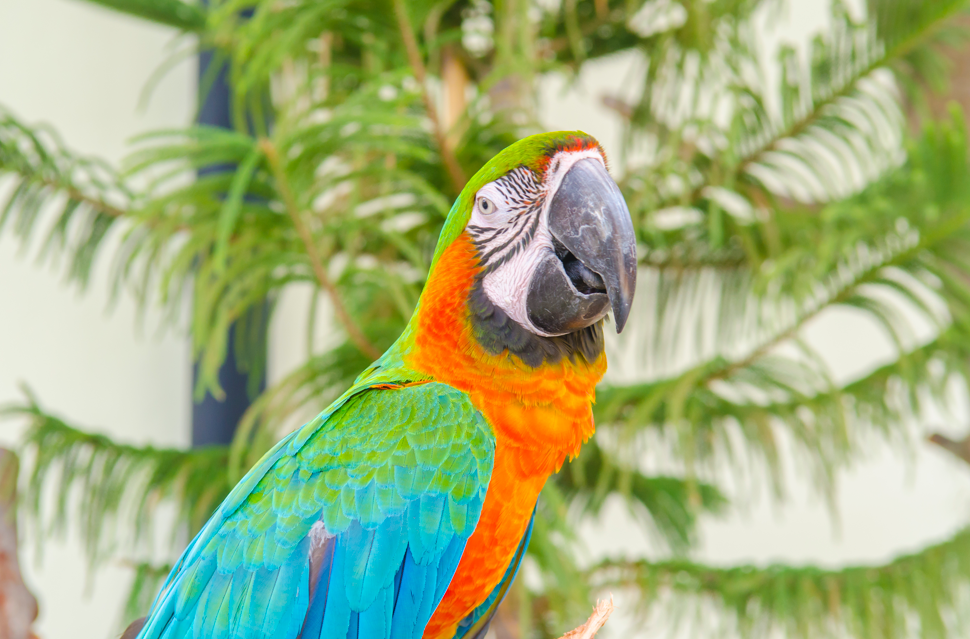
For parrot owners, cleaning the cage tray every day may be a tedious chore, but it serves as the most direct and effective “health report card” for monitoring your beloved bird’s condition. Because birds are targets for predators in the wild, they have evolved an exceptional ability to mask clinical signs of illness, often showing symptoms only when their bodies become extremely weak.
Consequently, subtle changes in droppings are frequently the sole clue during the early stages of a disease. A normal parrot dropping is actually composed of three parts; any alteration in the color, texture, or volume of any component can indicate abnormalities in the digestive system, liver, kidneys, or nutritional intake. This article will teach you how to scientifically observe parrot droppings, distinguishing between temporary shifts caused by diet and warning signs of illness that require vigilance.
Understanding the Three Main Components of Normal Parrot Droppings
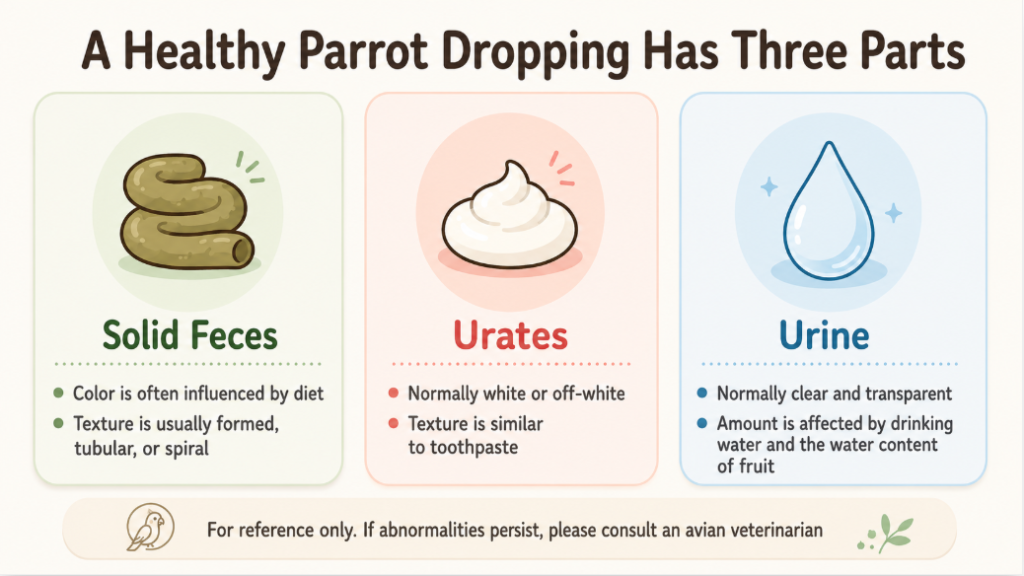
Before evaluating health, one must first understand the structure of a complete avian excretion:
- Solid Feces (Feces): Originates from the distal end of the digestive tract. The color is typically influenced by diet, and the texture should be tubular or coiled and well-formed.
- Urates (Urates): A byproduct of protein metabolism. Under healthy conditions, it should appear pure white or creamy white, with a texture resembling toothpaste.
- Urine (Urine): A clear, transparent liquid. Birds excrete urine along with solid waste, and its volume is influenced by water consumption.
The Meaning of Dropping Color Changes: Diet or Illness?
- Green or Brown Feces
This is the most common color. Parrots that consume a large amount of seeds or green vegetables will mostly have dark green feces, whereas parrots whose staple diet consists of pellets will have a fecal color close to that of the pellets (such as brown or reddish-brown).
Warning Sign: If a parrot’s feces suddenly turn bright green or fluorescent green without any dietary changes, and this is accompanied by lethargy, it may indicate liver damage or Psittacosis (Chlamydia) infection.
2. Red or Black Feces
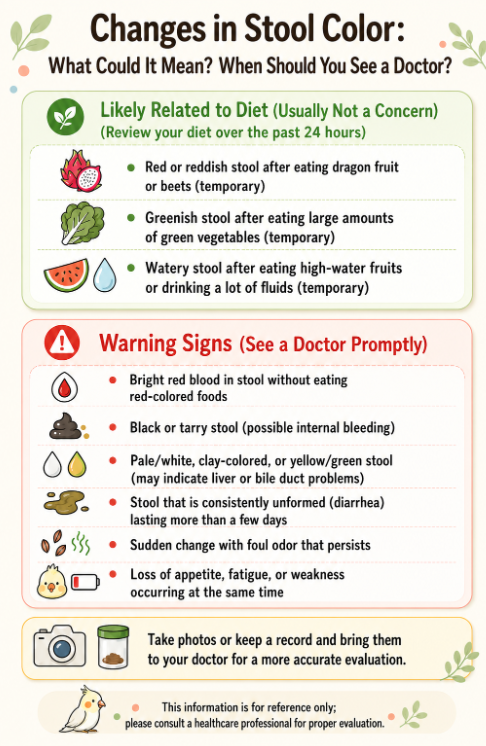
Dietary Factors: If your parrot has recently consumed beetroot, red dragon fruit, carrots, or berries, the feces turning red is normal pigmentation.
Warning Sign: If no such food has been ingested, deep black and sticky-textured feces (tarry stools) may indicate upper gastrointestinal bleeding; bright red blood represents an injury to the lower gastrointestinal tract or cloaca, warranting immediate medical attention.
3. Yellow or Bright Yellow
If the originally white “urate” component turns yellow or yellowish-green, this is typically a sign of liver dysfunction or elevated biliverdin, and must never be taken lightly.
Key Points of Observation for Texture and Shape
Aside from color, alterations in texture are equally critical:
- Diarrhea (Diarrhea): Refers to the solid feces losing their tubular structure and becoming loose. This can be associated with intestinal bacterial imbalances, parasites, or the consumption of unclean food.
- Polyuria (Polyuria): A substantial increase in the volume of the urine component (clear liquid), making the droppings look very wet. This may occur because the parrot drank more water that day or ate fruits with high water content, such as watermelon. However, if this condition persists long-term, examinations for kidney disease or diabetes are required.
- Undigested Seeds: If whole, undigested seeds appear in the feces, this typically represents abnormal gastrointestinal motility or Proventricular Dilation Disease (PDD), which is a severe avian disease requiring professional veterinary intervention.
Home Observation Advice: Establishing “Tray Data”
It is recommended that owners line the cage tray with white newspaper or pee pads. A white background best reflects the true color of urates and urine. During daily cleaning, spend a few seconds noting the average shape and color of the droppings. If an abnormality is noticed, reflect first on the menu over the past 24 hours; if dietary factors are ruled out and the abnormal condition persists across more than two bowel movements, you should take photographs to record it and consult a veterinarian.
The Importance of Professional Veterinary Examinations
When a parrot’s droppings are persistently abnormal, the veterinarian will recommend a “fecal smear test” or “fecal culture.” Through a microscope, the veterinarian can observe whether there is an overgrowth of bacteria, fungi (such as Candida), or parasite eggs within the intestinal tract. For cases where liver or kidney damage is suspected, a blood biochemistry analysis is required to precisely evaluate internal organ function.
Frequently Asked Questions
If my parrot eats red dragon fruit and its poop turns red, does it need to see a doctor?
If your parrot has recently consumed foods rich in natural pigments, such as red dragon fruit or beetroot, the feces turning red or purple is a completely normal phenomenon and will typically return to normal once the food is fully digested (about 4–8 hours). The focus of observation should be on whether the parrot’s energy levels and appetite remain normal. If the droppings remain red a day after ceasing consumption of such foods, or if there is mucus or an unusual odor, a veterinary examination should be sought.
Why did the white component of my parrot’s poop turn yellow?
The white component of the dropping is “urates.” If it turns yellow or green, this typically represents biliverdin excretion, which is an important indicator of liver stress, damage, or infection. This color is not easily altered by diet alone; therefore, once discoloration of the urates is noticed, a professional avian health checkup should be arranged as soon as possible.
What is the difference between diarrhea and polyuria in parrots?
This is an area easily confused by many owners. “Diarrhea” means the solid feces themselves break apart and are unformed, whereas “polyuria” means the solid feces are well-formed but the surrounding liquid is noticeably increased. Polyuria can be physiological (such as high water intake or nervousness) or pathological (such as renal failure), while diarrhea is typically directly related to intestinal infections or indigestion.
Is a sour or foul odor in the droppings normal?
Healthy parrot droppings have almost no perceptible odor. If you smell a distinct sour, foul, fishy, or yeasty odor when cleaning the cage, this typically indicates an overgrowth of pathogenic bacteria or fungi (such as a Candida infection) within the digestive tract. It is advised to bring a fresh dropping sample to the clinic for a laboratory test.
The first poop in the morning is exceptionally large, is there a problem with this?
This is typically normal. Many parrots hold their droppings while sleeping at night; therefore, the first dropping passed upon waking up in the morning will be much larger in volume than usual, and the urine portion may also be greater, which is referred to as “morning stool.” As long as subsequent droppings resume normal size and texture, owners do not need to worry excessively.
CityVet Avian Clinic & Health Examination
CityVet is committed to providing outstanding comprehensive veterinary care, guided by the core values of professionalism, compassion, and trust. We aim to offer reasonable fees, introduce advanced equipment, and explain treatment options clearly to pet owners, so that every pet receives full medical support. To book a dropping examination or consult on nutritional formulas for your beloved bird, please call our Tsuen Wan branch at 2623 5500 or our Yuen Long branch at 2477 9990. Address: G/F, 186 Sha Tsui Road, Tsuen Wan / Shop 2, G/F, Fuk Shun Building, 25 Ping Wui Street, Yuen Long.
Disclaimer: This article is for general information only and does not replace professional medical diagnosis. If you have any concerns, please book a veterinary examination as soon as possible.