
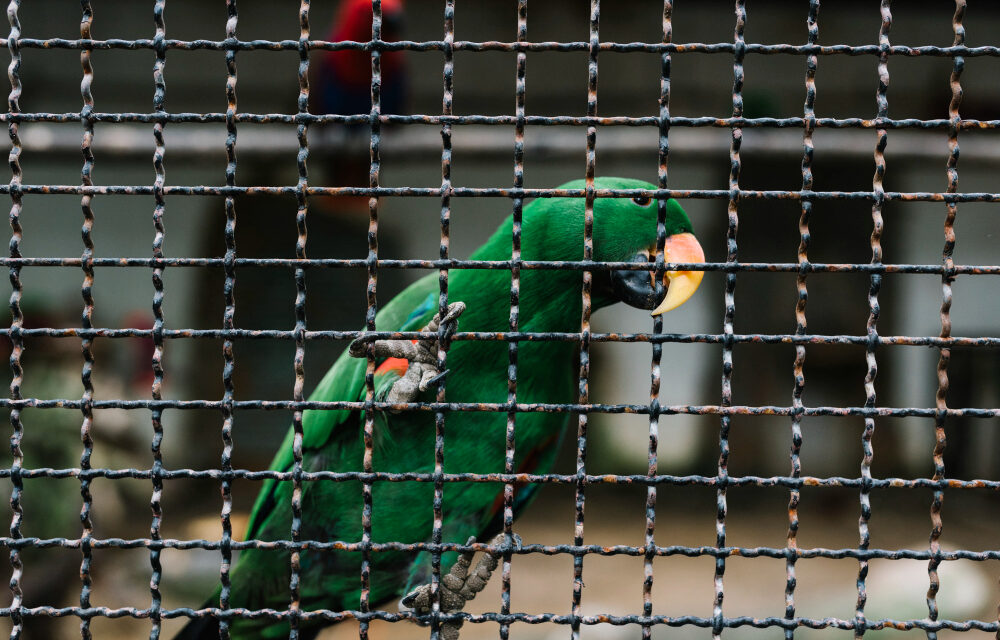
A normally bright and active parrot that suddenly becomes unsteady, squats with weak legs, vomits repeatedly or even develops full-body seizures may be facing one of the most common hidden household dangers for birds: heavy metal toxicity. Parrots are extremely curious and use their beaks to explore objects around them. If they chew and ingest metal objects containing lead or zinc, heavy metals can quickly enter the bloodstream and damage the nervous and digestive systems.
Hidden Household Dangers: Common Sources of Heavy Metals
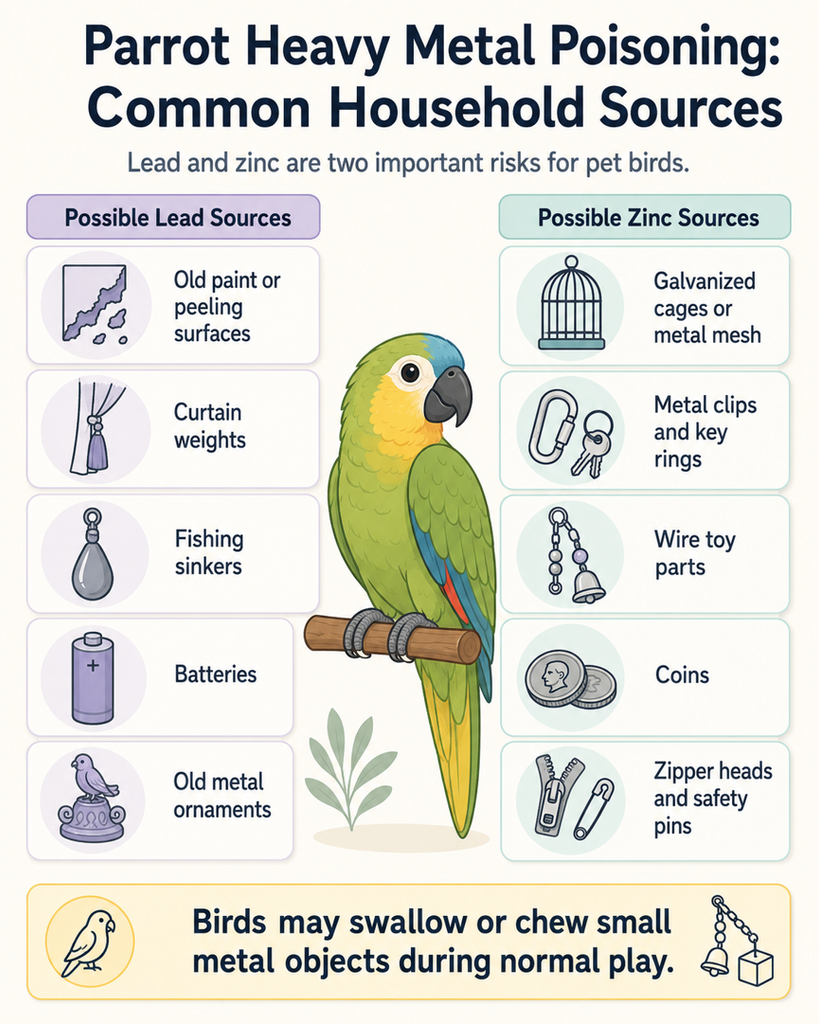
Many owners find it hard to believe that everyday household items can contain toxic metals. The following are the heavy metal sources parrots most commonly encounter:
Sources of lead poisoning
- Curtain accessories: Lead weights or lead cords in the bottom of curtains.
- Old paint and metal decorations: Old wall paint, stained-glass seams and vintage electrical wiring.
- Household items: Fishing sinkers, fishing rod accessories, metal foil around wine bottle tops and batteries.
Sources of zinc poisoning
- Non-compliant bird cages: Galvanized wire cages and poor-quality metal door locks.
- Metal clips and toy parts: Cheap key rings, metal quick links and galvanized wire toys purchased from pet stores.
- Coins and household items: Hong Kong coins, zipper pulls, paper clips and anti-rust coatings.
Common Clinical Signs of Heavy Metal Poisoning
Heavy metals enter the bloodstream, interfere with cellular function and damage the central nervous system, kidneys and digestive tract. Signs often appear rapidly:
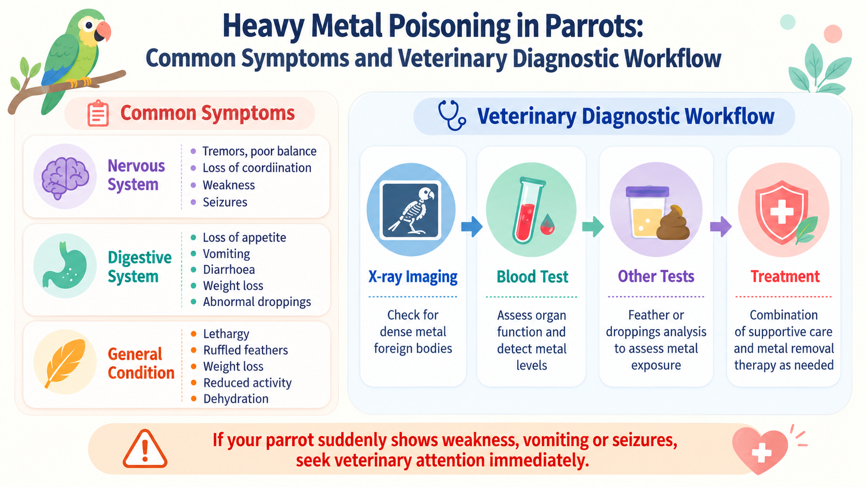
- Neurological signs: Weak grip on perches, soft or unstable legs, falling from perches, head tremors, seizures and even blindness.
- Digestive signs: Loss of appetite, repeated head flicking with vomiting of mucus, crop stasis, bright red blood in urine or dark green watery droppings.
- Systemic signs: Extreme depression, fluffed feathers, rapid weight loss, abnormal thirst and increased urination.
Professional Diagnostic Process by an Avian Veterinarian
Heavy metal poisoning is an avian emergency. The veterinarian may use the following diagnostic steps:
- X-ray imaging: X-rays can clearly show whether dense metal fragments are present in the gizzard or gastrointestinal tract.
- Blood tests: These assess the degree of anemia, kidney and liver function. Specialized tests can directly measure blood lead and zinc concentrations.
- Dropping and urine tests: These check for gastrointestinal bleeding or hemoglobinuria.
Veterinary Detoxification and Supportive Treatment
Once heavy metal poisoning is confirmed, time becomes the greatest enemy in saving the bird’s life:
- Chelation therapy: The veterinarian may administer specific metal chelators such as Ca-EDTA or D-penicillamine. These medications bind heavy metal ions in the blood, forming non-toxic complexes that are eliminated through the kidneys.
- Removing metal fragments from the digestive tract: Gastrointestinal protectants or lubricants may help fragments pass naturally. If the object is too large, endoscopy or surgery may be needed.
- Supportive care: Intravenous fluids help prevent dehydration, effective pain relief and anti-seizure medication may be given, and the bird may be monitored closely in a high-oxygen warming chamber.
How to Create a Safe Home Environment for Parrots
- Choose bird cages and toys carefully: Use stainless-steel cages and non-toxic, bird-safe toy components designed for avian use.
- Check the free-flight area: Before allowing flight, put away coins, keys, zippers and curtains with metal weights.
- Prevent chewing of wires and ornaments: Supervise activity and never allow parrots to chew electrical wires, metal picture frames or wall coatings.
Frequently Asked Questions (FAQ)
Q: How soon after eating metal fragments will a parrot show signs of poisoning?
A: The timing depends on the type and amount of metal absorbed. Some parrots develop acute vomiting and seizures within hours; others accumulate small amounts and show chronic leg weakness and weight loss weeks later.
Q: My parrot only chewed a galvanized metal clip and did not swallow it. Can it still be poisoned?
A: Yes. When a parrot rubs galvanized coating with the beak or saliva contacts it, small amounts of zinc ions can be absorbed through the oral mucosa and cause poisoning.
Q: If X-rays do not show metal objects, can heavy metal poisoning be ruled out?
A: Not completely. Tiny metal dust or metals already dissolved by stomach acid may not be visible on X-rays, so diagnosis still requires clinical signs and blood testing.
Q: Can heavy metal poisoning be detoxified by feeding milk or egg white?
A: Do not use home remedies. These will not detoxify the bird and may cause vomiting and aspiration pneumonia. Seek emergency veterinary care immediately.
Q: Are there after-effects after heavy metal poisoning is cured?
A: If chelation therapy is started early, many parrots can recover fully. However, delayed treatment that results in severe nerve damage or kidney failure may leave permanent after-effects.
CityVet Avian Consultation
CityVet is committed to delivering excellent, comprehensive veterinary medical services. Guided by the core values of professionalism, care and trust, we provide reasonable fees, introduce advanced equipment, and explain treatment options clearly to pet owners, offering comprehensive medical care for every pet. Want to book a parrot consultation? Please call our Tsuen Wan clinic at 2623 5500 or our Yuen Long clinic at 2477 9990. Address: G/F, 186 Sha Tsui Road, Tsuen Wan / Shop 2, G/F, Fook Shun House, 25 Ping Wui Street, Yuen Long.
Disclaimer: This article provides general information only and cannot replace professional medical diagnosis. If you have any concerns, please book a veterinary consultation as soon as possible.